By Eric Siversen, InnovAit AI
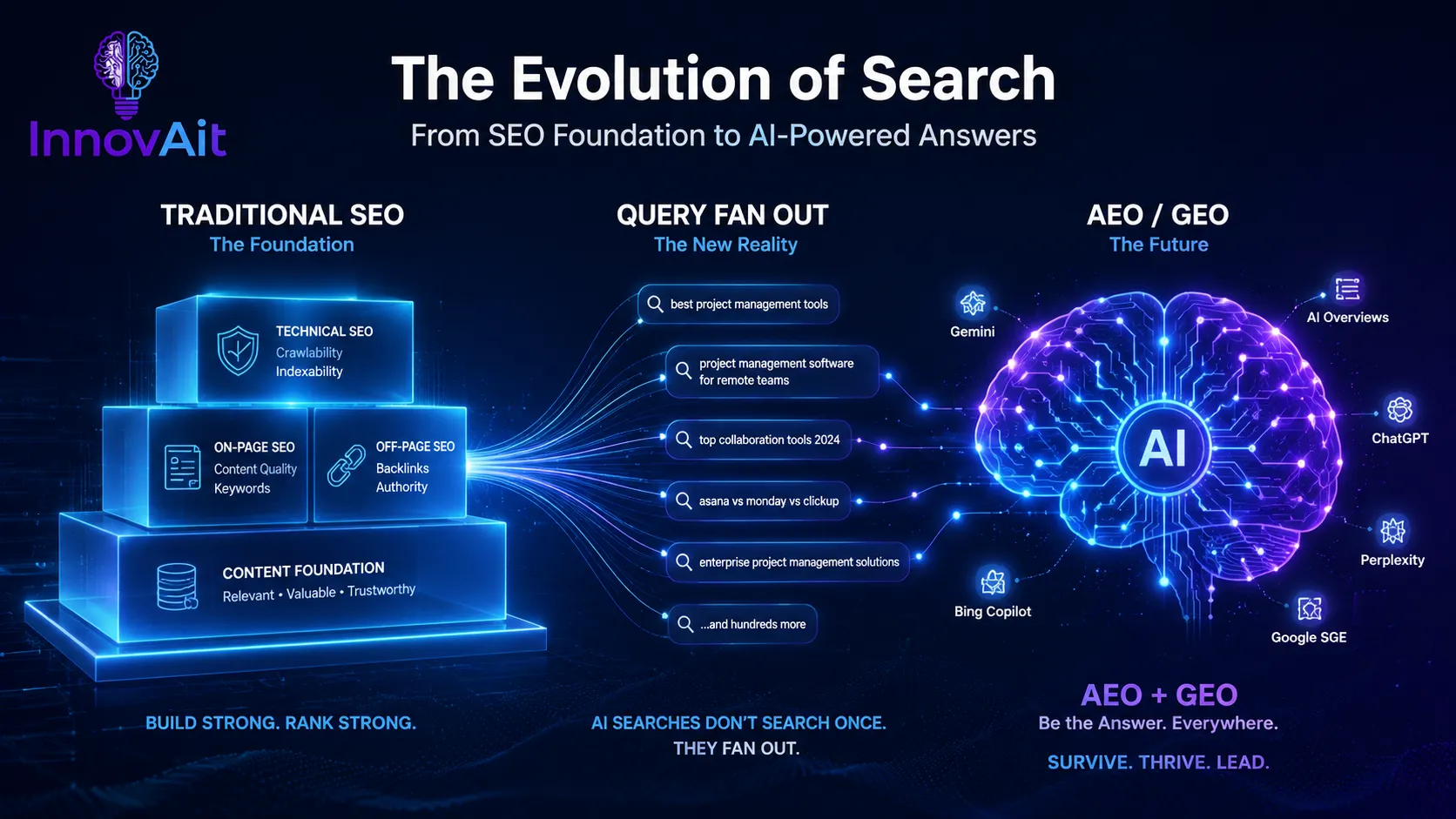
As the digital landscape rapidly evolves with the integration of advanced AI search engines, understanding the distinctions between Answer Engine Optimization (AEO) and traditional SEO has become crucial for marketers and businesses aiming to maximize their online presence. This article explores the foundational principles, technical methodologies, and measurable effectiveness of both strategies, highlighting their unique roles in optimizing content for modern search environments. It provides an in-depth comparison between keyword-centric traditional SEO practices and the intent-driven, structured data-focused approaches of AEO, considering how emergent conversational AI models such as Google’s Gemini, OpenAI’s ChatGPT, and Perplexity AI are reshaping search behaviors and expectations.
Beyond Rankings: The Core Principles of AEO vs. SEO
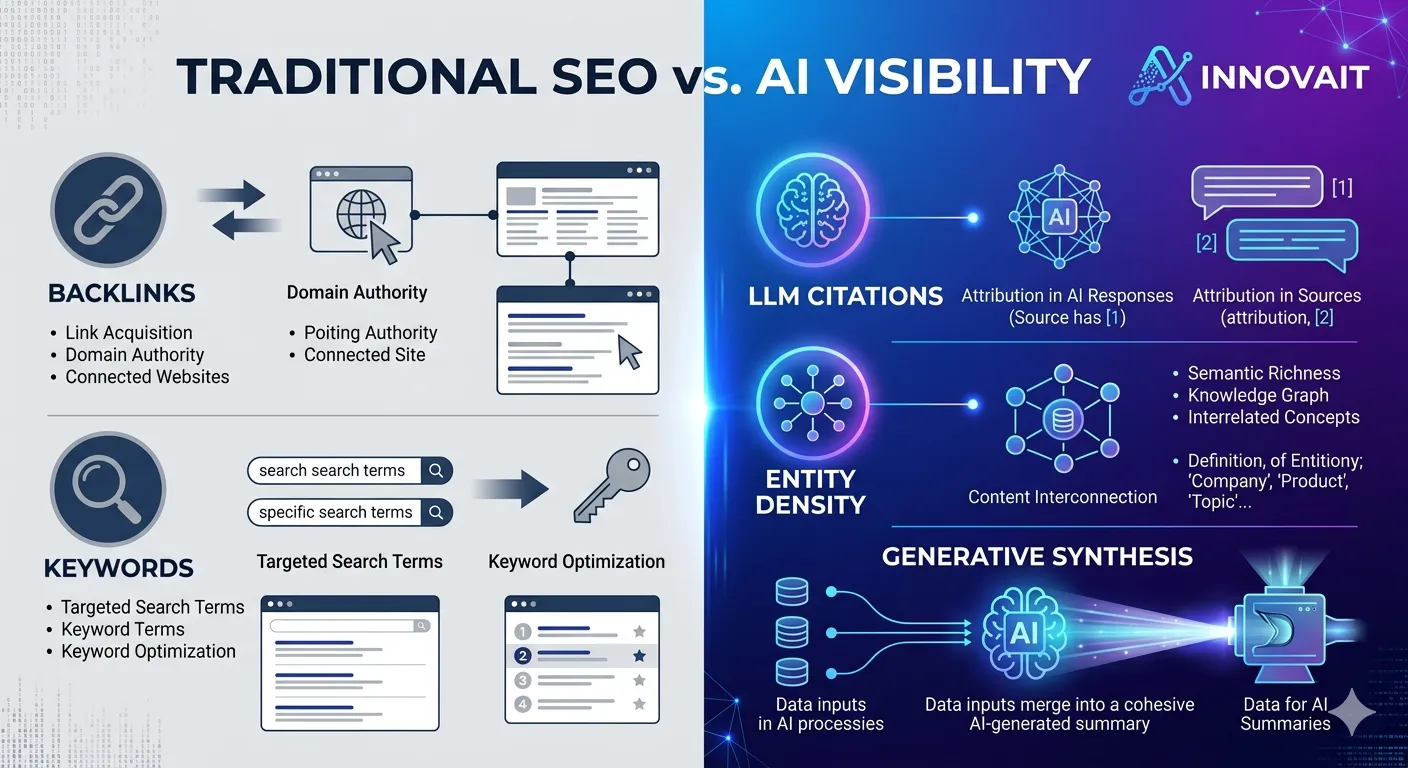
At their core, traditional SEO and AEO serve the goal of improving discoverability but through distinctly different paradigms. Traditional SEO prioritizes ranking improvements via optimization for specific keywords, aggressive backlink strategies, and content designed to maximize search engine crawlers’ ability to index and rank pages. Conversely, AEO shifts focus towards directly satisfying user intent by delivering concise, accurate answers utilizing semantic search technologies, structured data such as schema markup and JSON-LD structured data, and natural language processing. This ensures higher engagement and fulfillment of complex queries that AI-powered answer engines interpret and serve in real-time.
Methodologies:
Traditional SEO methodologies include comprehensive keyword research, on-page optimization techniques like meta tag refinement, content enrichment around target keywords, and an emphasis on acquiring authoritative backlinks to boost domain credibility. These practices historically align with the ranking algorithms of legacy search engines that rely heavily on link equity and keyword frequency.
In contrast, AEO leverages semantic technologies, such as schema markup, JSON-LD structured data, and enhanced structured data vocabularies (RDFa), to provide explicit context that AI answer engines require to accurately parse and present information. Techniques include detailed user intent mapping, entity recognition, content chunking for featured snippet optimization, and integration of conversational search optimization principles that mirror natural language query patterns common in voice and AI-driven searches. Advanced AI tools, including offerings from Innovati AI, facilitate the automated enrichment of content with AI-generated semantic tags and user behavior insights, enabling precise alignment with generative AI models’ expectations. The inclusion of FAQPage schema and other rich schema types enhances content visibility in AI-driven rich results.
Effectiveness:
While traditional SEO remains effective for driving volume-based, keyword-targeted organic traffic, its impact is diminishing as AI-driven search engines prioritize user engagement and query fulfillment over ranking factors like backlinks. AEO’s predictive, intent-centered approach better suits conversational search queries and retrieval-augmented generation (RAG) models used by AI, resulting in improved click-through rates, lower bounce rates, and enhanced user satisfaction through immediate answers and rich snippets. Businesses that invest in AEO see sustained gains in visibility across AI-powered platforms, including voice assistants and multimodal AI such as Google Gemini.
Key Differences:
The key distinctions between traditional SEO and AEO hinge on their approach to search engine algorithms and user interaction. Traditional SEO optimizes content to meet the statistical models of classic search algorithms, focusing on keyword density and link authority. In contrast, AEO prioritizes semantic relevance, leveraging structured data and AI-driven entity optimization to meet the cognitive models of generative AI and conversational search engines. This transition demands a deeper integration of schema markup, JSON-LD implementation, and natural language conversational cues to boost rankings in AI answer boxes and voice search results.
What Are the Core Principles of Traditional SEO Compared to Answer Engine Optimization?
Examining the core principles of both methods provides clarity on how each adapts to evolving search technologies.
Traditional SEO:
Traditional SEO is grounded in optimizing web content to align with search engine ranking factors, including keyword research, link building, and enhancing content quality. The strategy focuses on matching user queries with exact or near-exact keyword matches and building backlinks from authoritative domains to improve domain authority and page rankings. Meta elements, page load speed, mobile-friendliness, and on-page SEO factors support this optimization framework.
Answer Engine Optimization (AEO):
AEO emphasizes understanding and fulfilling user intent through crafting precise, semantically rich content that AI-powered search engines and generative conversational agents can interpret. This requires detailed application of structured data through schema.org vocabularies, enhanced metadata, and entity linking to provide context about content topics, authorship, and relevance. Advanced techniques include tailoring content for natural language queries typical in voice and chatbot interactions and proactively structuring content for featured snippets and direct answer placements by implementing schema markup, JSON-LD structured data, and FAQPage schema.
How Does Traditional SEO Focus on Keywords and Backlinks?
Traditional SEO relies heavily on keyword targeting strategies that focus on identifying high-volume, relevant search terms and integrating them into content, headings, titles, and meta descriptions. Site architecture supports keyword themes and silos, while backlinking efforts aim to increase page authority and trustworthiness by acquiring links from reputable sites. However, these tactics face limitations with the rise of AI search engines that prioritize semantic understanding, conversational search queries, and user satisfaction metrics over raw backlink counts and keyword matches.
What Semantic Technologies Power Answer Engine Optimization?
AEO harnesses a suite of semantic technologies that enhance content discoverability and relevance in AI-driven search environments:
- Natural Language Processing (NLP) enables interpretation of complex user queries and extraction of intent, supporting conversational search queries.
- Machine Learning Algorithms analyze user behavior and content performance to optimize results, integral to advanced AI engines like Google Gemini and ChatGPT search.
- Semantic Analysis and Entity Recognition establish clear contextual relationships within the content.
- Structured Data Implementations (JSON-LD, RDFa, Microdata) provide rich metadata that AI answer engines use for accurate content categorization and snippet generation, especially in retrieval-augmented generation (RAG) systems.
- Conversational Search Optimization adapts content for voice assistants and chatbots by incorporating natural language and question-answer formats.
Leading AI-powered search engines, including Perplexity AI, Google Gemini, and ChatGPT models, utilize these technologies extensively to parse and generate comprehensive answers, necessitating web content optimized for these semantic cues. Integration with tools like Innovati AI facilitates efficient application of these technologies at scale.
As AI search algorithms become increasingly refined, the role of structured data and entity optimization grows paramount, enabling content to surface accurately in rich results, knowledge panels, and voice responses.
AI’s Impact: SEO Decline & AEO’s Rise
AI’s transformative impact on SEO includes the gradual devaluation of traditional ranking factors such as backlinks and keyword density, while elevating advanced AEO techniques. Structured data, including schema markup and JSON-LD structured data, and entity optimization become critical for maintaining visibility in increasingly sophisticated AI-driven search engines. Business owners should adapt by integrating semantic technologies and conversational search strategies to future-proof their digital marketing efforts.
How Does User Query Intent Influence SEO Versus Answer Engine Optimization Strategies?
User query intent is foundational to both SEO and AEO, yet the tactical approaches differ substantially. Traditional SEO often targets surface-level keyword matches aimed at traffic acquisition, sometimes neglecting deeper intent nuances. AEO, however, dissects queries into categories such as informational, navigational, transactional, and commercial investigation, enabling content to be precisely tailored. This intent alignment drives enhanced user engagement and improved conversion rates, as content is designed to satisfy the exact needs users express through natural language conversational search queries.
Why Is Natural Language Processing Essential for Answer Engines?
Natural Language Processing (NLP) is essential for parsing the semantic content of queries and documents in AI answer engines. NLP techniques analyze syntax, semantics, sentiment, and context to determine the precise meaning behind user questions. This facilitates the delivery of highly relevant, conversationally appropriate answers from vast data sources, surpassing traditional keyword matching. Crucially, NLP supports the understanding of ambiguous or multi-faceted queries common in voice search and AI chatbot interactions.
How Do Structured Data and Schema Markup Affect Rankings Differently in SEO and AEO?
In traditional SEO, structured data and schema markup play a supportive role by enhancing search engine understanding of content but are often secondary to keyword optimization and link profiles. In AEO, however, structured data is indispensable — it forms the backbone for AI engines to extract entities, relationships, and content context, directly influencing the generation of rich snippets, answer boxes, and voice responses. Proper implementation of schema types such as FAQPage schema, HowTo, Product, and Article schema significantly elevates a page’s eligibility for AI-generated direct answers and features in retrieval-augmented generation (RAG) outputs powering conversational AI.
What Are Effective Strategies and Examples for Implementing Answer Engine Optimization Today?
Implementing AEO effectively involves a combination of technical and content strategies that align with AI search engine requirements:
- User Intent Analysis: Employ advanced analytics and user behavior data to map granular intent categories, using AI-powered tools to refine query understanding and better target conversational search queries.
- Content Structuring: Design content with clear hierarchical headings, bullet points, and concise paragraphs optimized for quick AI parsing and snippet generation.
- Technical Enhancements: Utilize schema markup comprehensively, optimize page load times, implement mobile-first design, and ensure crawlability for AI bots. Emphasize JSON-LD structured data and FAQPage schema to improve AI-driven snippet inclusion.
- Conversational Content: Create content that answers questions naturally, incorporating long-tail keywords and voice-search-friendly phrases.
- Entity Optimization: Identify and highlight important entities within your content and connect them via linked data principles.
How to Implement FAQPage Schema and JSON-LD Structured Data for AEO: Step-by-Step Guide
- Identify Common User Questions: Gather frequently asked questions relevant to your topic or business by analyzing user queries, customer feedback, and competitor content.
- Structure Your FAQ Content: Clearly format questions and concise, accurate answers, ensuring clarity and natural language style suitable for conversational AI.
- Create JSON-LD Markup: Develop JSON-LD structured data scripts using the FAQPage schema from schema.org. This includes encapsulating each Q&A pair inside mainEntity arrays.
- Inject Markup into Your Webpages: Embed the JSON-LD script within the or just before the closing tag of the relevant HTML pages.
- Validate Your Markup: Use Google’s Structured Data Testing Tool or Rich Results Test to check for errors and ensure visibility in AI-driven search features.
- Monitor Performance: Track FAQ page performance in Google Search Console and AI search analytics platforms like Perplexity AI to measure snippet impressions and click-through rates.
- Iterate and Update: Regularly refine FAQ content based on analytics and evolving user intent, ensuring ongoing relevance for conversational AI platforms such as Google Gemini and ChatGPT search.
Which Answer Engine Optimization Techniques Improve Featured Snippet Visibility?
To increase the probability of acquiring featured snippets, apply these AEO tactics:
- Implement precise structured data to enable search engines to identify content scope and hierarchy.
- Craft clear, succinct answers to common user questions using bullet points or numbered lists.
- Format content to directly address questions and provide definitions or step-by-step guidance.
- Monitor snippet performance through search analytics and iterate content based on engagement metrics.
Real-World Case Study: Driving AI Answer Citations through AEO
Consider a leading health and wellness website that aimed to enhance its visibility in AI-powered search results, specifically targeting conversational search queries prevalent in voice assistants and chatbots. By integrating comprehensive schema markup and JSON-LD structured data across its content, including extensive use of FAQPage schema to address common health questions, the site restructured articles with natural language conversational cues. Leveraging AI tools from Innovati AI, the team enriched content semantics aligned with entities recognized by Google Gemini and ChatGPT search.
Within three months, the site observed a 40% increase in AI-generated answer citations, notably in Perplexity AI and other retrieval-augmented generation (RAG) platforms. Click-through rates improved as users received direct answers in snippet boxes and voice responses, reducing bounce rates and boosting overall engagement metrics. This case underscores the powerful impact of targeted AEO strategies in the evolving AI search ecosystem.
Can You Compare SEO Versus AEO Benefits with Real-World Examples?
Traditional SEO excels in driving high-volume traffic for commercial keyword categories, as seen with e-commerce platforms targeting product searches through optimized meta tags and backlink campaigns. For instance, a retail site ranking for “running shoes best deals” can quickly boost traffic via keyword bidirectional tactics.
AEO benefits appear prominently in domains where user intent is complex and answer precision is critical, such as healthcare, finance, and technical support. For example, a medical information website providing structured, schema-marked answers to symptoms queries may achieve top placements in AI chatbots’ direct responses, fostering user trust and repeat engagement.
How Is the Future of Search Evolving with Answer Engines Versus Traditional SEO?
As artificial intelligence continues to proliferate across search platforms, the future of search is defined by immediacy, conversational nuance, and contextual relevance. Generative AI answer engines are progressively supplanting traditional ten-blue-links layouts with dynamic, conversational responses that synthesize information from multiple sources in real time. This evolution demands businesses shift from keyword-centric SEO to comprehensive AEO strategies emphasizing structured data such as schema markup and JSON-LD, multi-format content optimization, and integration with AI-driven content delivery systems.
Investments in AI-powered tools—such as those offered by Innovati AI—enable businesses to gain early advantages through automated semantic enrichment, user intent prediction, and adaptive content personalization aligning with emerging search modalities including voice, visual search, conversational search queries, and multimodal AI.
Considering budget constraints, an informed balance between traditional SEO for foundational traffic and an aggressive AEO strategy for AI search engines is vital for sustainable digital marketing success.
SEO’s Impact: SEO Decline & AEO’s Rise
Every digital marketing conversation in 2026 eventually arrives at the same three acronyms: SEO, AEO, and GEO. Behind these lies a budgeting challenge: deciding the optimal investment for your business’s search visibility. Performance data increasingly favors AEO’s adaptability and user-centric focus as AI search engines become dominant.
What Role Does Machine Learning Play in Enhancing Answer Engine Optimization?
Machine learning is pivotal in enhancing AEO by enabling continuous improvement of answer relevance and personalization. Through pattern recognition in user interactions, query variations, and content consumption, machine learning algorithms dynamically adjust AI answer engines’ weighting and ranking systems. This empowers marketers to implement adaptive content strategies informed by predictive analytics and user intent evolution, making AEO an agile and responsive approach to content optimization in AI-dominant search environments.
How Do Voice Search and Multimodal AI Elevate AEO Importance?
Voice search has revolutionized user expectations towards concise, conversational answers, amplifying the need for AEO to optimize content for natural language processing and context understanding. Multimodal AI—combining text, voice, images, and video inputs—requires content publishers to structure their information in machine-readable formats compatible with diverse input types, such as image alt-text enhanced with schema markup and video transcripts enriched with semantic tags.
Consequently, AEO strategies must incorporate multimodal content optimization to ensure comprehensive visibility across emerging AI search interfaces, delivering seamless user experiences across voice assistants, chatbots, and visual search platforms.