The 2026 Enterprise AI Implementation Roadmap: From Audit to ROI

Enterprise AI Implementation Roadmap 2026: Audit to ROI
As businesses increasingly turn to artificial intelligence (AI) to drive growth and efficiency, understanding the roadmap for effective implementation becomes crucial. At InnovAIt AI, our enterprise strategists have guided organizations across finance, healthcare, and manufacturing through every phase of AI transformation — from initial audit to full-scale deployment. This article delves into the essential components of an enterprise AI strategy for 2026, focusing on the journey from initial audits to achieving measurable return on investment (ROI). Readers will learn about the frameworks, methodologies, and best practices that can guide their organizations through the complexities of AI adoption. The challenge many face is not just in adopting AI technologies but in ensuring they align with business objectives and deliver tangible results. This guide will cover the key elements of an an effective AI strategy, how to conduct a comprehensive AI audit, the phases of building an AI project roadmap, measuring AI ROI, optimizing AI systems for lead generation, and overcoming common deployment challenges. For more on conducting a thorough AI business audit, see our detailed AI business audit process.
Indeed, the journey to successful AI integration is fraught with challenges, highlighting the critical need for well-defined strategies to ensure tangible returns.
Strategic AI Adoption & Value Realization in Enterprise
The integration of Artificial Intelligence (AI) into corporate operations represents a transformative shift, yet an estimated 95% of generative AI projects fail to deliver measurable return on investment (ROI). This underscores the critical need for strategic adoption and robust frameworks to ensure value realisation in the enterprise. Navigating this frontier requires careful planning to align AI initiatives with business objectives and overcome implementation challenges.
Navigating the AI Frontier: Strategic Adoption, Ethical Governance, and
Value Realisation in the Enterprise, P Majumdar, 2026
What Constitutes an Effective Enterprise AI Strategy in 2026?
An effective enterprise AI strategy in 2026 encompasses several key components that ensure alignment with business goals and sustainable growth. Central to this strategy is the AI Capability Maturity Analysis, which assesses an organization’s readiness to adopt AI technologies. This analysis helps identify gaps in current capabilities and informs the development of a unified digital operating model that integrates AI solutions across various business functions. Additionally, scalable AI solutions are essential for accommodating future growth and technological advancements.
Further emphasizing the strategic imperative, research highlights how AI can fundamentally reshape an enterprise’s development strategy and enhance its competitive edge.
AI for Enterprise Development Strategy & Competitiveness
The purpose of the present study is to examine the role and methods of using artificial intelligence (AI) in designing an enterprise development strategy, as well as to assess the advantages and disadvantages associated with its implementation. An algorithm for including AI tools in the process of strategic analysis and selection of strategic alternatives has been developed. The use of AI in strategy development makes it to increase the validity of management decisions, reduce time and resource costs, and adjust the strategy to rapidly changing environmental conditions. The use of AI can become a key factor in increasing the competitiveness of enterprises in the digital age.
The Use of Artificial Intelligence when Designing an Enterprise Development Strategy, 2025
How Does AI Adoption Framework Drive Enterprise Transformation?
AI adoption frameworks play a pivotal role in driving enterprise transformation by providing structured approaches to integrating AI into business processes. These frameworks guide organizations in identifying specific use cases, aligning AI initiatives with strategic objectives, and ensuring stakeholder engagement throughout the implementation process. Successful case studies demonstrate that companies leveraging these frameworks experience enhanced operational efficiency and improved decision-making capabilities.
Which AI Implementation Best Practices Ensure Sustainable Growth?
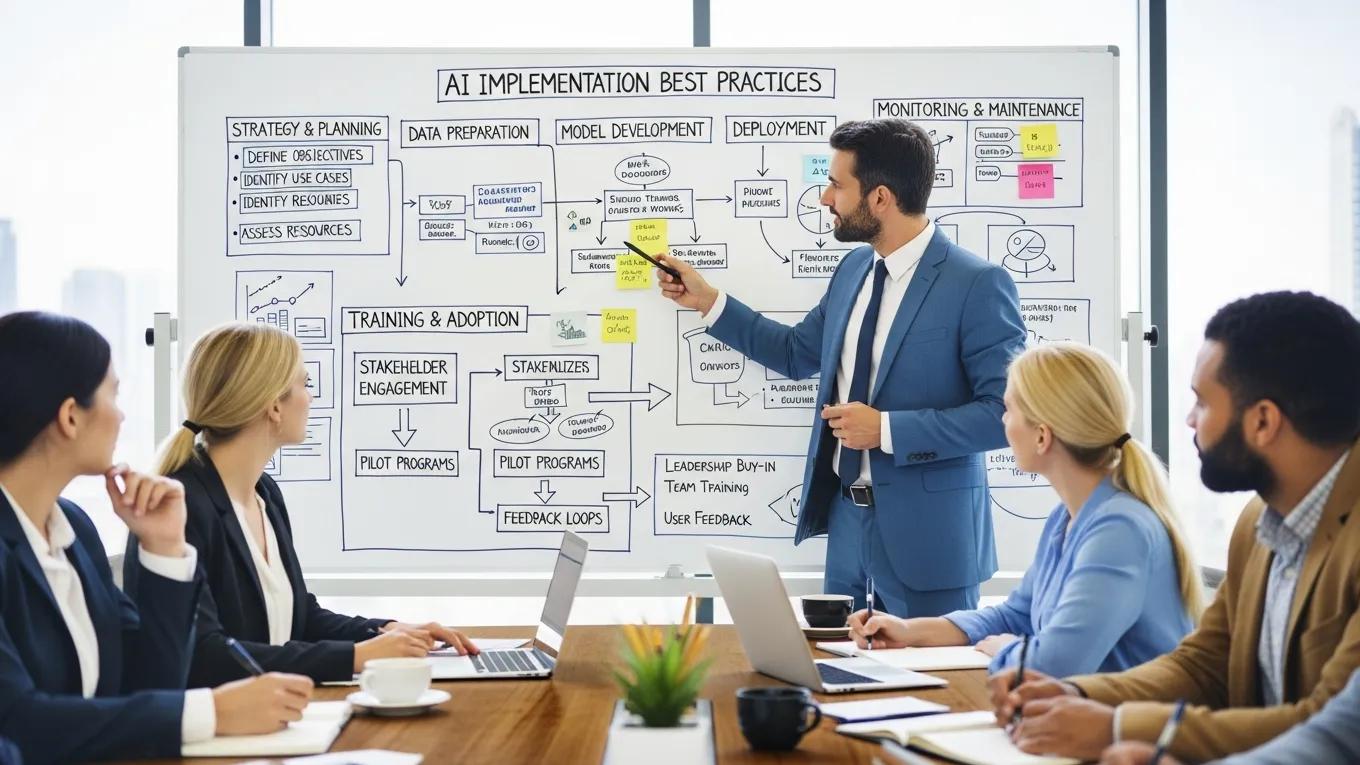
To ensure sustainable growth, organizations should adhere to several best practices during AI implementation. Key practices include:
- Training and Change Management: Providing comprehensive training for employees to facilitate smooth transitions to AI-driven processes.
- Stakeholder Engagement: Involving key stakeholders early in the process to foster buy-in and support for AI initiatives.
- Continuous Monitoring: Establishing metrics for ongoing evaluation of AI performance and impact on business outcomes.
These practices not only enhance the likelihood of successful AI adoption but also contribute to a culture of innovation within the organization.
How to Conduct a Comprehensive AI Audit: Metrics and Methodologies
Conducting a comprehensive AI audit is essential for understanding an organization’s current capabilities and readiness for AI adoption. This process involves defining clear objectives, selecting appropriate tools, and establishing metrics for success. A thorough audit helps identify strengths and weaknesses in existing systems and processes, paving the way for targeted improvements. For guidance on conducting a thorough AI business audit, visit our AI business audit process resource.
What Key Performance Indicators Identify AI Readiness Gaps?
Key performance indicators (KPIs) are critical for assessing AI readiness and identifying gaps that need to be addressed. Important KPIs include:
- Lead Conversion Rates: Measuring the effectiveness of AI in converting leads into customers.
- Customer Engagement Metrics: Evaluating how AI-driven solutions enhance customer interactions.
- Sales Growth: Tracking revenue increases attributable to AI initiatives.
These indicators provide valuable insights into the organization’s current state and inform strategic planning for AI implementation.
Which Tools and Processes Optimize AI Audit Accuracy?
To optimize the accuracy of AI audits, organizations should utilize a combination of tools and processes. Recommended tools include:
- Data Quality Assessment Tools: Ensuring the integrity and reliability of data used in AI models.
- Integration Tools: Facilitating seamless connections between existing systems and new AI solutions.
- Performance Tracking Tools: Monitoring the effectiveness of AI implementations against established KPIs.
Implementing these tools enhances the overall accuracy of the audit process and supports informed decision-making.
What Are the Phases of Building an AI Project Roadmap for Enterprises?
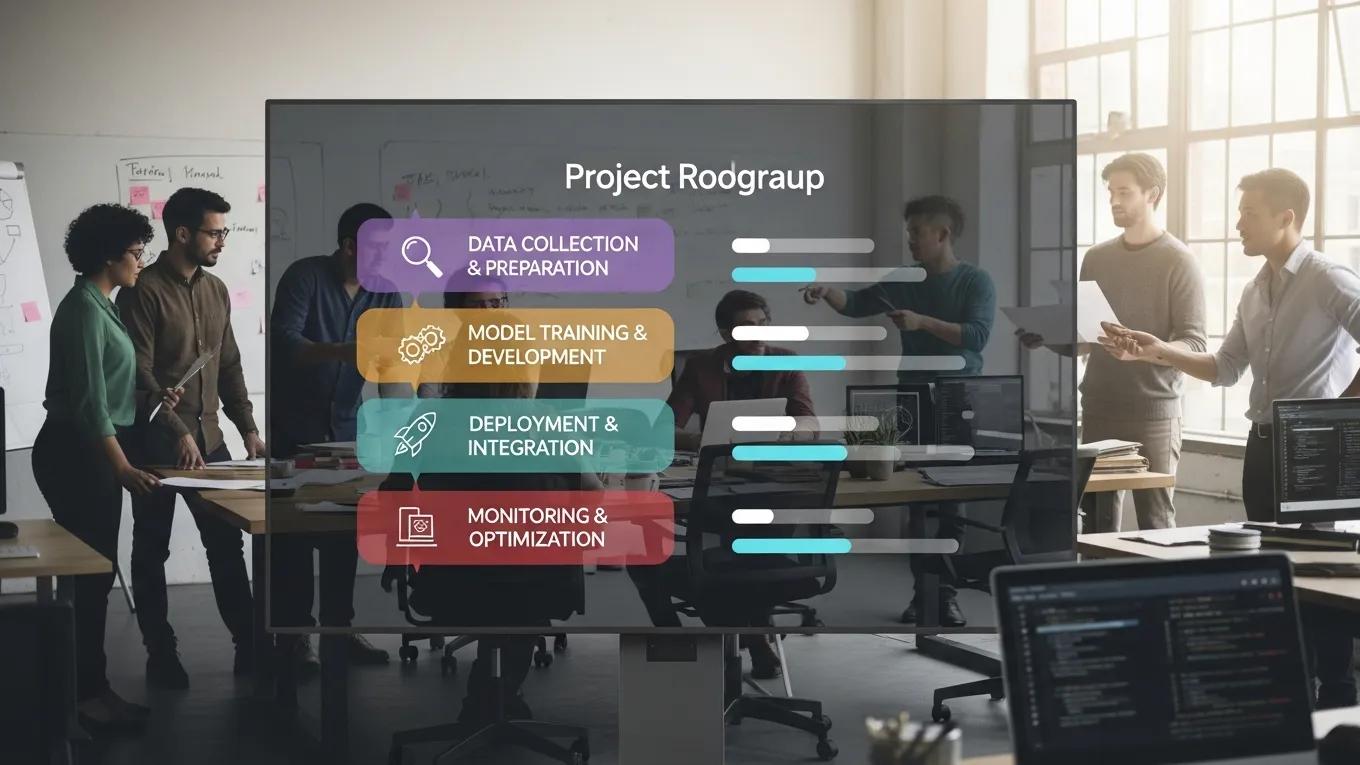
Building an AI project roadmap involves several critical phases that guide organizations from concept to execution. The roadmap should outline clear objectives, timelines, and resource allocations to ensure successful implementation.
How to Develop a Phased AI Implementation Roadmap?
Developing a phased AI implementation roadmap requires careful planning and execution. Key steps include:
- Define Phases: Clearly outline the stages of the project, from initial research to full deployment.
- Set Timelines: Establish realistic timelines for each phase to maintain momentum and accountability.
- Allocate Resources: Ensure that adequate resources, including personnel and budget, are assigned to each phase.
This structured approach helps organizations manage complexity and achieve their AI objectives effectively.
What Role Does AI Governance Play in Roadmap Success?
AI governance is crucial for ensuring that AI initiatives align with ethical standards and regulatory requirements. Establishing governance policies helps organizations mitigate risks associated with AI deployment, such as data privacy concerns and algorithmic bias. Regular audits and assessments of AI systems are essential for maintaining compliance and fostering stakeholder trust.
How to Measure AI ROI: Frameworks, Metrics, and KPIs for 2026
Measuring the ROI of AI initiatives is vital for demonstrating their value to the organization. A robust framework for evaluating AI ROI includes financial and operational metrics that quantify the impact of AI on business performance.
Which Financial and Operational Metrics Quantify AI Impact?
To effectively measure AI impact, organizations should focus on several key financial and operational metrics:
- Revenue Growth Metrics: Assessing increases in revenue directly linked to AI initiatives.
- Cost Reduction Metrics: Evaluating savings achieved through improved efficiency and automation.
- Customer Satisfaction Metrics: Measuring enhancements in customer experience resulting from AI-driven solutions.
These metrics provide a comprehensive view of AI’s contribution to organizational success.
Beyond individual metrics, a holistic view of AI’s impact reveals that cross-functional integration can significantly amplify ROI and operational efficiency.
AI ROI: Cross-Functional Synergy for Enterprise Growth
This study investigated the role of Artificial Intelligence (AI) in enhancing Return on Investment (ROI) through synergized deployment across human resources (HR), marketing, and finance functions. While previous research emphasized isolated AI advantages in individual departments, this study explored the compounded effects of cross-functional AI alignment, addressing a critical gap in enterprise AI strategy literature. Findings revealed that integrated AI adoption led to a 20-30% increase in operational efficiency alongside the 75% greater ROI improvements, underscoring the transformative potential of cross-departmental AI synergy.
The role of artificial intelligence in driving ROI through synergized HR, marketing, and financial decision-making, F Aziz, 2025
AI ROI Formula: A practical AI ROI framework uses the formula: AI ROI (%) = [(Financial Gains from AI − Total AI Investment) ÷ Total AI Investment] × 100. Track both hard savings (labor, error reduction) and soft gains (decision speed, customer satisfaction) for a complete picture.
How to Integrate Ethical and Governance Metrics into AI ROI?
Integrating ethical and governance metrics into AI ROI assessments is essential for ensuring responsible AI use. Organizations should consider:
- Ethical Considerations: Evaluating the societal impact of AI technologies and their alignment with organizational values.
- Governance Frameworks: Implementing structures that promote accountability and transparency in AI decision-making.
- Stakeholder Trust: Building trust through transparent communication about AI initiatives and their implications.
This holistic approach to measuring AI ROI not only enhances credibility but also supports long-term sustainability.
How to Optimize AI Systems for Lead Generation and Business Growth
Optimizing AI systems for lead generation is critical for driving business growth. By leveraging advanced AI techniques, organizations can enhance their marketing efforts and improve conversion rates.
What AI Techniques Enhance Lead Generation Efficiency?
Several AI techniques can significantly enhance lead generation efficiency, including:
- Automated Lead Qualification: Utilizing AI algorithms to identify and prioritize high-quality leads.
- Predictive Analytics: Analyzing historical data to forecast future customer behavior and preferences.
- Conversational AI: Implementing chatbots and virtual assistants to engage potential customers in real-time.
These techniques enable organizations to streamline their lead generation processes and maximize their marketing ROI.
How to Align AI Optimization with Enterprise Sales Objectives?
Aligning AI optimization with enterprise sales objectives requires a strategic approach. Key strategies include:
- Selecting Appropriate Tools: Choosing AI solutions that directly support sales goals and enhance team productivity.
- Training Your Team: Providing training to ensure that sales teams can effectively leverage AI tools.
- Monitoring Key Metrics: Continuously tracking performance metrics to assess the effectiveness of AI initiatives in achieving sales objectives.
This alignment ensures that AI investments contribute directly to business growth and success.
What Are the Common Challenges in Enterprise AI Deployment and How to Overcome Them?
Despite the potential benefits of AI, organizations often face challenges during deployment. Understanding these challenges and developing strategies to overcome them is essential for successful AI integration.
Which Change Management Strategies Facilitate AI Adoption?
Effective change management strategies are crucial for facilitating AI adoption within organizations. Key strategies include:
- Training and Education: Providing comprehensive training programs to equip employees with the necessary skills.
- Stakeholder Engagement: Involving key stakeholders in the planning and implementation process to foster support.
- Clear Objectives: Establishing clear goals and expectations for AI initiatives to guide efforts.
These strategies help organizations navigate the complexities of AI adoption and ensure a smoother transition.
How to Select the Right AI Vendors for Enterprise Success?
Selecting the right AI vendors is critical for ensuring successful implementation. Organizations should consider several criteria when evaluating potential vendors:
- Expertise and Experience: Assessing the vendor’s track record and expertise in AI solutions relevant to the organization’s needs.
- Integration Capabilities: Ensuring that the vendor’s solutions can seamlessly integrate with existing systems.
- Support and Training: Evaluating the level of support and training provided by the vendor to facilitate successful implementation.
By carefully selecting AI vendors, organizations can enhance their chances of successful AI deployment and maximize their investment.
This table illustrates the key metrics organizations should focus on when measuring the impact of AI initiatives, highlighting the importance of both financial and operational outcomes.
To further enhance your understanding of AI implementation and its potential benefits, consider exploring resources from Innovait AI. They offer valuable insights and solutions for businesses looking to leverage AI for growth.
Frequently Asked Questions
Ready to move from strategy to results?
InnovAIt AI’s certified AI implementation specialists bring hands-on experience across 50+ enterprise deployments, helping organizations build AI roadmaps that deliver measurable, auditable ROI. Our enterprise team will build your custom AI implementation roadmap — starting with a free AI business audit at audit.innovaitai.com. Receive your personalized roadmap within 48 hours.