
Agencies and studios are adopting artificial intelligence to improve operational efficiency and lead generation. This article examines AI solutions tailored to agency contexts and explains how they optimize workflow automation, strengthen client engagement, and support business growth. You will find practical guidance on strategies, tools, and implementation best practices. As agencies confront workflow and lead-generation challenges, AI provides process streamlining and productivity gains. Topics include workflow automation, operational advantages of AI, and leading AI marketing tools.
Optimizing Workflow Automation and Lead Generation
AI systems are instrumental in automating repetitive work and improving lead generation for agencies and studios. By applying AI, teams can reallocate effort toward higher-value activities. This section outlines specific strategies and tools agencies can adopt to improve efficiency and outcomes.
Strategies for Workflow Automation

To optimize workflow automation, agencies must set clear objectives and design adaptable processes. Key strategies include:
- Define Specific Goals : Establishing clear objectives for automation helps in aligning technology with business needs.
- Design Scalable Workflows : Creating workflows that can adapt to growth ensures that agencies can handle increased demand without compromising quality.
- Implement Phased Workflows : Gradually rolling out automation allows teams to adjust and refine processes based on real-time feedback.
These strategies increase operational efficiency and establish a culture of continuous improvement within the agency.
Tools for Lead Generation
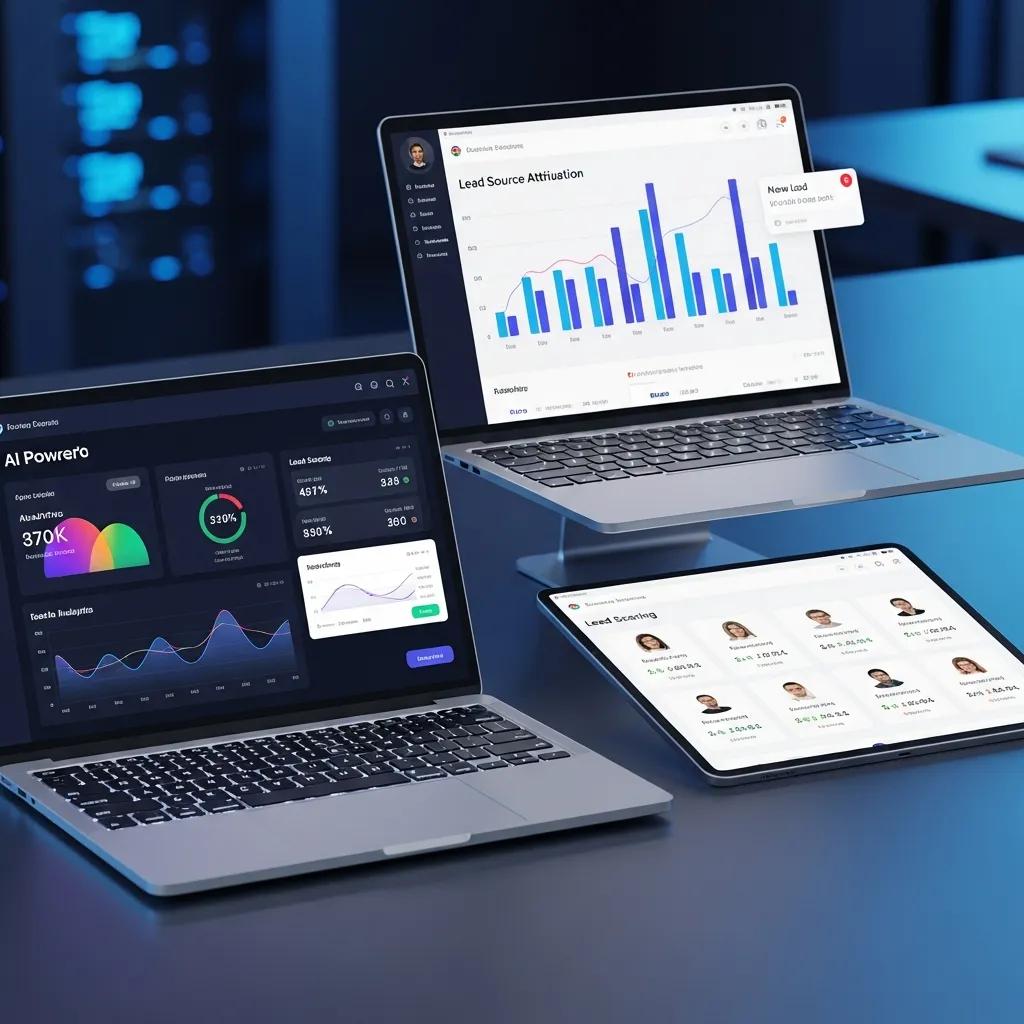
Agencies can deploy AI-driven tools to improve lead generation. Effective options include:
- AI-Powered Lead Scoring Tools : These tools analyze data to prioritize leads based on their likelihood to convert, enabling targeted marketing efforts.
- Automated Engagement Systems : Implementing chatbots and automated email campaigns can significantly improve client engagement and response times.
- Data Analysis Tools : Leveraging AI for data analysis allows agencies to identify trends and insights that inform marketing strategies.
Integrating these solutions streamlines lead workflows and improves conversion performance.
Best Practices for Implementation
Successful AI adoption requires methodical planning and disciplined execution. Best practices include:
- Continuous Monitoring and Optimization : Regularly assessing the performance of AI systems ensures they remain effective and aligned with business goals.
- Integration with Existing Systems : Ensuring that new AI tools work seamlessly with current workflows minimizes disruption and enhances user adoption.
- Training and Support for Teams : Providing adequate training and resources helps teams adapt to new technologies and maximize their potential.
Adhering to these practices is critical to realize measurable improvements in agency performance.
Measuring Success
Agencies should measure discrete metrics to evaluate the impact of AI implementations. Important metrics include:
- Operational Efficiency Metrics : Measuring time saved and productivity gains can highlight the impact of automation.
- Lead Quality Assessment : Analyzing the quality of leads generated through AI tools helps in refining targeting strategies.
- Overall ROI : Assessing the return on investment from AI initiatives provides insights into their financial impact.
Prioritizing these KPIs ensures AI investments deliver measurable business value.
How Does AI Enhance Agency Workflow Automation?
AI reduces manual intervention and optimizes processes through automation, advanced analytics, and predictive techniques. The following tools and methods demonstrate how agencies can leverage AI effectively.
Tools and Techniques
Agencies employ several technical approaches to automate workflows. Principal tools include:
- Autonomous AI Agents : These agents can perform tasks without human intervention, streamlining operations and reducing errors.
- Natural Language Processing (NLP) : NLP technologies improve client interactions by enabling more intuitive communication through chatbots and virtual assistants.
- Machine Learning Algorithms : These algorithms analyze data patterns to optimize workflows and predict outcomes, allowing for proactive adjustments.
Adopting these tools materially increases operational efficiency and reduces error rates.
Measurable Benefits
AI-driven workflow automation delivers measurable outcomes, including:
- Enhanced Operational Efficiency : Automation reduces the time spent on repetitive tasks, allowing teams to focus on strategic initiatives.
- Increased Productivity : By streamlining processes, agencies can handle more projects simultaneously without sacrificing quality.
- Cost Savings : AI-driven insights can lead to more informed decision-making, ultimately reducing operational costs.
Collectively, these outcomes demonstrate the ROI potential of integrating AI into agency workflows.
Implementation Strategies
Effective AI deployment requires deliberate strategy. Consider these approaches:
- Define Clear Objectives : Establishing specific goals for automation helps in aligning technology with business needs.
- Ensure Scalability : Designing workflows that can adapt to growth ensures that agencies can handle increased demand without compromising quality.
- Adopt Iterative Development : Implementing AI in phases allows teams to adjust and refine processes based on real-time feedback.
These approaches support a controlled, low-risk transition to AI-enhanced operations.
Key Features of AI-Powered Agency Automation Tools
AI automation platforms include core capabilities designed to increase throughput and reduce manual effort. These features include:
- Autonomous AI Agents : Capable of executing tasks independently, these agents reduce the need for manual intervention.
- Cross-Platform Automation : Seamless integration with existing tools ensures that agencies can leverage their current technology stack.
- Continuous Learning and Adaptation : AI systems that learn from data over time can improve their performance and adapt to changing business needs.
These capabilities are foundational for agencies seeking scalable operational efficiency.
Measurable Benefits: Efficiency and ROI Improvements
Integrating AI across operations yields quantifiable efficiency gains and improved ROI. Key benefits include:
- Operational Efficiency Increases : Automation streamlines processes, reducing the time and resources required for task completion.
- Cost Savings from AI-Driven Insights : AI tools provide valuable data analysis that can inform more effective marketing strategies, leading to reduced costs.
- Improved Decision-Making : Enhanced data analysis capabilities allow agencies to make more informed decisions, ultimately driving better business outcomes.
These results make a compelling case for adopting AI in agency operations.
What Are the Leading AI Marketing Tools for Agencies?
Several categories of AI marketing tools are particularly effective for agencies. These tools include:
- Lead Generation Platforms : Tools that utilize AI to identify and engage potential clients, improving lead conversion rates.
- Workflow Automation Tools : Solutions that streamline internal processes, allowing agencies to operate more efficiently.
- Client Engagement Tools : AI-driven platforms that enhance communication and interaction with clients, fostering stronger relationships.
These solutions equip agencies to compete more effectively and scale client acquisition.
Integrating AI Marketing Platforms into Agency Operations
Integrating AI marketing platforms requires a strategic plan. Key steps include:
- Assess Current Processes : Identifying inefficiencies in existing workflows helps in selecting the right AI tools for integration.
- Select Appropriate Tools : Choosing AI platforms that align with agency goals ensures a smoother transition and better outcomes.
- Develop a Clear Implementation Roadmap : A well-defined plan for integration helps in managing expectations and minimizing disruptions.
Following this framework enables predictable integration with minimal operational disruption.
Case Studies Demonstrating Increased Lead Conversion Rates
Multiple case studies demonstrate the impact of AI on lead conversion. Agencies that implemented AI-driven lead scoring reported improved conversion rates through more targeted campaigns. Automated engagement systems have enhanced client interactions, contributing to higher satisfaction and retention. These studies provide practical evidence of AI effectiveness in real-world agency workflows.
Which Creative AI Software Solutions Empower Studios?
Creative studios are adopting AI tools to streamline production and accelerate innovation. These solutions reduce production time and support creative exploration. Key benefits include:
Academic research further examines AI’s impact on creative industries, noting efficiency gains and emerging considerations for digital media production.
AI in Creative Industries & Digital Media Production
This research analyzes AI’s transformative effects on film, television, and game production. It identifies AI’s dual role in accelerating workflows and democratizing creative capabilities while also raising ethical concerns and risks of creative homogenization. Case studies demonstrate faster production cycles, novel techniques, and expanded creative possibilities, yet they also raise questions about originality, authenticity, and the role of human creators.
AI and the future of creative development: redefining digital media production, S Hemraj, 2025
- Accelerated Content Production : AI tools can generate content quickly, allowing studios to meet tight deadlines.
- Enhanced Creativity and Consistency : AI-driven insights can inspire new ideas while maintaining brand consistency.
- Improved SEO Performance : AI tools can optimize content for search engines, increasing visibility and engagement.
These capabilities enable studios to deliver higher-quality content at reduced cycle times.
Capabilities of AI-Driven Creative Tools for Content Production
AI creative platforms provide capabilities that speed production and improve targeting. These capabilities include:
- Automated Content Generation : AI can create written content, graphics, and videos, significantly reducing production time.
- Data-Driven Insights : Analyzing audience data allows studios to tailor content to specific demographics, improving engagement.
- Collaboration Features : Many AI tools facilitate collaboration among team members, streamlining the creative process.
Together, these functions make AI central to contemporary content production strategies.
Impact on Studio Productivity and Innovation
AI integration materially increases studio productivity and innovation. By automating routine tasks, studios can reallocate effort to creative work, resulting in:
- Enhanced Productivity : Teams can accomplish more in less time, allowing for greater output and creativity.
- Fostering Innovation : AI tools provide insights that inspire new ideas and approaches, driving creative breakthroughs.
- Reducing Operational Silos : AI integration encourages collaboration across departments, enhancing overall studio performance.
These effects evidence AI’s transformative potential within creative environments.
How Do Lead Generation AI Solutions Drive Client Acquisition?
Lead-generation AI applies advanced algorithms to identify and engage prospects with greater precision. Key mechanisms include:
- Predictive Lead Scoring : AI analyzes data to prioritize leads based on their likelihood to convert, enabling targeted outreach.
- Automated Engagement : AI-driven systems facilitate timely communication with leads, enhancing the overall client experience.
- Data Analysis for Personalization : AI tools analyze client data to create personalized marketing strategies, improving engagement and conversion rates.
Collectively, these mechanisms improve client acquisition efficiency and conversion outcomes.
Scalable AI-Driven Lead Scoring and Qualification Methods
Agencies can deploy scalable AI lead-scoring and qualification methods to optimize sales processes. Key methods include:
Further research underscores the efficacy of advanced machine learning techniques in refining lead scoring and qualification for improved sales efficiency.
AI Lead Scoring for Enhanced Sales Efficiency
This research paper explores the application of advanced machine learning techniques, specifically Random Forest and Logistic Regression, in enhancing sales efficiency through AI-powered lead scoring and qualification. The study addresses the challenge faced by sales teams in prioritizing leads and improving conversion rates by utilizing predictive algorithms to identify high-potential prospects.
Enhancing sales efficiency: leveraging random forest and logistic regression for AI-powered lead scoring and qualification, A Sharma, 2020
- Predictive Lead Scoring : This method assesses the probability of lead conversion based on historical data, allowing for more focused marketing efforts.
- Automated Qualification : AI systems can automatically qualify leads, reducing the time spent on low-probability prospects.
- Continuous Learning : AI algorithms improve their accuracy over time, ensuring that lead scoring remains effective as market conditions change.
These approaches streamline qualification workflows and enhance overall sales effectiveness.
Optimizing Sales Funnels with AI-Powered Platforms
AI platforms enhance funnel optimization through targeted scoring, personalization, and automated engagement. Key strategies include:
- Utilizing Predictive Lead Scoring : This approach helps prioritize leads based on their likelihood to convert, ensuring that sales efforts are focused on the most promising prospects.
- Creating Personalized Marketing Campaigns : AI tools can analyze client data to tailor marketing messages, increasing engagement and conversion rates.
- Implementing Automated Engagement Strategies : Automation can facilitate timely follow-ups and interactions, enhancing the client experience throughout the sales funnel.
These tactics optimize sales operations and typically raise conversion rates.
What Strategies Optimize AI Systems for Agency Growth?
To scale AI for agency growth, implement these strategies:
- Implementing Agent-Based Workflows : Utilizing AI agents to manage tasks can enhance efficiency and reduce manual workload.
- Utilizing Predictive Analytics : AI can analyze data trends to inform proactive adjustments in marketing strategies, ensuring agencies stay ahead of the competition.
- Monitoring Performance for Continuous Optimization : Regularly assessing AI system performance allows agencies to make necessary adjustments and improvements.
These measures are fundamental to capturing the full growth potential of AI systems.
Implementing AI Optimization Processes for Campaign Success
Delivering campaign success requires disciplined AI optimization. Key steps include:
- Defining Clear Objectives for AI Optimization : Establishing specific goals helps align AI initiatives with overall business objectives.
- Ensuring Integration with Existing Workflows : Seamless integration minimizes disruption and enhances user adoption of AI tools.
- Measuring Success Using KPIs : Tracking key performance indicators allows agencies to evaluate the effectiveness of AI initiatives and make data-driven decisions.
Applying this process ensures optimization efforts align with campaign objectives and measurable KPIs.
Best Practices for AI Client Management and Integration
Effective client integration depends on several best practices. These include:
- Defining Clear Objectives for Client Management : Establishing specific goals helps ensure that AI initiatives align with client needs.
- Providing Ongoing Training and Support : Equipping teams with the necessary skills and knowledge enhances the effectiveness of AI tools.
- Implementing Feedback Loops for Continuous Improvement : Regularly gathering feedback from clients and team members allows for ongoing refinement of AI systems.
Adherence to these practices ensures reliable deployment and client-aligned outcomes.
Frequently Asked Questions
What are the potential challenges of implementing AI systems in agencies?
Common challenges include resistance to change from staff, significant upfront investment, and integration friction with legacy systems. Data quality and relevance are frequent obstacles to performant AI. Targeted training and sustained support are required to mitigate these risks and enable a smooth transition to AI-enhanced operations.
How can agencies ensure data privacy when using AI tools?
Agencies should institute robust data governance: anonymize sensitive information, secure explicit client consent, and comply with regulations such as GDPR. Regular audits of data handling and strong encryption further protect client data. Select vendors that demonstrate transparent security controls and compliance.
What role does training play in the successful adoption of AI systems?
Comprehensive training is essential for adoption. Programs should cover technical operation of tools and interpreting AI outputs for decision-making. Ongoing support and refresher sessions maintain proficiency and foster a culture of continuous learning, improving integration into daily workflows.
How can agencies measure the effectiveness of their AI implementations?
Measure AI effectiveness through KPIs such as operational efficiency, lead conversion rates, and return on investment. Regularly reviewing these metrics, combined with feedback from teams and clients, identifies optimization opportunities and validates tool performance against objectives.
What are some emerging trends in AI for agencies and studios?
Current trends include wider adoption of natural language processing for client interactions, expanded use of predictive analytics for targeted marketing, and integration of AI with technologies like blockchain to enhance data security. There is also a stronger focus on ethical AI practices to ensure transparency and fairness.
How can agencies foster a culture of innovation with AI?
Agencies foster innovation by encouraging experimentation, enabling cross-functional collaboration, and investing in training. Allocate resources for controlled pilot projects and establish incentives for successful AI initiatives to scale high-impact ideas across the organisation.
Meet Jane Doe: AI Technology Consultant for Agencies & Studios
Jane Doe, AI Technology Consultant
Jane Doe is a seasoned AI technology consultant with over 15 years of experience in digital transformation for marketing agencies and creative studios. She specializes in integrating AI-driven solutions to optimize workflows, enhance client engagement, and drive business growth. Jane holds a Master’s degree in Artificial Intelligence from Tech University and has contributed to numerous industry publications on AI applications in marketing and creative industries.
Conclusion
Integrating AI systems into agency operations delivers measurable benefits: improved efficiency, enhanced lead generation, and streamlined workflows. By applying the strategies and tools discussed, agencies can optimize processes and support sustainable growth. To assess AI’s potential for your agency, initiate a structured pilot and review the supporting resources referenced in this guide.