

AI-enabled Local AEO (Algorithmic Engine Optimization) and GEO (Geographic Optimization) are increasingly adopted to improve local search visibility and lead generation. This article articulates the mechanisms, tools, and expected outcomes of these approaches. It explains how AI analyzes search behavior, refines geo-targeting, automates workflows, and delivers measurable performance improvements that businesses can monitor and act upon.
The academic literature corroborates AI’s role as a strategic enabler for organisations seeking to sustain competitiveness in digital markets, demonstrating a strong reliance on external expertise and research to validate these advancements.
AI-Powered SEO & Digital Marketing for Market Competitiveness
This study systematically investigates how artificial intelligence (AI) enhances market competitiveness through its application in search engine optimization (SEO) and digital marketing strategies within e-commerce environments. In an increasingly saturated and algorithm-driven digital marketplace, firms are under continuous pressure to improve visibility, personalization, and customer engagement.
Enhancing market competitiveness through AI-powered SEO and digital marketing strategies in e-commerce, R Hasan, 2025
Local AEO comprises optimisation techniques targeted at improving a business’s placement in local search results. Applied AI enables analysis of large-scale user data to reveal local search patterns and preferences, which informs targeted content and offer strategies. The result is improved local visibility, stronger engagement signals, and higher conversion potential.
Local AEO focuses on optimising website content, local directory listings, and social profiles to secure prominent placement in local searches. Effective implementation typically drives greater foot traffic, elevated online engagement, and stronger brand recognition within defined service areas, supporting customer acquisition and retention objectives.
| AI Technology | Functionality | Impact |
|---|---|---|
| Machine Learning | Analyzes user data to predict behavior | Improves targeting accuracy |
| Natural Language Processing | Enhances content relevance | Increases user engagement |
| Predictive Analytics | Forecasts trends based on data | Optimizes marketing strategies |
AI contributes to local ranking improvements by synthesising interaction data and search trends to identify engagement drivers. Core technologies include machine learning for behavioural prediction, natural language processing for semantic content analysis, and predictive analytics for trend forecasting. Together, these capabilities enable more precise targeting and continuous strategy refinement.
Adopting these AI capabilities within local AEO frameworks enables organisations to adapt to shifting consumer behaviour and maintain competitive ranking positions.
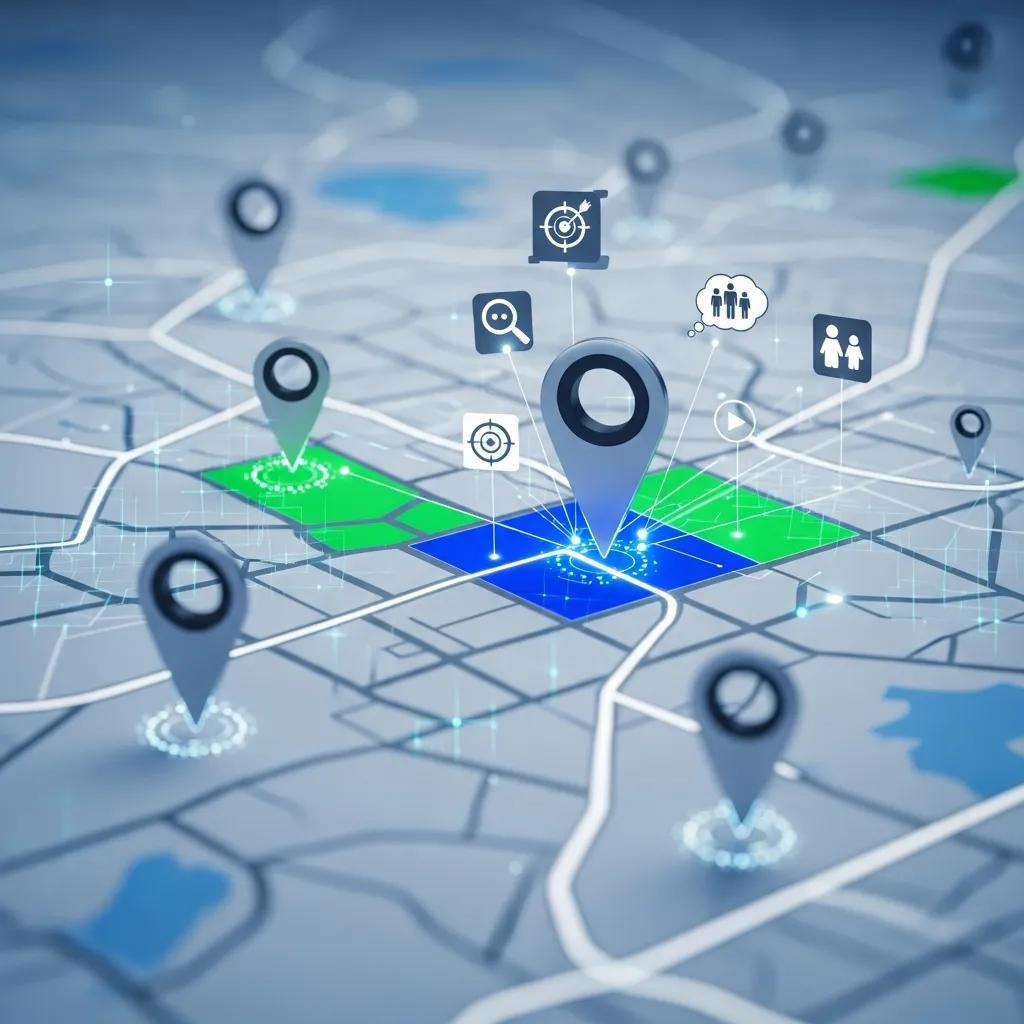
Geo-targeting concentrates marketing resources on defined geographic segments to improve relevance and conversion efficiency. The following tactics are commonly deployed to maximise local reach.
Applied correctly, these tactics increase search prominence within target areas and produce higher conversion rates by aligning offers with local intent.
Customised geo optimisation adapts campaigns to demographic and location-specific variables. The following methods are central to that approach.
When implemented, these targeted methods improve marketing efficiency and contribute to measurable ROI improvements.
Recent research further indicates that AI-enabled geotargeting increases ad relevance and marketing efficacy by delivering geographically tailored messages to consumers.
AI-Powered Geotargeting for Enhanced Marketing Efficacy
Marketing strategists for e-commerce platforms in Abha City, Saudi Arabia, have shifted their focus towards the use of social media influencers and AI-powered geotargeted marketing. This research seeks to analyze the effect of such strategies on consumer behavior, trust in brands, and the efficacy of marketing. To add, 75% of consumers reported the AI-driven, geotargeted advertisements as being more relevant and tailored to their needs.
Role of Social Media Influencers and AI-Powered Geotargeted Marketing in Brand Promotion in the E-Commerce Industry in Abha City of KSA, 2025
Combining AI-driven geo-targeting with local SEO automation standardises and accelerates routine optimisation tasks. Automation supports content updates, listing management, and continuous performance tracking to maintain relevance across local search channels.
This integrated approach reduces manual workload and enables rapid tactical adjustments in response to performance signals.

A range of AI tools and techniques can automate local SEO and geo optimisation workflows. Representative categories include the following.
Appropriate tool selection reduces manual effort while improving the precision and scalability of local search initiatives.
Automation also applies to content production, where AI assists with generation and SEO optimisation at scale.
AI’s Role in Enhancing SEO Content Generation
the role of AI in enhancing SEO through automating the generation of website content, in par
Google, SEO and helpful content: How artificial intelligence can be helpful for e-commerce websites, 2024
Several platforms support local search optimisation through AI capabilities. Examples referenced here include DominAit™, GenerAit™, and structured AEO processes that standardise algorithmic visibility improvements.
These solutions supply the operational tools required to implement AI-driven local AEO and GEO programmes effectively.
AI automation delivers continuous insights and analytics that drive measurable improvements in local search KPIs. Core focus areas include content relevance, structured data adoption, and persistent performance monitoring.
When applied systematically, automation improves execution speed and supports data-driven optimisation cycles.
Rigorous measurement is essential to validate local AEO and GEO outcomes. Organisations should adopt standard methods to collect and interpret performance data.
Consistent use of these measurement approaches enables iterative optimisation and clearer assessment of strategy effectiveness.
Effective evaluation of AI-driven local SEO relies on a concise KPI set that reflects visibility and commercial impact.
Regular KPI tracking supports evidence-based decisions and prioritisation of optimisation activities.
Analytics platforms are central to quantifying ROI from geo optimisation and lead-generation programmes. Key considerations include metric selection, advanced analysis tools, and financial evaluation of campaign outcomes.
These practices enable organisations to allocate budget effectively and optimise campaigns for measurable returns.
Empirical case studies document the benefits of AI in local AEO and GEO optimisation through documented performance improvements and client outcomes, underscoring the importance of academic and industry research in validating these technologies.
These case studies provide practical evidence and procedural insights for organisations planning similar initiatives.
Large organisations report meaningful gains in local visibility after deploying AI solutions, with improvements observable across client engagement and conversion indicators.
Enterprise examples serve as blueprints for scaling AI-driven local search programmes and extracting quantifiable value.
AI-driven geo-targeting campaigns consistently report measurable improvements across lead volume, conversion rates, and return on investment, demonstrating the commercial value of targeted local campaigns.
These quantified outcomes validate AI investment and guide ongoing optimisation priorities.
AI enhances local AEO and GEO by enabling advanced data analysis, increasing targeting precision, and supporting personalised campaigns. Machine learning and predictive analytics surface actionable insights on user behaviour, enabling content and campaign adjustments that increase visibility, engagement, and conversion while automating repetitive tasks.
Success is measured via KPIs such as organic traffic, conversion rates, and engagement metrics. Analytics platforms (for example, Google Analytics) provide the behavioural and source data necessary for assessment. Periodic competitor benchmarking further contextualises performance against industry standards.
High-quality, locally relevant content is foundational to local AEO and GEO. Localised content improves discoverability and relevance, strengthens user engagement, and supports higher rankings when combined with structured data and targeted keywords.
Certain AI tools streamline local SEO workflows. Examples cited include DominAit™ and GenerAit™, alongside schema markup utilities and AI-enabled CMS platforms that automate updates and content optimisation—reducing manual workload while maintaining consistency.
Geo-targeting increases engagement by delivering messages and offers aligned with local needs and contexts. Tactics such as geo-fencing and localized content ensure relevance and timeliness, which improves interaction rates and supports increased footfall to physical locations.
Key challenges include data integration across systems, the learning curve for new tools, and maintaining content relevancy while automating processes. Additionally, organisations must monitor algorithm changes and adapt practices to preserve long-term effectiveness.
Yes. Small businesses can leverage AI to analyse customer data, optimise online presence, and execute targeted campaigns at scale. These capabilities enable smaller organisations to compete effectively for local visibility and to drive increased foot traffic and digital conversions.
Effective AI strategies for local rankings emphasise content relevance, structured data, and engagement optimisation. These priorities align technical and content efforts to improve discoverability and user signals.
Deploying these strategies produces measurable improvements in local search performance and visibility.
Geo optimisation increases lead-generation efficiency by concentrating resources on high-value geographic segments, aligning messaging with local intent, and leveraging behaviour data to refine audience selection.
These practices reduce acquisition waste and improve conversion metrics for location-based campaigns.
AI-driven local AEO and GEO optimisation delivers a structured, measurable approach to improving local visibility and customer engagement. By applying advanced analytics, targeted geo strategies, and automation, organisations can increase conversion potential and strengthen local market position. Contact our team to assess how these solutions can be applied to your local search objectives and to establish clear performance metrics for growth.
To explore how AI-driven local AEO and GEO optimization can enhance your business’s local search performance and lead generation, reach out to our experts. We provide tailored assessments and help establish measurable goals to drive your local market success.
Get started with our local AEO and GEO services to ensure your business appears in AI-generated local search answers.