
Agent-based workflows and AI agent orchestration are core capabilities for organisations seeking measurable improvements in operational performance. These systems deploy autonomous agents to automate complex processes, reduce manual intervention, and support faster, evidence-based decisions. This article examines the technical mechanisms, business benefits, and practical applications of agent-based workflows, with particular attention to their role in improving lead generation. Readers will receive clear definitions, an explanation of AI’s role in automation, and a practical view of implementation considerations relevant to enterprise environments.
Agent-based workflows consist of autonomous software agents that execute tasks and make decisions using rules and real-time data. They remove repetitive manual steps, lower error rates, and accelerate throughput. AI agent orchestration coordinates multiple agents, optimising task allocation and resource use to reduce latency and increase end-to-end efficiency. The combined approach enables organisations to respond to operational changes with data-driven adjustments and improved process reliability.
Case studies demonstrate how AI agents manage complex customer interactions and adapt to dynamic operational conditions.
AI Agents in Programmatic Orchestration: Real-World Examples
During its Dreamforce 2024 event, Salesforce presented an artificial intelligence (AI) agent that it built in partnership with high-end clothing retailer Saks Fifth Avenue. While conversing with a customer, the AI agent changed a sweater order to a different size. When informed the product would not arrive on time, the AI agent switched the item from delivery to same-day in-store pickup at a location the customer agreed was convenient.
Large Action Models for Programmatic Orchestration, G Piccoli, 2025
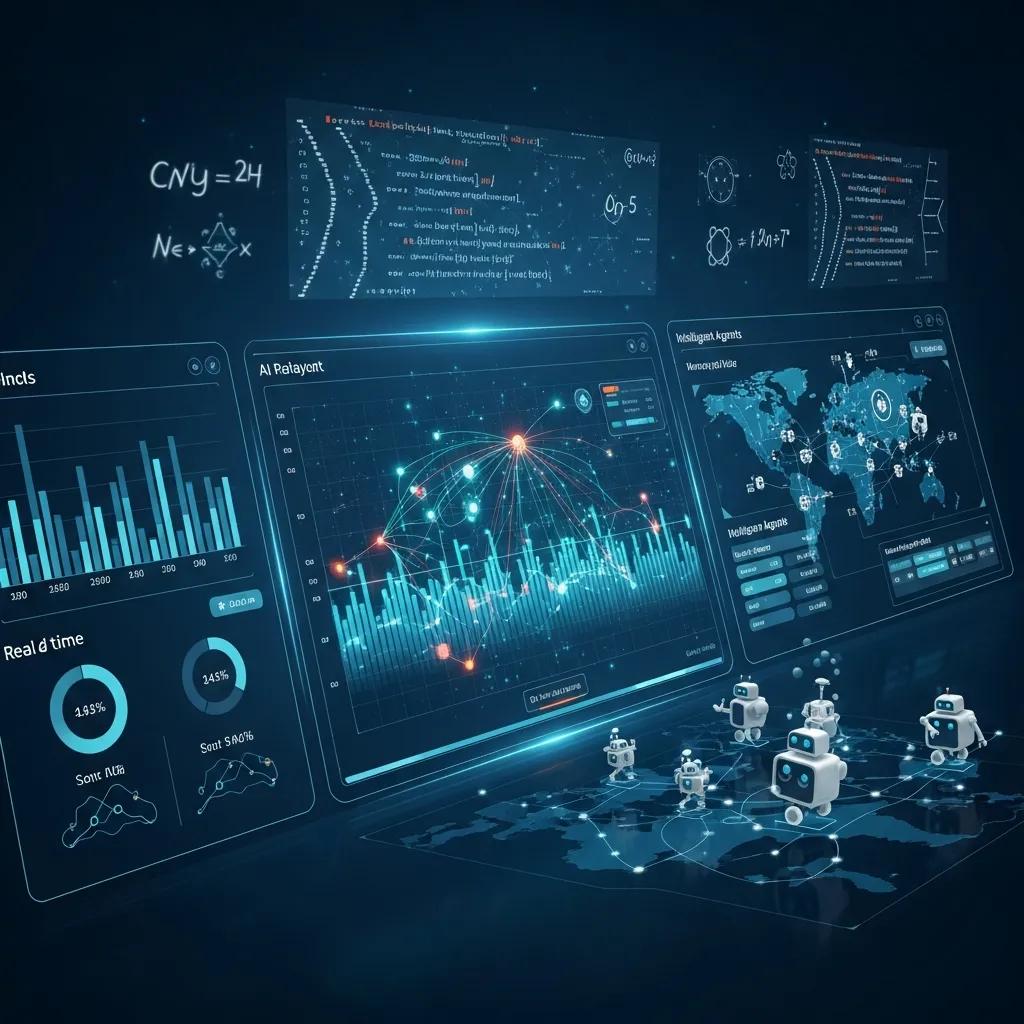
AI workflow automation uses machine intelligence to streamline and optimise business processes end to end. Intelligent agent management covers the deployment, coordination and lifecycle control of agents assigned to discrete tasks. These agents analyse data, learn from interactions, and adjust behaviour to improve outcomes. Together, automation and agent management reduce operational cost, increase process consistency, and free teams to prioritise strategic initiatives.
This capability is most apparent in enterprise deployments where multi-agent systems reduce labour-intensive work and yield substantial cost savings.
Multi-Agent System Orchestration for Enterprise Automation
Insurers are deploying networks of specialized AI agents to automate the labor-intensive processes of claims processing, underwriting, and customer service. These agents can handle routine inquiries, verify policy details, and even initiate payouts, significantly reducing operational costs and improving response times. Similarly, [16] presents a multi-agent automation framework for property claims underwriting, demonstrating how coordinated AI agents can streamline complex, document-heavy workflows.
The Orchestration of Multi-Agent Systems: Architectures, Protocols, and
Enterprise Adoption, A Adimulam, 2026
Multi-agent systems comprise interacting agents that collaborate to achieve shared objectives. Designed for coordinated decision-making, they enable automated orchestration by distributing tasks across specialised agents and managing inter-agent communication. This collaborative architecture improves problem-solving capacity and supports advanced decision workflows, making it well suited to volatile environments that require rapid adaptation.
Research increasingly investigates how multi-agent architectures, combined with large language models, can deliver autonomous, adaptive orchestration.
Autonomous AI Workflow Orchestration with Multi-Agent LLMs
Workflow orchestration plays a pivotal role in modern computing systems, automating complex, multistep tasks across distributed services and agents. Traditional orchestration frameworks are typically rule-based, brittle, and require explicit programming for every scenario. With the advancement of Large Language Models (LLMs) and multi-agent systems, there emerges an opportunity to develop autonomous, adaptive workflow orchestration mechanisms capable of reasoning, collaboration, and dynamic task allocation.
Multi-Agent LLMs for Autonomous Workflow Orchestration, 2025
InnovAit AI applies its proprietary innovait-agent-design methodology to structure agent interactions for operational effectiveness. The methodology defines modular workflows, role-specific agents, and scalable integration patterns that reduce friction between components. By focusing on clear interface definitions and adaptive orchestration, InnovAit facilitates predictable, reproducible outcomes across use cases while preserving flexibility for business-specific requirements.
The innovait-agent-design methodology includes core features engineered to improve workflow performance and maintainability:
These capabilities collectively improve throughput, reduce operational risk, and simplify ongoing maintenance for agent-based solutions.
Implementing AI process orchestration requires a structured approach that aligns technology with business objectives and technical constraints:
Following this sequence ensures implementations deliver measurable operational improvements and remain adaptable as conditions change.
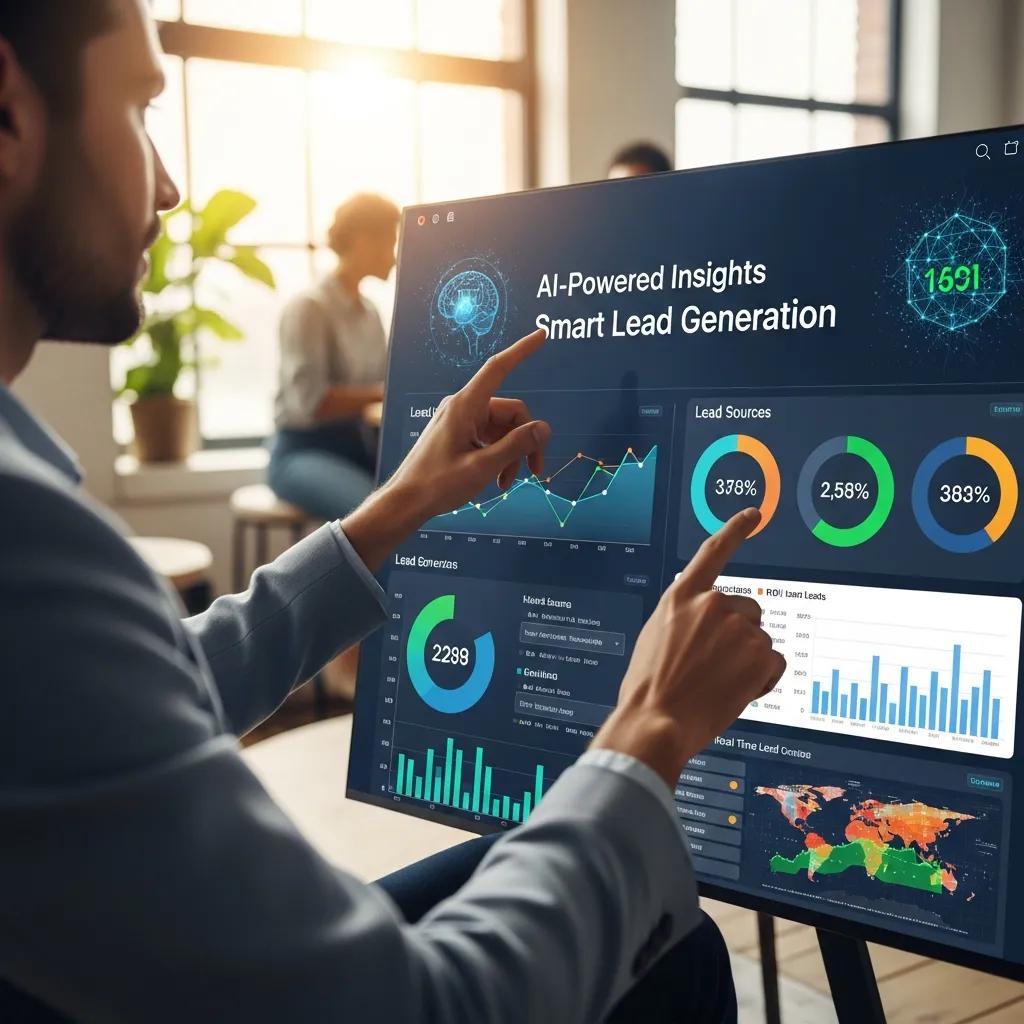
AI agent orchestration applied to lead generation delivers targeted operational benefits that support revenue growth and efficiency.
These outcomes demonstrate how agent orchestration can materially improve lead pipeline performance when integrated with existing sales and marketing processes.
Organisations can improve lead generation efficiency by adopting targeted AI tools, automating engagement workflows, and refining qualification criteria.
When applied systematically, these strategies reduce cycle time and allow commercial teams to convert a higher proportion of qualified leads.
Evaluating ROI and growth from automated agent workflows requires selecting metrics that reflect commercial and operational objectives.
Concentrating on these KPIs enables organisations to quantify value, prioritise optimisation efforts, and report business impact to stakeholders.
Successful AI workflow automation is built on clear objectives, scalable designs, and iterative delivery.
Applying these practices reduces implementation risk and accelerates time to measurable benefit.
Organisations typically face data, alignment, and integration challenges when managing AI agents; addressing them proactively is essential.
Proactive data governance, aligned objectives, and staged integration plans materially reduce deployment friction and improve agent performance. Agent Memory Architecture.
InnovAit AI differentiates through a structured, methodology-driven approach and proprietary techniques for agent collaboration. The innovait-agent-design framework emphasises modularity and adaptability, enabling tailored solutions for lead generation and operational optimisation. This focus positions InnovAit to deliver targeted outcomes for enterprise clients seeking pragmatic AI adoption.
InnovAit AI offers strategic consulting in AI search optimisation, lead-generation automation, and systems architecture to close content and service gaps. The consultancy aligns AI investments with commercial objectives and designs implementation roadmaps that reduce risk and accelerate value realisation.
To increase visibility for AI agent orchestration, organisations should implement semantic SEO and structured data tactics that clarify content intent and entity relationships for search engines.
Combined, these measures improve discoverability and increase qualified traffic to pages that describe orchestration capabilities.
Implementing Schema.org markup is a practical step to improve search visibility and content interpretation by platforms and crawlers.
Following these steps helps organisations ensure structured data implementations deliver the intended visibility and contextual benefits.
Structuring content with semantic triples and explicit entity relationships increases information relevance and improves search understanding. Highlighting entities and their relationships clarifies meaning for both users and algorithms; for example, framing sentences as “AI agent orchestration [entity] enhances [relationship] business efficiency [entity]” makes conceptual links explicit and supports better indexing and user comprehension.
AI agent orchestration delivers value across finance, healthcare, retail and logistics by automating domain-specific workflows. Finance benefits from fraud detection and customer service automation; healthcare from patient management and data analytics; retail from personalised customer interactions and inventory control; and logistics from optimised supply-chain operations. Across these sectors, automation reduces cost and improves service levels.
AI agents improve through machine learning techniques that ingest operational data and feedback. Common approaches include supervised learning on labelled datasets and reinforcement learning that optimises behaviour via reward signals. Continuous training and validation enable agents to refine decisions, improve task execution, and adapt to evolving conditions.
Security considerations include data privacy, access control, and vulnerability management. Organisations should encrypt sensitive data, enforce strict access policies, and maintain a program of regular security audits and patching. Compliance with regulations such as GDPR is also essential to protect data and uphold customer trust.
Yes. Orchestrated AI agents can automate routine inquiries, personalise interactions, and ensure consistent, timely follow-ups. Applied correctly, these capabilities reduce response times, increase customer satisfaction, and enable service teams to focus on complex, high-value engagements.
Data quality underpins agent accuracy and reliability. Inaccurate or incomplete data produces poor predictions and ineffective automation. Regular data audits, cleansing and validation processes are essential to maintain data integrity and maximise the performance of AI workflows.
Success is measured with KPIs aligned to business goals: operational efficiency, customer satisfaction scores, cost savings, lead conversion rates, response times and engagement metrics. Regular performance reviews and stakeholder reporting allow organisations to assess impact and prioritise improvements.
Expected trends include deeper integration of NLP and advanced machine-learning models, increased emphasis on ethical and transparent AI, and greater adoption of orchestration to support distributed and remote operations. These developments will drive more capable, collaborative agents and higher business adoption rates.
Agent-based workflows and AI agent orchestration materially enhance operational efficiency, reduce manual error, and enable more informed decision-making across industries. By automating repetitive processes and deploying coordinated agents, organisations can reallocate resources to strategic initiatives and accelerate growth. Contact InnovAit AI to evaluate how tailored agent orchestration can optimise your workflows and improve business performance.
Orchestrate smarter AI workflows and make your business discoverable at every stage by adding our answer engine optimization to your architecture.