
Advanced agent design patterns are central to optimizing AI workflows. They enable structured communication and coordination across agents, increasing operational efficiency and productivity. This article examines agent orchestration frameworks, their core components, and the practical impact on workflow automation. Readers will receive actionable insights into system mechanisms, multi-agent benefits, and implementation best practices to address common workflow challenges and support AI-driven business growth.
Agent orchestration frameworks define how multiple agents interact and execute workflows within an environment. They enable reliable data exchange, coordinated task execution, and collaborative decision-making to automate complex processes. The primary advantages are streamlined operations, reduced manual overhead, and improved productivity. By integrating existing tools and technologies, these frameworks support cohesive workflows that adapt to evolving business requirements.
Agent orchestration coordinates multiple agents to achieve defined workflow objectives. The core components of agent orchestration include:
Combined, these components form a resilient framework that improves the efficiency and reliability of automated workflows.
Research further documents platforms that facilitate the design and management of multi-agent orchestration in practical settings.
Agent Behavior Design & Multi-Agent Orchestration Platform
This paper presents an agent orchestration platform that enables developers to design complete agent-based scenarios via graphical user interfaces. The platform supports creating a multi-agent system from scratch or adapting existing distributed systems to a multi-agent configuration. It includes tools for macro-level design—defining interactions between agents—and micro-level design—specifying internal agent structure. Agent behavior is modeled as a workflow composed of basic behavior building blocks.
A platform for agent behavior design and multi agent orchestration, GB Laleci, 2004
Orchestration frameworks improve workflow efficiency by automating repetitive tasks and integrating business systems. This reduces operational bottlenecks and frees teams to concentrate on strategic initiatives. Key enhancements include:
Innovait AI develops and optimizes orchestration frameworks, delivering tailored solutions that increase operational efficiency for enterprise clients.

Multi-agent systems distribute tasks across specialized agents to accelerate business process automation. They enable concurrent execution, reduce single points of failure, and improve throughput. The benefits of multi-agent designs include:
This flexibility makes multi-agent systems an attractive option for organizations looking to optimize their processes.
Effective multi-agent implementations rely on core architectures, including:
These elements underpin multi-agent systems that adapt to diverse business requirements.
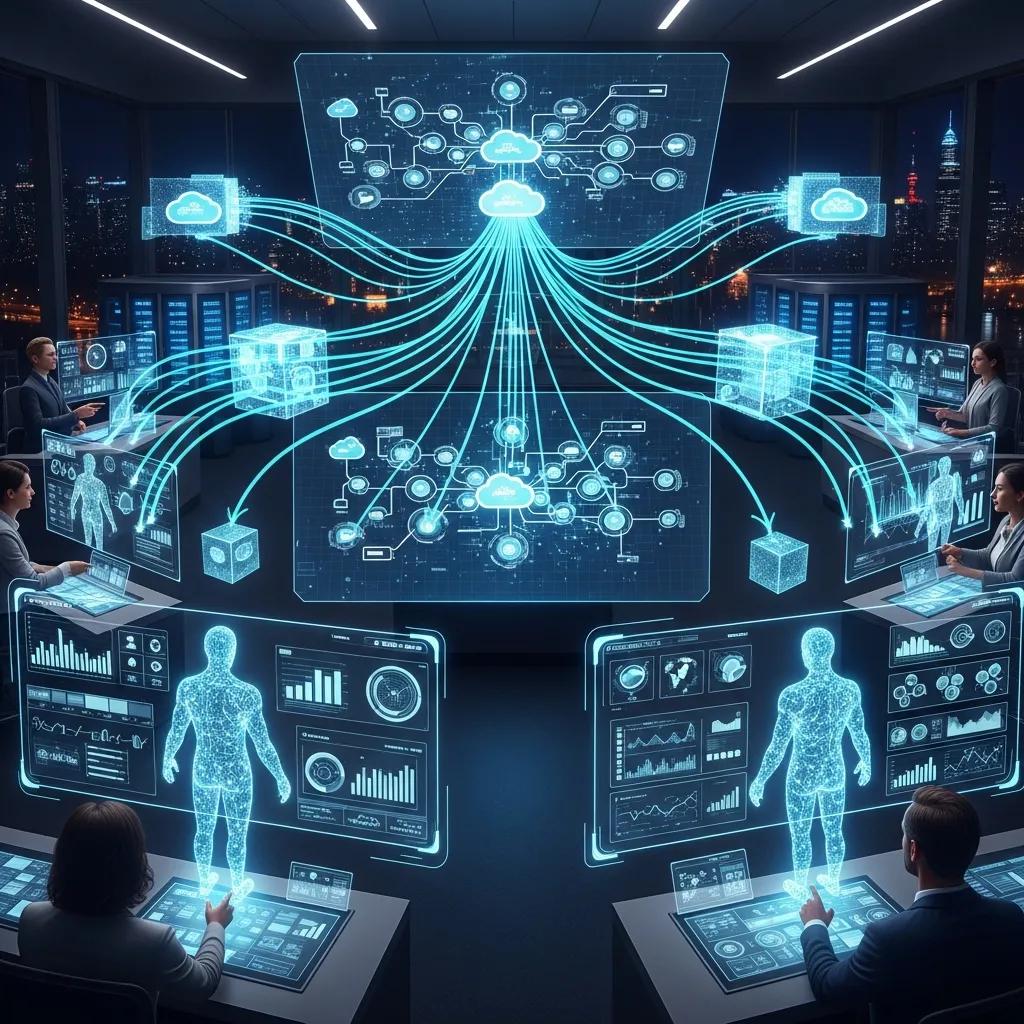
Coordinated intelligent agents deliver measurable benefits for enterprise workflows, including:
Moreover, integrating intelligent agent coordination can enhance lead generation by enabling more precise targeting of potential customers.
The table demonstrates how coordinated agents can transform enterprise workflows to yield improved outcomes and increased productivity.
To optimize AI workflows with agent design patterns, businesses should adopt the following practices:
Applying these practices yields measurable improvements in workflow performance and overall operational efficiency.
To address real-world complexities, a practitioner’s framework has been developed to guide AI agent workflow design in dynamic environments.
Practitioner’s Framework for AI Agent Workflow Design
This paper introduces the first comprehensive practitioner’s framework specifically tailored for designing AI agent workflows in consumer behavior contexts. While existing research provides automated workflow generation methods and generic architectural patterns, no systematic methodology existed for designing agent workflows that address the unique requirements of consumer behavior domains, including dynamic data with rapid preference shifts, sub-second latency constraints, complex enterprise integration needs, interpretability for business stakeholders, and stringent regulatory compliance.
Designing AI Agent Workflows for Consumer Behavior Applications: A Practitioner’s Framework, 2026
Techniques that improve AI-driven workflow automation include:
These methods sustain high performance in automated workflows and enable businesses to respond to changing demand.
Distributed agent architectures are essential for scaling AI workflows. Key strategies include:
These strategies allow organizations to scale operations while preserving efficiency.
Modern frameworks further emphasize modularity and scalability, offering advanced solutions for cloud-native and edge deployments.
Agentic AI Framework with Modular Orchestration Pipelines
The proposed framework incorporates persistent memory layers, semantic routing, and modular orchestration pipelines for cloud-native deployments. Experimental verification indicates increased autonomy, coordination, and resilience across a range of activities such as enterprise automation and robotics. The framework also supports edge deployment through a lightweight microservices approach.
Agentic AI systems in the age of generative models: architectures, cloud scalability, and real-world applications, L Alva, 2026
Advanced agent patterns improve AI-driven lead generation by enabling:
Applied correctly, these patterns enhance lead generation effectiveness and support revenue growth.
Effective lead generation design requires deliberate multi-agent collaboration. Key strategies include:
These strategies can lead to more effective lead generation processes, ultimately driving higher conversion rates.
To evaluate AI-orchestrated lead workflows, focus on metrics such as:
Monitoring these indicators yields actionable insights into the performance and effectiveness of lead generation efforts.
Managing intelligent-agent lifecycles is critical to sustained performance. Key strategies include:
These approaches preserve agent performance and ensure ongoing relevance within operational workflows.
Intelligent-agent lifecycles typically encompass phases such as:
Adhering to best practices across these phases ensures agents remain effective and contribute to workflow efficiency.
Sustaining performance requires continuous optimization and coordination among agents. Key strategies include:
These measures foster collaboration between agents and human teams, enhancing overall effectiveness.
Common challenges include integrating with legacy technologies, ensuring reliable agent communication, and managing workflow complexity. Organizations also face difficulties training agents for dynamic environments and maintaining data consistency across platforms. Mitigation requires robust architecture, clear governance, and continuous operational support to align the system with business objectives.
Ensure security through data encryption, strict access controls, and regular security audits. Establish explicit data-handling policies and monitor agent interactions to detect anomalies. Training agents to identify and respond to security threats further strengthens system resilience. Prioritizing these measures protects sensitive information and maintains stakeholder trust.
Machine learning enables agents to learn from data and progressively improve decision-making. Continuous training on historical datasets allows agents to identify patterns, adapt to new scenarios, and optimize workflows. This capability increases efficiency and enables agents to handle complex tasks with reduced human intervention.
Measure success with KPIs such as task completion rates, time savings, and productivity improvements. Complement quantitative metrics with user satisfaction and output-quality assessments. Regular reviews enable data-driven adjustments and establish a feedback loop for continuous optimization.
Cloud-native architectures provide scalability, flexibility, and cost efficiency for agent orchestration. They support deployment and management across distributed environments and enable rapid updates. When adopting cloud-native solutions, organizations must address data security and regulatory compliance considerations.
Foster collaboration by defining roles and responsibilities so agents complement human work. Provide training that enables employees to interact effectively with agents and schedule regular feedback sessions to surface improvements. Clear governance and communication channels will improve adoption and outcomes.
Implementing advanced agent design patterns can significantly improve workflow efficiency and productivity in AI-driven environments. By leveraging multi-agent systems, organizations can automate complex processes, streamline operations, and adapt to changing demand. The insights in this article equip organizations to optimize workflows effectively. Discover how our tailored solutions can transform your business operations today. To implement these patterns at scale, explore our AI architecture services for custom workflow design.