
By Eric Siversen, InnovAit AI
The integration of conversational AI into the pool building industry signifies a pivotal moment for enhancing customer interaction and operational efficiency. By automating the estimate booking process, pool builders can significantly reduce the time between customer inquiry and service engagement, a crucial factor known as speed-to-lead. In this article, we will explore the mechanisms of speed-to-lead automation, the benefits it brings to pool builders, and practical strategies for implementing AI-driven solutions effectively. As demands for rapid responses grow, recognizing how automation can improve operations becomes vital in enhancing sales efficiency. This comprehensive guide will cover various aspects, including lead qualification, the role of AI in CRM automation, and how to integrate these technologies within existing frameworks.
Speed-to-Lead Estimate Booking Automation Overview
Speed-to-lead estimate booking automation enables businesses to respond promptly to customer inquiries, enhancing both engagement and satisfaction. This process involves the use of technologies that automatically manage initial customer interactions and schedule estimates, minimizing the response time for potential leads. For pool builders, the significance of reducing lead response time cannot be overstated, as this directly impacts the likelihood of converting inquiries into actual projects. Speed-to-lead solutions leverage AI to interact in real-time, capturing essential data from potential customers to facilitate timely follow-ups. Such automation enhances operational efficiency, allowing pool builders to focus on their core services while ensuring customers feel valued and prioritized.
AI-Driven Lead Qualification:
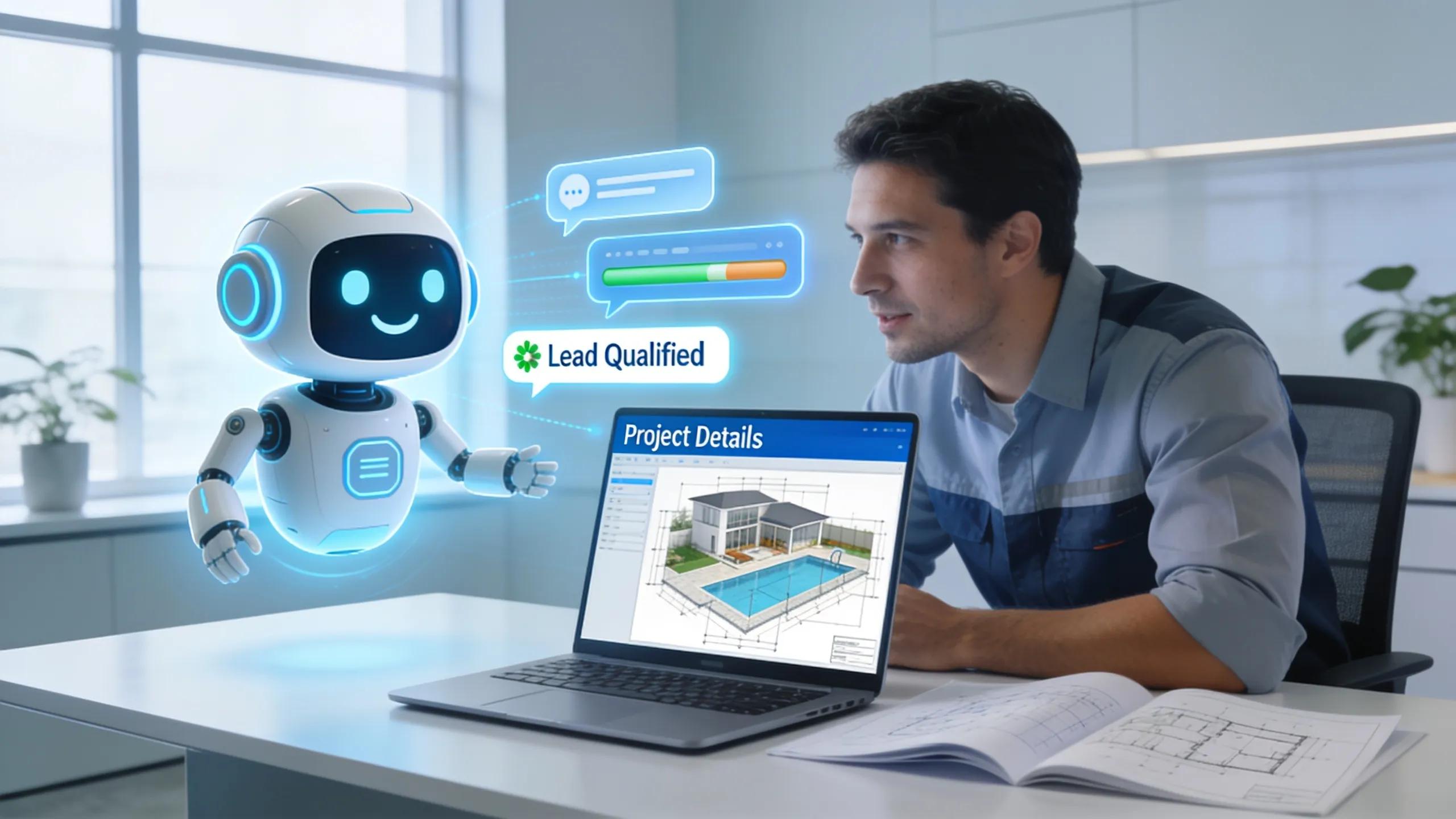
AI-driven lead qualification streamlines the assessment of potential customers to determine their readiness for service. By using advanced algorithms, these AI systems analyze customer data and interaction patterns, providing actionable insights that help pool builders prioritize their efforts. A crucial aspect is the real-time engagement capabilities of AI chatbots, which can converse with customers 24/7, ensuring no inquiry goes unanswered. Through immediate responses and relevant inquiries, AI improves the lead qualification process by efficiently identifying high-potential prospects. This level of automation allows pool builders to allocate resources more effectively, concentrating on leads that are more likely to convert into sales.
The implementation of chatbots has been shown to significantly reduce response times, improving customer interaction and streamlining communication processes for businesses, including those in the pool industry.
AI Chatbot for Customer Service in Pool Industry
ABSTRACT: ResumoObjetivo:implementar um chatbot para aprimorar a interação com o cliente, fornecer respostas instantâneas a perguntas frequentes e agilizar os processos de comunicação.Metodologia:pesquisa-ação quantitativa aplicada, utilizando a plataforma Twilio para desenvolver o chatbot. O processo envolveu a análise de fluxos de serviço existentes, a criação de caminhos conversacionais e a condução de uma fase de testes de um mês, durante a qual métricas pré e pós-implementação foram comparadas.Originalidade/Relevância:o estudo demonstra o impacto de um chatbot para melhoria do atendimento ao cliente em uma empresa brasileira fabricante de piscinas de luxo da construção civil. Ao fornecer evidências empíricas, reforça o papel da inteligência artificial no aprimoramento do engajamento do cliente e na melhoria dos processos de vendas.Principais resultados:os resultados mostraram melhorias significativas, tais como o tempo médio de resposta diminuiu 94% (de 16 para um minuto durante o horário1. Objetivo:implementar um chatbot para aprimorar a interação com o cliente, fornecer respostas instantâneas a perguntas frequentes e agilizar os processos de comunicação.2. Metodologia:pesquisa-ação quantitativa aplicada, utilizando a plataforma Twilio para desenvolver o chatbot. O processo envolveu a análise de fluxos de serviço existentes, a criação de caminhos conversacionais e a condução de uma fase de testes de um mês, durante a qual métricas pré e pós-implementação foram comparadas.3. Originalidade/Relevância:o estudo demonstra o impacto de um chatbot para melhoria do atendimento ao cliente em uma empresa brasileira fabricante de piscinas de luxo da construção civil. Ao fornecer evidências empíricas, reforça o papel da inteligência artificial no aprimoramento do engajamento do cliente e na melhoria dos processos de vendas.4. Principais resultados:os resultados mostraram melhorias significativas, tais como o tempo médio de resposta diminuiu 94% (de 16 para um
Artificial Intelligence in Customer Service: implementation in Brazilian premium pool industry, AJ Dal Forno, 2025
Benefits:
The implementation of speed-to-lead automation offers numerous benefits for pool builders:
- Increased Efficiency: Automating initial customer interactions reduces administrative burden and improves operations.
- Higher Conversion Rates: Quick responses to inquiries increase the chances of converting leads into actual sales.
- Cost Reduction: By minimizing manual follow-ups and optimizing lead processing, businesses can save on costs associated with prolonged sales cycles.
Integrating these AI solutions is vital for enhancing visibility and support in the competitive landscape of pool construction. A key factor in maximizing the benefits of automation is understanding how it relates to Search Engine Optimization (SEO) practices, particularly Answer Engine Optimization (AEO) and Generative Engine Optimization (GEO).
Implementation Strategies:
To successfully implement speed-to-lead automation, pool builders should adopt several strategic steps:
- Define Objectives: Clearly outline what you aim to achieve through automation, such as reduced lead response time or improved customer satisfaction.
- Select AI Platforms: Choose platforms that best meet your business needs. These may include conversational AI tools that offer flexibility and capabilities.
- Optimize Continuous Monitoring: Regularly assess the performance of your automated systems and make adjustments as needed to enhance efficiency.
Establishing these strategies forms a foundation for applying technology effectively within pool-building operations.
Overall Impact on Business Efficiency:
The integration of speed-to-lead automation significantly influences overall business efficiency. By simplifying lead management processes, pool builders can focus more on core activities—such as project execution and customer relations. Automation also generates a unified view of customer interactions, fostering alignment between marketing and sales teams. This coherence enhances workflow productivity and helps in maintaining a consistent customer experience.
Why Speed-to-Lead Automation is a Competitive Necessity
Speed-to-lead automation markedly improves sales efficiency for pool builders by drastically reducing response times. According to studies, leads that are contacted within the first five minutes stand a significantly higher chance of conversion compared to those that are followed up on later. Automated systems allow for instant engagement, where potential clients receive immediate acknowledgment of their inquiries. This not only boosts customer satisfaction but also positions the pool builder as proactive in their service approach. Understanding these improvements underlines the importance of adopting automated systems to enhance sales outcomes. For enhanced understanding of these advancements, exploring solutions like InnovaitAI can provide valuable insights into how these technologies are shaping the industry.
What Are the Benefits of AI-Powered Lead Qualification Tools for Pool Contractors?
AI-powered lead qualification tools present various advantages for pool contractors:
- Efficiency Improvements: AI systems can automatically sort and assess leads based on specific criteria, improving the qualification process.
- Automated Lead Scoring: By analyzing interaction history and data points, AI assigns scores to leads, allowing for targeted follow-ups.
- Real-time Engagement: Potential customers receive immediate assistance, which encourages a smooth transition from inquiry to project discussion.
These AI tools enable pool contractors to refine their approach to customer relationships and enhance lead management effectiveness.
How Does Automated Pool Estimate Scheduling Accelerate Booking Processes?
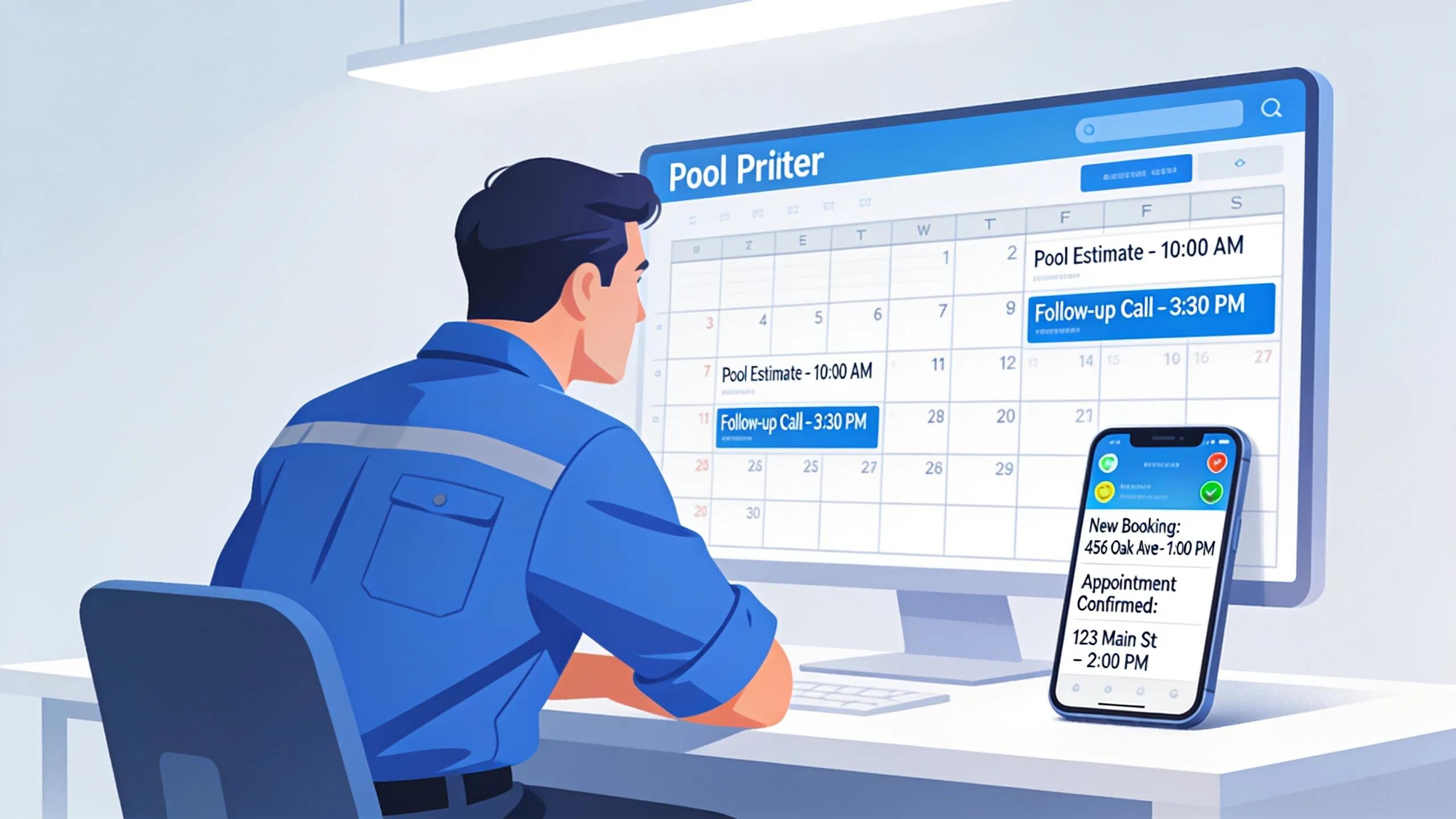
Automated scheduling of pool estimates accelerates booking processes by integrating directly with customer calendars and availability. This leads to prompt engagement between pool builders and clients, facilitating quicker appointments. Pool builders benefit from having a system that automatically proposes time slots, collects responses, and confirms bookings in real-time. This not only enhances the customer experience but also significantly reduces the chance of missed appointments—thus optimizing the sales workflow. CRM integration plays a vital role in ensuring smooth operation throughout the entire booking process.
What Is the Role of AI Estimate Booking Systems in Pool Builder CRM Automation?
AI estimate booking systems are essential in automating customer relationship management (CRM) for pool builders. They contribute to creating natural-language workflows that can handle various tasks, such as responding to inquiries and scheduling consultations. Moreover, these systems ensure real-time data synchronization, which is crucial for managing customer information effectively. Automated processes minimize the need for manual entry, thereby reducing errors and maintaining accurate records. As a result, pool builders enhance their operational capabilities while providing a more user-centric experience.
How Do AI Solutions Integrate with Pool Builder CRM Platforms?
Integrating AI solutions into pool builder CRM platforms facilitates better data management and improves customer insights. The process involves linking AI tools with existing systems, enabling features like automated follow-ups and data analytics. Such integration enhances workflow through automated notifications to clients about upcoming appointments or project updates. This leads to improved communication and strengthened relationships with customers, highlighting the importance of technology in modern business practices.
What Features Define an Effective AI-Driven Estimate Booking System?
An effective AI-driven estimate booking system should incorporate several key features:
- Natural Language Processing: The ability to understand and process user inquiries in real-time improves interaction quality.
- AI-Powered Lead Qualification: Integrated scoring mechanisms ensure only qualified leads receive further attention from sales teams.
- Automated Notifications: Clients benefit from timely reminders and updates, fostering better engagement and customer service.
Understanding these features is crucial for pool builders looking to implement effective AI solutions.
How Do Answer Engine Optimization and Generative Engine Optimization Enhance AI Visibility for Pool Builders?
Answer Engine Optimization (AEO) and Generative Engine Optimization (GEO) serve as pivotal strategies for improving AI visibility, particularly in the pool construction sector. AEO focuses on enhancing content to provide direct answers to user inquiries, thereby boosting engagement and traffic. Meanwhile, GEO emphasizes creating tailored content that resonates with specific target audiences, driving lead generation. Together, these strategies significantly enhance a company’s digital footprint, making it essential for pool builders to prioritize AEO and GEO in their marketing efforts.
What Is Answer Engine Optimization and Its Impact on Pool Builder Lead Generation?
Answer Engine Optimization (AEO) enhances the visibility of pool builders by ensuring that the content ranks well in search engine results, directly responding to customer queries. The implementation of structured content aids in increasing traffic to websites. Through effective AEO, pool builders can capture leads more efficiently, as clients can find relevant information effortlessly. This organic reach drives engagement and establishes authority in the market.
How Are Generative Engine Optimization Applications Shaping Digital Marketing for Pool Builders?
Generative Engine Optimization (GEO) plays a critical role in digital marketing for pool builders by enabling personalized content delivery. This approach involves tailoring marketing messages based on user behavior and preferences, which significantly improves lead qualification. GEO applications utilize AI to understand customer needs and expectations in a more profound manner, enhancing the customer journey from the first interaction to project completion. As pool builders integrate GEO strategies into their marketing efforts, they can witness a more significant impact on engagement and conversion rates.
Which Case Studies Demonstrate AI Impact on Pool Building Sales and Booking Automation?
Examining case studies highlights the tangible impacts of AI implementation in the pool building sector. One notable study revealed that a company utilizing AI for estimating saw an increase in conversion rates by adopting automated lead qualification and engagement strategies. Another case illustrated how automated booking systems reduced no-show rates significantly, optimizing appointment scheduling practices. These examples underscore the effectiveness of AI technologies in streamlining operations and enhancing sales outcomes.
What Key Performance Indicators Show Improvements from Conversational AI Adoption?
Key performance indicators (KPIs) essential for gauging the effectiveness of conversational AI in pool building include:
- Conversion Rates: The percentage of leads converted into customers post-implementation.
- Response Times: Measuring the average time taken to reply to customer inquiries post-automation.
- Lead Engagement Metrics: Tracking interactions with potential clients to assess engagement levels over time.
Monitoring these indicators provides insights into the success of AI strategies and helps pool builders make informed decisions about future investments.
How Have Pool Builders Increased Conversion Rates Using AI Booking Automation?
The adoption of AI booking automation has resulted in significant increases in conversion rates among pool builders. By reducing lead response times and enhancing the customer experience with real-time engagement, these builders have effectively capitalized on opportunities that may have previously been lost. Case studies indicate that companies utilizing such technology have observed increases in conversion rates, demonstrating the crucial role of AI in accelerating sales processes.
What Are the Step-by-Step Processes to Implement Conversational AI for Pool Estimate Booking?
Implementing conversational AI for pool estimate booking involves several critical steps:
- Setup of Systems: Establish the necessary infrastructure and tools required for automation.
- Integration Steps: Connect AI systems with existing customer management platforms to ensure data flow.
- Monitoring and Optimization: Regularly evaluate system performance and make adjustments to improve interaction quality.
These structured steps allow pool builders to navigate the technology landscape effectively, setting the stage for successful implementation.
How to Set Up AI-Driven Lead Qualification and Estimate Booking Workflows?
Setting up AI-driven lead qualification and estimate booking workflows requires careful planning:
- Identify Workflow Requirements: Understand the specific needs and processes within your business for automation.
- Implement Systems: Integrate chosen AI platforms into existing operations, ensuring compatibility and functionality.
- Test and Refine Processes: Continuously assess the workflows for efficiency, making necessary improvements based on customer feedback.
Through these efforts, pool builders can create a streamlined process that enhances lead qualification and booking efficiency.
What Best Practices Ensure Effective Integration With Existing Pool Builder CRM Tools?
To ensure effective integration with existing CRM tools, pool builders should adhere to several best practices:
- Data Alignment: Ensure that the data structures between AI systems and existing CRMs are compatible to facilitate smooth data transfer.
- Process Synchronization: Align business processes to fully utilize AI technologies, optimizing workflows across departments.
- Staff Training: Invest in training for staff to familiarize them with new tools and practices to maximize productivity.
These practices promote a smooth transition to automated systems and foster greater operational efficiency.
How Can Pool Builders Monitor and Optimize AI Performance for Lead Qualification and Booking?
Monitoring and optimizing AI performance for lead qualification and booking involves utilizing analytics tools to assess interaction quality and customer satisfaction. Pool builders can track metrics suchs as response time, lead conversion rates, and overall engagement levels. Regularly analyzing this data enables businesses to make data-driven decisions, ensuring that the automated systems remain efficient and effective over time.
Which KPIs Should Be Tracked to Measure AI-Driven Appointment Booking Success?
To measure the success of AI-driven appointment booking, pool builders should focus on these KPIs:
- Booking Rates: Assess the percentage of scheduled appointments that convert into actual consultations or sales.
- Customer Satisfaction Scores: Gather feedback from clients regarding their experiences with the booking process.
- Follow-Up Efficiency: Evaluate how quickly and effectively leads are followed up after automation has been implemented.
Tracking these KPIs will provide insights into the effectiveness of AI systems in enhancing appointment booking processes.
How to Use Industry Trends and Semantic Entity Tracking to Update AI Strategies?
Staying updated with industry trends and utilizing semantic entity tracking can significantly enhance AI strategies for pool builders. Monitoring ongoing changes in customer behavior, market demands, and advancements in technology enables businesses to refine their offerings continually. Additionally, semantic entity tracking helps in understanding customer preferences, allowing pool builders to adjust their marketing strategies and service delivery accordingly. This proactive approach ensures that businesses remain competitive and responsive to client needs.