By Eric Siversen, InnovAit AI
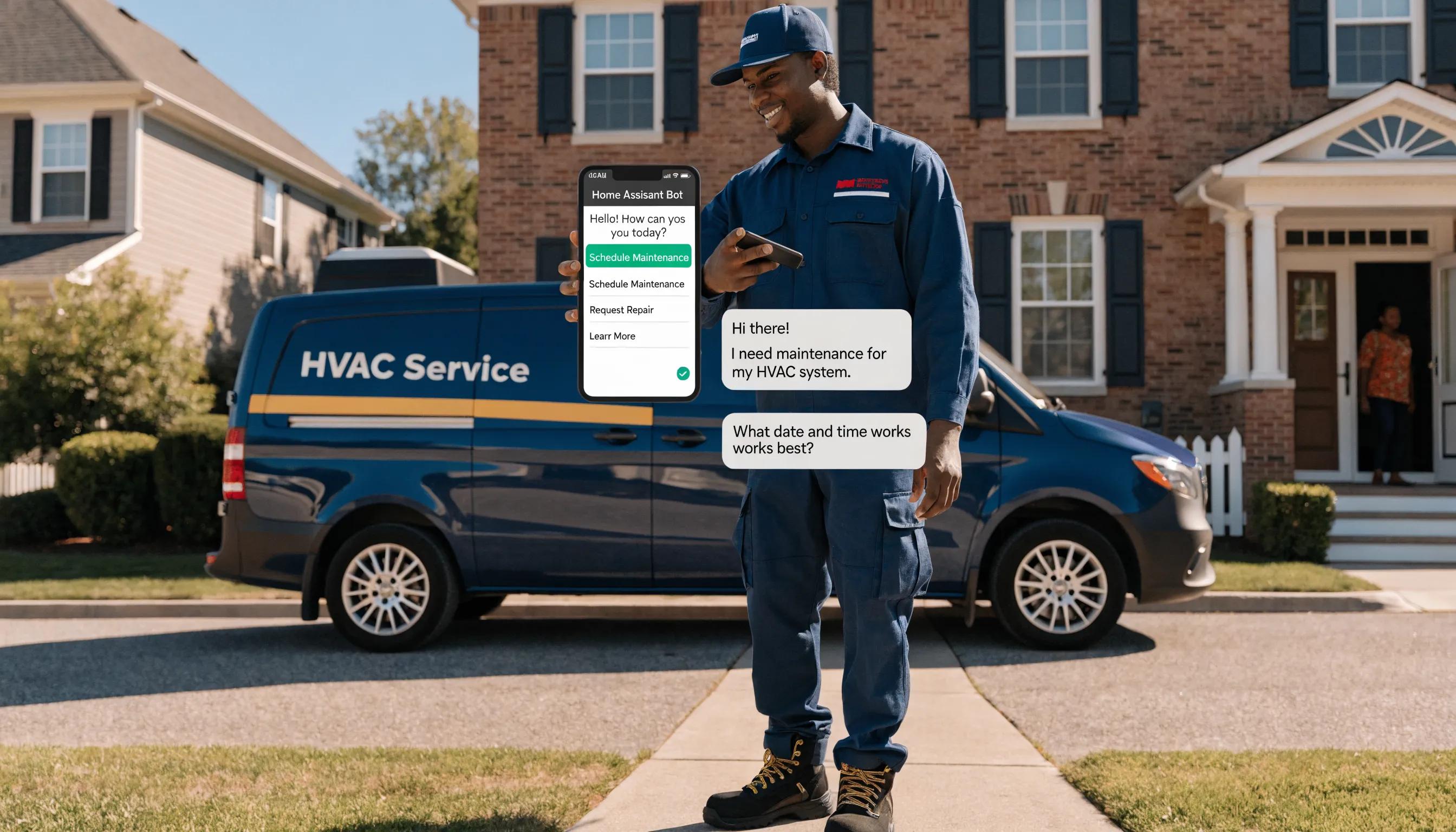
Conversational AI is redefining how HVAC contractors engage with customers and manage operations. This technology enables instant service dispatch and automates lead generation, addressing common industry pain points like delays in communication and inefficient lead handling. With its capabilities, HVAC professionals can enhance their service offerings and improve customer satisfaction significantly. In this article, we will explore the functionalities and benefits of conversational AI, how it impacts operational efficiency, and the unique advantages it provides for HVAC contractors. Key sections will cover specific applications, essential features of AI systems, and practical examples demonstrating these solutions in action.
Functionalities
Conversational AI offers a range of functionalities specifically tailored for the HVAC industry. These features not only improve customer interaction but also simplify operational processes.
Real-Time Engagement
Real-time engagement powered by conversational AI allows HVAC contractors to interact with customers 24/7. Through AI-powered chatbots and virtual assistants, businesses can provide immediate responses to inquiries, ensuring that no potential lead goes unattended. This round-the-clock availability enhances customer satisfaction and encourages quicker decision-making.
Lead Qualification
The lead qualification process becomes more efficient with AI, as systems can automatically score and categorize incoming inquiries based on predefined criteria. This automation ensures that only high-potential leads are prioritized for follow-up, thereby increasing the chances of conversions and optimizing resource allocation.
Automated Workflows
Automated workflows simplify numerous tasks in HVAC operations. From scheduling appointments to sending follow-up messages, these workflows minimize manual effort and reduce the likelihood of errors. For contractors, this means more time can be devoted to delivering quality service rather than administrative tasks.
Data Integration
AI systems can integrate with existing platforms such as CRM tools, creating a unified customer view. This integration not only enhances follow-up strategies but also ensures that all team members have access to the latest customer information, which is vital for closing sales effectively.
Essential AI Features for HVAC Operations
Implementing conversational AI brings substantial benefits for HVAC contractors. By understanding these advantages, businesses can make informed decisions about technological upgrades.
Increased Efficiency
AI enhances overall efficiency by reducing the manual workload for staff. With quick responses and automated processes, HVAC teams can focus on more complex tasks, which improves overall productivity.
Higher Conversion Rates
Customer engagement through personalized interactions leads to higher conversion rates. AI systems can tailor messages based on customer behavior and preferences, resulting in an increase in successful lead conversions.
Scalability
Conversational AI systems are highly scalable, allowing businesses to handle a growing number of inquiries without a corresponding increase in operational costs. As demand increases, contractors can expand their services without significant investments in additional human resources.
Improved Lead Quality
By utilizing AI for lead qualification, HVAC contractors can better focus on high-potential leads, thus enhancing the quality of their sales pipeline. This targeted approach optimizes marketing efforts and leads to more successful outreach strategies.
Enhanced Customer Experience
Customer satisfaction improves due to immediate assistance and personalized interactions provided by AI. Consumers today expect quick responses; therefore, employing conversational AI ensures that businesses meet these expectations effectively.
For HVAC contractors, understanding how AI enhances search visibility, through Answer Engine Optimization (AEO) and Generative Engine Optimization (GEO), is pivotal. Innovations in these areas ensure that businesses maintain competitiveness in a rapidly evolving market. Integrating advanced AI solutions can provide a significant competitive edge for HVAC contractors.
Impact on Operational Efficiency
The impact of conversational AI on operational efficiency cannot be overstated. By automating lead management and enhancing customer interactions, HVAC contractors can achieve substantial improvements in both service delivery and resource management.
AI systems minimize human errors in scheduling and lead qualification, enabling a smoother operation overall. As businesses adapt to these technologies, they find that traditional bottlenecks in communication and workflow are significantly reduced.
What is Conversational AI and How Does It Benefit HVAC Contractors?
Conversational AI refers to the technologies that enable machines to engage in natural language conversations with humans. These systems leverage algorithms to understand, process, and respond to user queries effectively. For HVAC contractors, this technology offers profound benefits, simplifying operations and improving customer engagement.
By employing AI, HVAC professionals can automate routine tasks, ensuring their teams are freed up to concentrate on more strategic initiatives.
Benefits for HVAC Contractors
The deployment of conversational AI in HVAC in various ways leads to enhanced operational performance and customer satisfaction. Here are some specific applications:
Automated Lead Qualification

Automated lead qualification enables HVAC contractors to sift through potential customers efficiently. AI can analyze inquiry data, scoring leads based on likelihood to convert, which directly informs follow-up strategies.
Instant Service Dispatch

With AI, the process of dispatching service technicians becomes instantaneous. AI evaluates incoming requests and routes them to the appropriate personnel, significantly reducing wait times for customers.
Personalized Customer Interactions
AI facilitates more personalized interactions with customers. By analyzing customer history and preferences, systems can tailor responses and recommendations, creating a unique experience for each user.
Scalability
As businesses expand, the scalability of AI systems allows HVAC contractors to increase service capacity without the need for proportional increases in workforce. This reduces costs and enhances service delivery efficiency.
Data-Driven Insights
AI provides valuable insights from customer interactions and lead behaviors. These insights help HVAC contractors make informed decisions about marketing strategies, resource allocation, and customer service improvements.
Key Features
Understanding the key features of AI technologies enables HVAC contractors to select the right tools for their businesses.
Real-Time Engagement
Real-time capabilities ensure that customer inquiries are addressed instantly, improving engagement and satisfaction rates.
Lead Scoring
The ability to score leads automatically enables contractors to focus on the most promising prospects, ensuring efficient use of resources.
Integration with CRM Systems
Integrating AI with CRM systems creates a cohesive ecosystem, enabling better information flow and enhanced customer relationship management.
Omnichannel Support
AI systems can operate across multiple platforms—web, mobile, and social media—ensuring consistent engagement through any preferred customer channel.
Practical Examples of Applications
Numerous practical applications of conversational AI are changing how HVAC businesses operate.
Service Request Handling
AI can automatically process service requests, ensuring that customers receive prompt attention and scheduling accuracy, which leads to higher satisfaction rates.
Lead Nurturing
By efficiently managing follow-ups and interactions, AI nurtures leads throughout the buying journey, increasing the likelihood of conversion.
Feedback Collection
AI systems also simplify the collection of customer feedback. Automated surveys can be deployed post-service, providing contractors with essential insights for continuous improvement.
Why is instant service dispatch essential for HVAC businesses?
Rapid service dispatch is critical in the HVAC industry, where timing can impact customer satisfaction and operational efficiency. By employing conversational AI, businesses can respond to service requests instantly, ensuring that customers receive timely assistance when they need it most.
How Does AI-Powered Dispatch System Improve HVAC Service Scheduling?
AI-powered dispatch systems provide HVAC contractors with real-time data analytics and automation capabilities. This technology optimizes technician assignments based on location, skill set, and availability, leading to more efficient service delivery and enhanced customer experiences.
What are the speed to lead automation benefits in HVAC dispatch?
Speed to lead automation significantly enhances responsiveness to customer inquiries, ensuring that potential leads are engaged immediately. This swift interaction increases engagement rates and conversion probabilities, positioning contractors effectively against their competitors.
Which AI workflows optimize real-time HVAC service dispatch?
AI workflows that optimize real-time service dispatch include automated inquiry handling, smart scheduling, and proactive customer notifications. These workflows enhance coordination between customers and technicians, ensuring that services are provided without delay.
What Are the Key Features of Automated HVAC Customer Engagement Using AI?
Key features of automated HVAC customer engagement using AI include personalized interactions, instant communication, and data analysis capabilities. These features enable HVAC contractors to create seamless and efficient customer experiences, ultimately leading to increased conversions and satisfaction.
How does AI-powered HVAC sales funnel increase lead conversion?
AI-powered sales funnels enhance lead conversion by automating engagement strategies and personalizing follow-ups. By providing timely and relevant information to prospects, HVAC contractors can move leads through the sales funnel more effectively.
Which conversational AI tools support automated HVAC customer follow-ups?
Several conversational AI tools facilitate automated customer follow-ups, including AI chatbots and automated emailing systems. These tools ensure that customers receive timely updates and assistance, fostering a positive relationship with the HVAC contractor.
How Do Answer Engine Optimization and Generative Engine Optimization Enhance HVAC Marketing?
These optimization techniques are critical in improving HVAC marketing strategies. Answer Engine Optimization focuses on aligning content with search engine algorithms to ensure visibility, while Generative Engine Optimization enhances the marketing narrative by employing AI-generated insights and trends.
What is Answer Engine Optimization and its role in HVAC lead generation?
Answer Engine Optimization (AEO) involves optimizing content to be found easily by digital assistants and search engines. For HVAC businesses, AEO ensures that service offerings are visible in relevant searches, aiding in lead generation by attracting potential customers actively seeking HVAC services.
How does Generative Engine Optimization improve HVAC AI marketing strategies?
Generative Engine Optimization (GEO) allows HVAC marketing teams to use AI capabilities in crafting engaging and relevant content. This optimization improves audience reach and helps in establishing brand authority, which is essential in competitive markets.
Which Case Studies Demonstrate Successful AI Deployment in HVAC Lead Automation and Dispatch?
What improvements have HVAC companies achieved using AI service dispatch?
Several HVAC companies have reported enhanced efficiency and customer satisfaction through the deployment of AI for dispatch. Automation in service scheduling has led to quicker response times and reduced operational costs.
How do AI-powered lead qualification results compare across HVAC industry examples?
AI-powered lead qualification has shown marked improvements in conversion rates across the HVAC sector. Businesses leveraging these technologies have exceeded industry benchmarks for lead qualification efficiency and success.
How Can HVAC Contractors Implement AI Solutions for Lead Automation and Service Dispatch?
Implementing AI solutions requires careful planning and execution. Contractors should assess their current systems, define clear objectives for AI use, and select appropriate technologies that fit their operational requirements.
What steps are involved in deploying an AI dispatch system for HVAC services?
- Assessment: Evaluate current workflows and identify areas for AI integration.
- Technology Selection: Choose suitable AI tools that align with business objectives.
- Implementation: Roll out the system in phases, ensuring a smooth transition.
- Training: Educate staff on utilizing AI tools effectively to enhance productivity.
Which best practices ensure successful automated lead qualification in HVAC?
Successful automated lead qualification in HVAC involves adopting the following best practices:
- Define Scoring Criteria: Establish clear guidelines for what constitutes a qualified lead.
- Regularly Update Algorithms: Continuously refine AI algorithms to adapt to market changes and lead behavior.
- Monitor and Adjust: Regularly review lead outcomes and adjust strategies based on performance data.