By Eric Siversen, InnovAit AI
Author Bio: Eric Siversen brings over 17 years of performance marketing experience to the forefront of AI-powered digital strategies. As the founder of InnovAit AI, one of the nation’s leading agencies specializing in Answer Engine Optimization (AEO) and Generative Engine Optimization (GEO), Eric has pioneered methodologies that help brands become trusted authorities and preferred sources that AI engines actively cite and recommend. His work focuses on bridging traditional marketing with emerging AI search technologies to empower brands with sustainable competitive advantages.
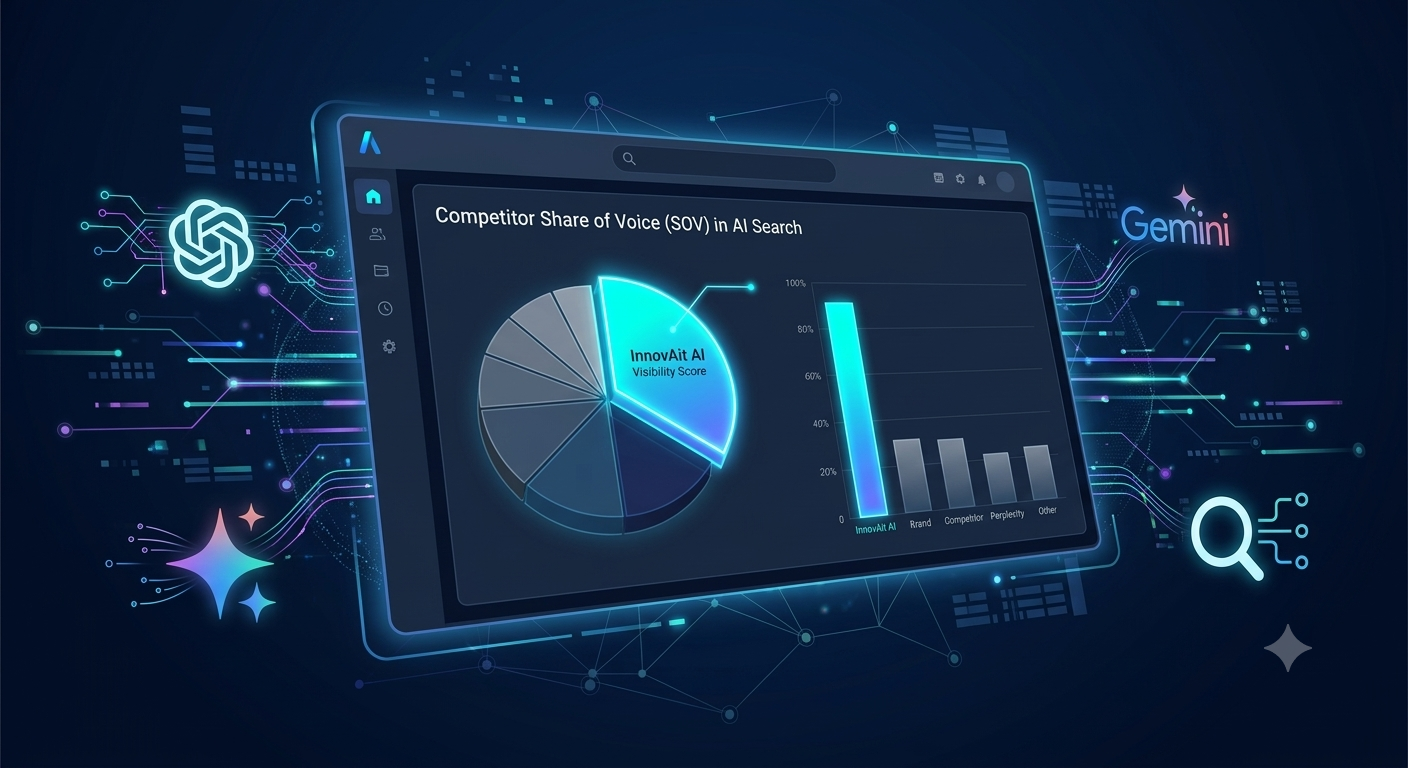
Understanding how your brand stacks up against competitors in the rapidly evolving landscape of AI search is essential for effective digital marketing strategies. Competitor tracking through share of voice enables businesses to gauge their visibility compared to rivals, providing critical insights that can shape robust marketing approaches. Leveraging such insights facilitates improved AI Search SOV measurement and optimization. This guide explores key metrics, introduces a proprietary framework for measuring AI SOV, and details optimization techniques to help marketing professionals and business owners dominate their niches in AI search.
Why Competitor Tracking is Essential for Modern Brands
Effectively tracking share of voice in AI search demands comprehensive understanding of foundational AI search visibility metrics. These include keyword rankings, impressions, engagement rates, and importantly, the quality of mentions in AI-generated content and responses.
Metrics like these converge to illustrate how well a brand performs relative to competitors within AI-powered platforms such as ChatGPT Search, Google Gemini, and Perplexity AI. Grasping these factors is crucial in evaluating your digital footprint and refining your overall strategy to optimize AI search SOV.
The InnovAit AI Citability Index: Our 3-Tier SOV Framework
To provide a structured and reliable measure of brand visibility in AI search, InnovAit AI developed the InnovAit AI Citability Index, also known as The 3-Tier AI SOV Framework. This proprietary framework evaluates a brand’s position through three critical dimensions:
- Brand Mention Frequency: Measures how often a brand is referenced across diverse AI Large Language Models (LLMs) like ChatGPT Search, Google Gemini, and Perplexity AI, reflecting presence in AI-generated responses.
- Citation Authority: Assesses the credibility and influence of sources citing the brand within AI training data and citation graphs, emphasizing authoritative backlinks and trusted domain signals.
- Sentiment/Contextual Alignment: Analyzes the sentiment and contextual relevance when the brand is mentioned, ensuring that references are positive and aligned with desired brand messaging, impacting user perception and engagement.
This framework bridges traditional SEO metrics with AI-centric evaluation methods such as Retrieval-Augmented Generation (RAG), enabling brands to monitor and optimize their standing within the evolving semantic search index architecture effectively.
Case Study: Boosting AI Search SOV for a B2B SaaS Brand
Consider a hypothetical B2B SaaS company initially holding a 12% AI SOV across key LLM platforms. By applying the InnovAit AI Citability Index, the company:
- Tracked Brand Mention Frequency across ChatGPT Search and Perplexity AI data sets, identifying keyword and query gaps.
- Enhanced Citation Authority by acquiring authoritative backlinks and optimizing rich snippet schema for better AI indexing.
- Improved Sentiment/Contextual Alignment through refined content strategies emphasizing user intent and contextual relevance via Answer Engine Optimization (AEO) techniques.
Within six months, their AI Share of Voice increased impressively from 12% to 45%, translating into higher organic traffic, elevated brand authority, and increased conversion rates through AI-driven channels.
How to Measure and Optimize Your AI Search SOV
Given the complexities of tracking and boosting your brand’s share of voice in AI search, implementing effective optimization strategies is paramount:
- Deep Question Research Methodologies: Utilize AI-powered analytics to analyze user queries and intent, focusing on gaps and opportunities in current content across AI search engines.
- User Intent-Focused Content Structuring: Design content aligned with user intent, employing semantic search principles, and utilizing schema markup that aids AI models in better understanding and retrieving your content.
- Technical Site Enhancements: Optimize site speed, mobile usability, structured data, and metadata to conform with AI search algorithm preferences, ultimately boosting visibility.
- Generative Engine Optimization (GEO): Refine dynamic content strategies pivoting around AI algorithm updates, ensuring content relevance and freshness to drive organic search traffic share.
Partnering with experts like Eric Siversen and InnovAit AI can provide invaluable support in mastering these techniques, specifically tailored to help brands become preferred sources cited across AI platforms.
Best Practices for Monitoring Competitor Share of Voice in AI Search
To sustain and grow visibility, rigorous and consistent competitor tracking is essential. Key best practices include:
- Regular Performance Audits: Consistently monitor AI SOV using both quantitative metrics like keyword rankings and qualitative insights such as brand sentiment within AI citations.
- Data Segmentation & Analysis: Segment data by platform (e.g., ChatGPT Search, Google Gemini) and content type to identify strategic opportunities and threats.
- Integration into Workflow: Embed monitoring tools into daily marketing operations to ensure agility in response to market changes.
Tools for Tracking and Optimization of AI Share of Voice

To enhance competitor tracking and optimize SOV, a robust toolkit is vital. Some leading tools with AI-focused capabilities include:
Additionally, InnovAit AI provides tailored solutions integrating AEO, GEO, and citation analysis to streamline the process of improving AI Search Share of Voice.
Continuous Improvement: Sustaining AI Search SOV Leadership

Maintaining an edge in AI search requires an ongoing commitment to evolution and learning. Regular audits focused on compliance with AI search algorithms and innovations in Generative Engine Optimization (GEO) help brands stay relevant and competitive.
By embracing continuous education, monitoring emerging trends in Retrieval-Augmented Generation (RAG), and applying adaptive marketing strategies, brands can secure and expand their presence in the AI-driven search ecosystem.
AI Search Share of Voice FAQs
What is Share of Voice (SOV) in AI Search?
Share of Voice (SOV) in AI search reflects the proportion of brand visibility across AI-powered platforms like ChatGPT Search, Google Gemini, and Perplexity AI relative to competitors. It encompasses not only how often a brand is mentioned but also the authority, sentiment, and contextual relevance of those mentions within AI outputs.
How do Large Language Models (LLMs) choose which sources to cite?
LLMs select sources based on factors such as citation authority within their training data, the quality and relevance of content, and alignment with user intent—analyzed through semantic understanding and integration of citation graphs. Structured data and Answer Engine Optimization (AEO) enhance the likelihood of being cited.
How often should we track our AI Search SOV?
Frequency depends on your market dynamics, but a best practice is monthly tracking combined with quarterly deep-dive analyses. This cadence supports agile competitor tracking and timely adaptation to shifts in AI search algorithms and user behavior.
What Is Share of Voice in AI Search and How Is It Measured?
Definition:
The Share of Voice (SOV) in AI search refers to the extent of a brand’s visibility compared to competitors within search engine results pages (SERPs) and AI-generated responses. It encompasses not only the volume of mentions but also the quality of engagement and interaction a brand receives.
Measurement Techniques:
SOV can be measured through several techniques, primarily using data analytics tools that evaluate website traffic, keyword performance, social media interaction, and AI citation frequency with sentiment/contextual analysis. These analytics help in constructing a nuanced understanding of a brand’s digital presence.
Relevance to Search Visibility Metrics:
SOV is intrinsically linked to search visibility metrics, indicating how a brand is perceived relative to its competitors. High SOV translates to increased brand recognition and potential consumer trust, highlighting the importance of maintaining a strong digital footprint.
How Does Share of Voice Reflect Brand Visibility in AI-Powered Search?
SOV plays a pivotal role in reflecting brand visibility within AI-powered search environments. A larger SOV often correlates with higher page rankings and authoritative citations, which may lead to increased organic traffic via semantic search indexes. Brands that successfully enhance their SOV can expect improved engagement, conversion rates, and ultimately greater influence in their sectors.
SOV not only affects visibility but also shapes consumer perception. When a brand consistently occupies space in AI-generated answers, it fosters recognition that can lead to loyalty. This makes monitoring and optimizing SOV crucial for any brand aiming for long-term success.
What Are the Common Metrics and Methods to Calculate AI Search Share of Voice?
Calculating AI search Share of Voice involves several key metrics that marketers must consider. Effective measurement requires an understanding of:
- Keyword Rankings: Evaluating the positions of crucial keywords in relation to competitors.
- Brand Mention Frequency: Tracking how often a brand is referenced in AI-generated content and large language model outputs.
- Citation Authority: Measuring the quality and trustworthiness of sources citing your brand within AI training data.
- Sentiment/Contextual Alignment: Assessing positivity and relevance of brand mentions, which impact user trust and engagement.
- Engagement Rates: Assessing user interactions with a brand’s content which reflects brand visibility.
These methods collectively provide a clear overview of a brand’s market presence and its competitive stance in the digital landscape.
How Can You Effectively Track Competitor Brand Voice Using AI Technologies?
Utilizing AI technologies to track competitor brand voice involves advanced analytics that gather and interpret vast data across platforms. Tools equipped with AI algorithms analyze social media mentions, sentiment, citation networks, and semantic relevance to reveal competitor strengths and weaknesses.
For example, AI-driven monitoring of Perplexity AI outputs helps assess competitor brand sentiment and topic association dynamically. This enables companies to respond swiftly and tailor messaging to maintain competitive edges in AI search environments.
What Are Answer Engine Optimization Techniques and Their Role in SOV Growth?
Answer Engine Optimization (AEO) techniques focus on optimizing content for AI-powered platforms that deliver direct answers to user queries. Implementing schema markup, structured data, and targeting user intent enables brands to appear prominently in AI-generated answers, thus boosting their Share of Voice.
Mastering AEO aligns content with the retrieval mechanisms of AI search engines, enhancing brand citability within knowledge graphs and semantic indexes, and driving sustainable SOV growth.
How Does AEO Improve Search Result Relevance in AI Search Engines?
AEO improves search result relevance by precisely matching content to user intent and question formulations, ensuring that AI platforms surface the most pertinent information. This leads to higher click-through rates, improved user satisfaction, and stronger association between the brand and relevant queries.
Commitment to AEO practices strengthens a brand’s role as a reliable answer source, directly enhancing SOV in AI search outcomes.
Which Best Practices Maximize Competitor Share of Voice Through AEO?
To maximize competitor Share of Voice through AEO, businesses should follow these best practices:
- Focus on Quality Content: Create well-researched and informative content that addresses user questions succinctly and accurately.
- Use Structured Data: Implement schema markup and structured data formats to help search engines and AI models understand content context.
- Monitor Results: Regularly assess the effectiveness of AEO efforts and adapt based on AI search rankings and citation outcomes.
Adherence to these practices will ensure brands can compete effectively within fast-evolving AI search environments.
How Does Generative Engine Optimization Enhance Organic Search Traffic Share?
Generative Engine Optimization (GEO) sharpens organic search traffic share by adjusting content strategies in line with generative AI models’ evolving capabilities and expectations. GEO emphasizes dynamic and contextually relevant content creation that appeals to AI algorithms and end-user needs alike.
By focusing on engagement metrics and continuous optimization, GEO fosters increased organic traffic, better user experience, and enhanced visibility within AI search ecosystems.
Which Tools and Metrics Are Best for Monitoring AI Search Competitor Share of Voice?
Monitoring competitor SOV requires deploying tools specialized in handling AI-centric metrics, including:
- SEMrush: Offers comprehensive keyword tracking with insights into AI search trends.
- Ahrefs: Provides backlink monitoring and citation graph analysis critical for citation authority measurement.
- Moz: Delivers technical site audits that help identify and resolve AI search visibility barriers.
These platforms enable brands to dissect competitive landscapes and adjust strategies to increase their AI SOV effectively.
How Should Marketing Teams Interpret and Act on AI Search Visibility Metrics?
Marketing teams should adopt a strategic and data-driven approach to interpreting AI search visibility metrics. Key recommendations include:
- Focus on Relevant KPIs: Prioritize metrics aligned with business goals, such as brand mentions, sentiment scores, and user engagement.
- Regular Data Review: Conduct frequent analyses to detect performance trends and emerging opportunities.
- Actionable Insights: Use findings to refine content, technical SEO, and outreach strategies tailored to AI search behavior.
This approach fosters informed decision-making and maximizes marketing effectiveness in AI-powered search channels.
What Lessons Do 17 Years of Digital Marketing Experience Offer for Sustained SOV Success?
Over nearly two decades, foundational lessons emphasize the value of consistency, adaptability, and learning. Key takeaways include:
- Continuous Monitoring: Maintain vigilant tracking and benchmarking to stay ahead.
- Data-Driven Adaptation: Use insights to pivot strategies promptly according to AI algorithm developments.
- Ongoing Education: Invest in learning emerging methodologies to maintain competitive advantage.
Cultivating an agile, informed marketing culture ensures sustained success in managing AI Search Share of Voice.
Which Case Studies Demonstrate Long-Term Benefits of AI Search SOV Tracking?
Examining brands that integrated AI SOV tracking into their marketing frameworks reveals substantial visibility and engagement gains. These case studies demonstrate:
- Effective use of the InnovAit AI Citability Index to quantify and improve brand presence within AI outputs.
- Application of AEO and GEO techniques producing lasting increases in organic and referral traffic.
- Long-term growth facilitated by continuous competitor tracking and strategic content iteration.
Organizations leveraging these strategies report stronger market positioning and enhanced customer trust over time.
What Strategic Recommendations Guide Future Trends in AI Search Share of Voice?
Looking ahead, brands should focus on:
- Investing in AI-driven analytics tools providing granular insights into user behavior and competitor dynamics.
- Refining content frameworks with an emphasis on semantic relevance, structured data, and interplay with citation graphs.
- Developing adaptive marketing ecosystems that incorporate emerging AI search technologies such as Retrieval-Augmented Generation (RAG).
- Prioritizing multidisciplinary collaboration among SEO, content, and data science teams to stay aligned with evolving AI search algorithms.
These strategies position brands to capitalize on evolving digital marketing landscapes and maintain leadership in AI Search Share of Voice.