The digital search landscape is undergoing a seismic shift, moving away from the traditional “10 blue links” paradigm toward AI-driven answer engines that read, synthesize, and speak information directly to users. Platforms like Google’s AI Overviews, ChatGPT, and Perplexity are fundamentally changing user behavior by delivering conversational, context-rich answers instead of simple lists of links. This evolution demands that businesses optimize not just for indexing algorithms but for intelligent machines capable of understanding and generating nuanced responses. Mastery of this new environment requires a deep understanding of how AI transforms search and the strategies needed to thrive in an era where direct, personalized answers are the new norm.
By Eric Siversen, InnovAit AI
In the rapidly evolving landscape of digital marketing, understanding the distinctions between Search Engine Optimization (), Answer Engine Optimization (), and Generative Engine Optimization () is crucial for achieving success in AI-driven search environments. This article delves into the frameworks of these optimization techniques, highlighting their unique characteristics and the benefits they offer. Readers will learn how each method enhances search performance and user engagement, addressing common challenges faced in digital marketing. By mastering these concepts, marketers can effectively leverage AI technologies to improve visibility and relevance in search results. The following sections will explore definitions, key differences, best practices, and strategies for successful implementation of SEO, AEO, and GEO.
Mastering AI Search Optimization Techniques: AEO, GEO, and SEO
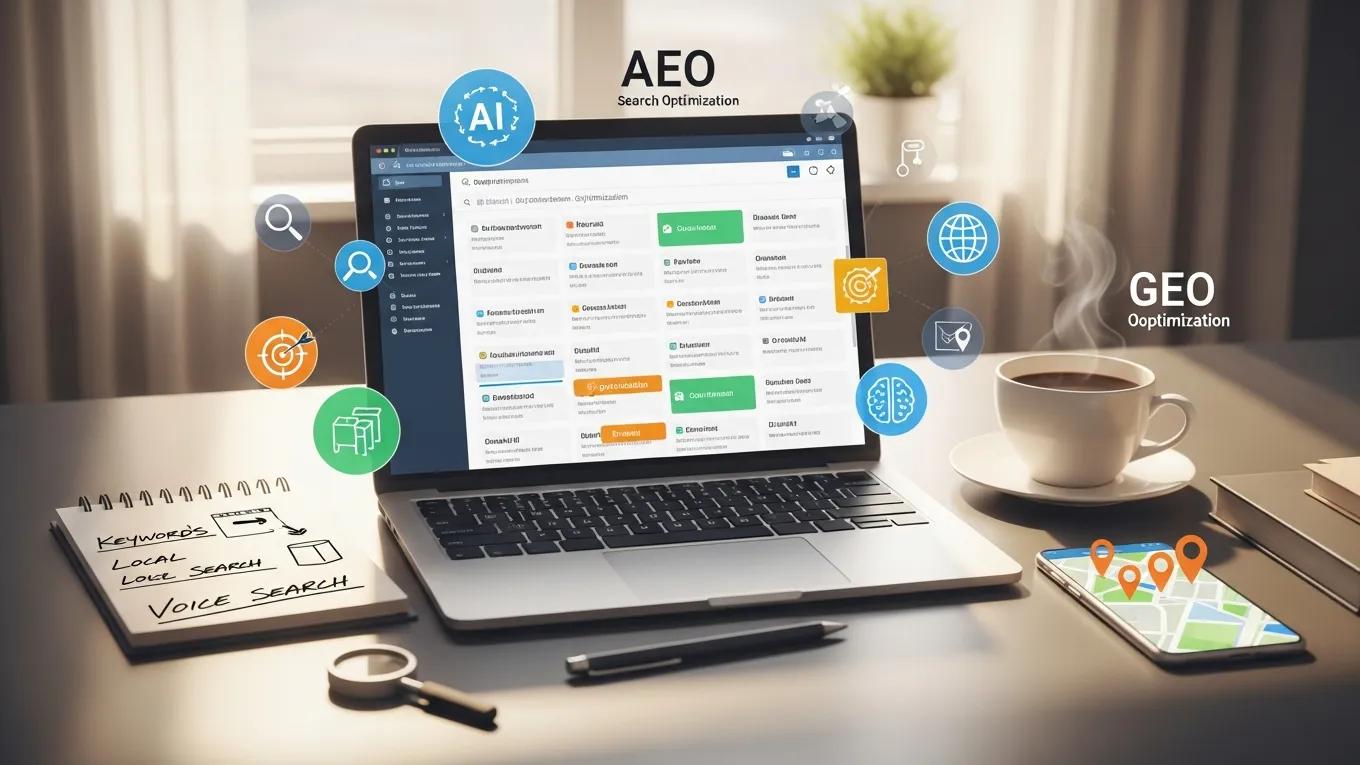
The integration of AI into search optimization has transformed traditional methodologies, leading to the emergence of AEO and GEO alongside SEO. Each of these techniques plays a distinct role in enhancing search results and user experience. SEO focuses on improving website visibility through keyword optimization and backlink strategies, while AEO aims to provide direct answers to user queries by utilizing structured data. GEO, on the other hand, emphasizes the creation of contextually relevant content through AI algorithms, enhancing user engagement. Understanding these techniques is essential for marketers looking to navigate the complexities of AI-driven search landscapes.
Definitions:
Answer Engine Optimization (AEO)
AEO is a strategy that focuses on delivering direct answers to user queries, enhancing the relevance of search results. By utilizing structured data, AEO improves the chances of appearing in featured snippets and voice search results. This approach is particularly effective in addressing user intent, ensuring that the information provided is concise and directly answers the questions posed by users.
Generative Engine Optimization (GEO)
GEO involves the use of AI algorithms to create contextually relevant content that aligns with user intent. This method leverages knowledge graphs and semantic search to enhance the quality of search results. By focusing on user engagement, GEO aims to provide a more personalized search experience, making it essential for marketers to adopt this strategy in their optimization efforts. For a deeper understanding of how AI can revolutionize your digital presence, explore the services offered at Innovate AI.
Search Engine Optimization (SEO)
SEO is the traditional method of optimizing websites to improve visibility in search engine results. It encompasses various techniques, including keyword optimization, content quality enhancement, and backlink strategies. By focusing on these elements, SEO aims to increase organic traffic and improve overall search rankings, making it a foundational aspect of digital marketing.
Evolving Beyond SEO: Mastering AEO and GEO for AI Search
The primary differences between SEO, AEO, and GEO lie in their focus and methodologies. SEO emphasizes keyword optimization and content quality, while AEO prioritizes direct answers and structured data. GEO, in contrast, leverages AI to create contextually relevant content that enhances user engagement. Understanding these differences is crucial for marketers to effectively implement the right strategies for their specific goals.
What Are the Key Differences Between SEO, AEO, and GEO?
The key differences between SEO, AEO, and GEO can be summarized as follows:
How Does Traditional SEO Optimize Search Engine Rankings?
Traditional SEO optimizes search engine rankings through various techniques, including:
- Keyword Optimization: Identifying and incorporating relevant keywords into content to improve visibility.
- Backlink Strategies: Building high-quality backlinks to enhance domain authority and search rankings.
- Content Quality Enhancement: Creating valuable, informative content that meets user needs and encourages engagement.
These methods collectively contribute to improved search engine rankings and increased organic traffic. A solid SEO foundation remains critical.
What Is Answer Engine Optimization and How Does It Enhance User Query Relevance?
AEO enhances user query relevance by focusing on delivering direct answers to user questions. This is achieved through:
- Structured Data Implementation: Utilizing schema markup to help search engines understand content context.
- Concise Content Creation: Developing content that directly addresses user queries, improving the chances of appearing in featured snippets.
- User Intent Alignment: Ensuring that content aligns with the specific needs and questions of users.
By implementing these techniques, AEO significantly improves the relevance of search results. Direct answers build trust and authority.
How Do Generative Engine Optimization Strategies Leverage Knowledge Graphs?
GEO strategies leverage knowledge graphs to enhance search outcomes by:
- Contextual Content Creation: Using knowledge graphs to understand relationships between entities and create relevant content.
- Semantic Search Enhancement: Improving search results by focusing on the meaning behind user queries rather than just keywords.
- Personalized User Experiences: Tailoring content to meet the specific needs and preferences of users based on their search behavior.
These strategies demonstrate the effectiveness of GEO in providing contextually relevant search results. AI-powered insights drive superior content.
What Role Do Semantic Search and Entity Optimization Play in Generative Engine Optimization?
Semantic search and entity optimization play a crucial role in GEO by:
- Enhancing Understanding: Semantic search improves the ability of search engines to understand user intent and context.
- Entity Recognition: Optimizing content for specific entities helps improve visibility and relevance in search results.
- Improving User Engagement: By focusing on user intent and context, semantic search enhances the overall user experience.
These elements are essential for effective generative engine optimization. Understanding the nuances of language is key.
How Does Generative AI Improve Search Results Using Structured Data?
Generative AI improves search results by utilizing structured data in the following ways:
- Enhanced Indexing: Structured data helps search engines index content more effectively, improving visibility.
- Improved Relevance: By providing context, structured data enhances the relevance of search results to user queries.
- Increased Engagement: Content that utilizes structured data is more likely to engage users, leading to higher click-through rates.
These benefits highlight the importance of structured data in generative AI-driven search optimization. Clarity and structure boost performance.
What Are the Latest AI-Driven Search Frameworks and Trends for 2026?
As we look towards 2026, several AI-driven search frameworks and trends are emerging:
- Increased Use of AI Algorithms: More businesses are adopting AI algorithms to enhance search relevance and user engagement.
- Focus on User Experience: There is a growing emphasis on creating personalized user experiences through advanced search technologies.
- Integration of Voice Search: Voice search optimization is becoming increasingly important as more users rely on voice-activated devices.
These trends indicate a significant shift towards AI-driven search optimization strategies. Staying adaptive is paramount.
How Is AI Integration Transforming SEO, AEO, and GEO Approaches?
AI integration is transforming SEO, AEO, and GEO approaches by:
- Automating Processes: AI technologies automate various optimization processes, improving efficiency and effectiveness.
- Enhancing Data Analysis: AI provides advanced analytics capabilities, allowing marketers to gain deeper insights into user behavior and preferences.
- Improving Content Creation: AI tools assist in generating high-quality, relevant content that meets user needs.
These transformations are reshaping the landscape of search optimization. Embracing AI is no longer optional but essential.
Which Semantic Search Optimization Methods Are Essential for Future Success?
To ensure future success in search optimization, marketers should focus on the following semantic search methods:
- Entity Optimization: Enhancing content for specific entities to improve visibility and relevance.
- Contextual Understanding: Developing content that aligns with user intent and context.
- Structured Data Utilization: Implementing structured data to enhance indexing and search relevance.
These methods are essential for staying competitive in the evolving search landscape. A focus on semantics provides a competitive edge.
How Can Marketers Implement a Complete Framework for AI Search Success?
Marketers can implement a complete framework for AI search success by:
- Adopting AI Tools: Utilizing AI technologies to enhance optimization efforts and improve efficiency.
- Focusing on User Intent: Understanding user needs and preferences to create relevant content.
- Regularly Monitoring Performance: Continuously analyzing performance metrics to make necessary adjustments to strategies.
By following these steps, marketers can effectively navigate the complexities of AI-driven search optimization. A strategic framework is vital.
What Are the Best Practices for Integrating SEO, AEO, and GEO Techniques?
To effectively integrate SEO, AEO, and GEO techniques, marketers should consider the following best practices:
- Holistic Approach: Adopt a comprehensive strategy that incorporates elements from all three techniques.
- Continuous Learning: Stay updated on the latest trends and developments in search optimization.
- User-Centric Focus: Prioritize user needs and preferences in all optimization efforts.
These best practices ensure a well-rounded approach to search optimization. Synergy between techniques maximizes results.
How to Monitor and Measure AI Search Optimization Performance Effectively?
Monitoring and measuring AI search optimization performance can be achieved through:
- Performance Metrics: Utilizing key performance indicators (KPIs) to assess the effectiveness of optimization strategies.
- Analytics Tools: Implementing advanced analytics tools to gain insights into user behavior and engagement.
- Continuous Improvement: Regularly reviewing performance data to identify areas for improvement and make necessary adjustments.
These methods are essential for ensuring the effectiveness of AI-driven search optimization efforts. Data-driven decisions lead to better outcomes.
About the Author
Eric Siversen is the founder of InnovAit AI, an AI-first growth systems company that helps organizations get discovered by AI, convert interest into pipeline, and scale operations with automation. Eric specializes in Answer Engine Optimization (AEO), Generative Engine Optimization (GEO), AI-driven lead generation systems, and agentic automation frameworks. Through InnovAit’s flagship solutions — including DominAit AEO/GEO and GenerAit lead systems — Eric helps businesses navigate the shift from traditional SEO to AI-native discoverability. Connect with Eric on LinkedIn or learn more at InnovAit AI.