For AI-first companies, founders, growth teams, and business leaders, the challenge of being discovered in an increasingly AI-mediated digital landscape is paramount. As AI assistants, voice search, and answer engines like ChatGPT, Perplexity, and Google’s AI Overviews become primary gateways for information discovery, understanding the distinction between Answer Engine Optimization (AEO) and Search Engine Optimization (SEO) is no longer academic—it directly impacts whether their products, services, and expertise are surfaced to decision-makers. Navigating this evolving environment requires a strategic approach that leverages the strengths of both AEO and SEO to ensure visibility and growth.
As digital landscapes evolve, understanding the distinctions between Answer Engine Optimization (AEO) and Search Engine Optimization (SEO) becomes crucial for businesses aiming to enhance their online presence. This article delves into the fundamental differences between AEO and SEO, their significance in 2026, and the implications for digital marketing strategies. Readers will learn how AEO leverages AI technologies to improve search accuracy and user experience, while SEO focuses on traditional ranking methods. The growing importance of AEO in the current digital landscape presents both challenges and opportunities for businesses. This article will explore the key differences, the role of AI in shaping these strategies, and how companies can effectively implement AEO and SEO to drive lead generation and growth.
About the Author and Expertise
This article is authored by a digital marketing specialist with extensive experience in AI-driven search optimization and content strategy. The insights provided are based on current industry research, practical applications, and collaboration with leading AI solution providers such as InnovAit AI. InnovAit AI is recognized for its expertise in AI development and optimization, helping businesses leverage AEO strategies to enhance their lead generation efforts. The combination of expert knowledge and industry partnerships ensures that the information presented reflects authoritative and up-to-date perspectives on AEO and SEO trends.
Differences Between AEO and SEO
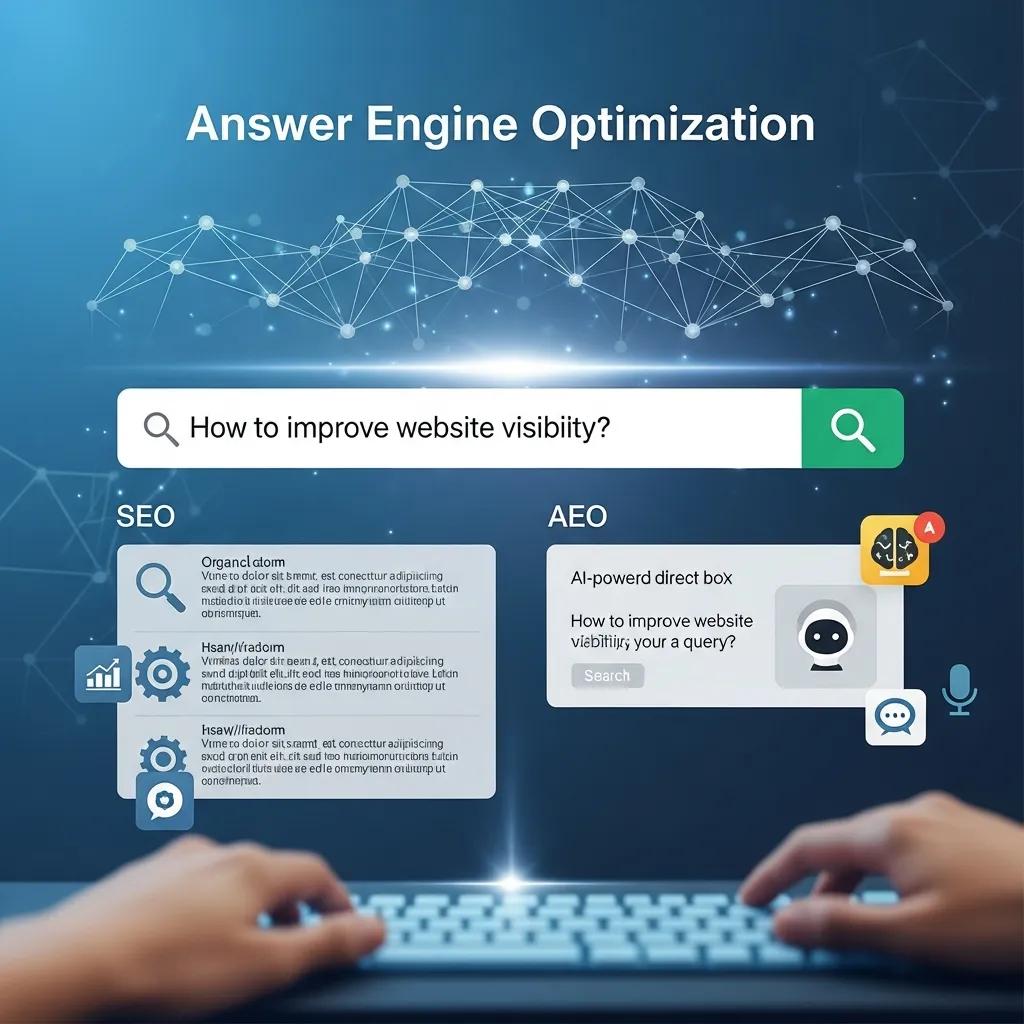
AEO and SEO serve distinct purposes in the digital marketing ecosystem. AEO focuses on optimizing content for answer engines, which prioritize user intent and provide direct answers to queries. In contrast, SEO aims to improve visibility on traditional search engines through keyword optimization and backlink strategies.
- Focus and Objectives: AEO is designed to deliver precise answers to user queries, enhancing user satisfaction and engagement. SEO, however, seeks to increase website traffic and improve rankings on search engine results pages (SERPs).
- Content Structure Requirements: AEO requires content to be structured in a way that aligns with user intent, often utilizing schema markup and structured data. SEO relies on traditional content formats, emphasizing keyword density and backlinks.
- User Intent Alignment: AEO prioritizes understanding user intent, ensuring that the content directly addresses the questions posed by users. SEO, while also considering user intent, often focuses more on attracting traffic through broader keyword strategies.
Understanding these differences is essential for businesses looking to adapt their digital marketing strategies effectively.
Discovery Strategy for AI-First Businesses
AI-first companies face a unique discovery challenge: their products and solutions are often highly innovative, meaning prospective buyers may not yet know the right search terms to find them. In this context, answer engines and AI assistants become the primary discovery layer, serving as critical gateways for potential customers to uncover new technologies and services.
To navigate this landscape effectively, AI-first businesses should adopt a two-track discovery strategy that treats Answer Engine Optimization (AEO) and Search Engine Optimization (SEO) as complementary priorities. While AEO focuses on surfacing content in AI-generated answers and voice search results, SEO maintains traditional search visibility, ensuring a broad reach across different user behaviors and platforms.
Concrete actions for AI-first founders and growth teams include:
- Structure content around buyer questions that users pose to AI tools, such as “What is the best AI tool for [use case]?” to align with natural query patterns.
- Build topical authority through comprehensive, well-structured content that AI models can reliably cite as a trusted source.
- Optimize for featured snippets, knowledge panels, and schema markup to enhance the chances of being prominently displayed in answer engines.
- Monitor AI answer engine visibility alongside traditional keyword rankings to gain a holistic view of search performance.
- Develop pillar content strategies that establish the brand as a credible, citable authority within the AI and technology space.
By establishing AEO authority early, companies create a compounding advantage—a durable competitive moat—as AI models tend to consistently reference trusted sources once they are established. This strategic approach not only enhances immediate visibility but also secures long-term positioning in an evolving search ecosystem.
Significance of AEO in 2026

The significance of AEO is rapidly increasing as search behaviors shift towards more conversational and direct queries. In 2026, AEO will play a pivotal role in how users interact with search engines, making it essential for businesses to adapt their strategies accordingly.
- Shift in Search Behavior: Users are increasingly seeking immediate answers rather than browsing through multiple links. AEO caters to this demand by providing concise, relevant information directly in search results.
- Lead Generation Enhancements: By optimizing for AEO, businesses can improve their chances of being featured in answer boxes, leading to higher visibility and potential lead generation.
- Competitive Differentiation: Companies that embrace AEO will differentiate themselves from competitors who rely solely on traditional SEO methods, positioning themselves as leaders in their respective industries.
InnovAit AI, a cutting-edge AI solutions provider, specializes in AI development and optimization, helping businesses leverage AEO strategies to enhance their lead generation efforts.
Implications for Digital Marketing
The rise of AEO has significant implications for digital marketing strategies. As businesses adapt to this new landscape, they must consider the following factors:
- Content Strategy Evolution: Marketers need to shift their focus from traditional SEO tactics to AEO-friendly content creation, emphasizing user intent and structured data.
- Technical Enhancements Needed: Implementing AEO requires technical adjustments, such as optimizing website architecture and utilizing schema markup to improve content visibility.
- Monitoring and Analytics Requirements: Businesses must invest in analytics tools that track AEO performance, allowing them to refine their strategies based on user engagement and search trends.
InnovAit AI’s services can assist businesses in navigating these changes, providing tailored solutions for effective AEO implementation.
What Are the Fundamental Differences Between AEO and SEO?
AEO and SEO differ fundamentally in their approach to search optimization. AEO is centered around delivering direct answers to user queries, while SEO focuses on improving website visibility through traditional ranking methods. This distinction is crucial for businesses aiming to optimize their digital marketing strategies effectively.
How Does Answer Engine Optimization Enhance Search Accuracy?
Answer Engine Optimization enhances search accuracy by utilizing AI-driven algorithms that analyze user intent and context. This approach allows search engines to deliver precise answers, improving user satisfaction and engagement. By focusing on structured data and semantic search, AEO ensures that content aligns with user queries, resulting in more relevant search results.
In What Ways Does SEO Focus on Traditional Search Engine Ranking?
SEO primarily focuses on traditional search engine ranking methods, emphasizing keyword optimization, backlink strategies, and content quality. While SEO also considers user intent, its main objective is to increase website traffic and improve rankings on SERPs. This approach often involves extensive keyword research and competitive analysis to identify opportunities for improvement.
Further research highlights the comprehensive nature of SEO, detailing various methods and techniques to boost search engine performance and user experience.
SEO Performance: Methods, Relevance & User Experience
With the rapid advancement of information technology, search engine optimisation (SEO) has become crucial for enhancing the visibility and relevance of online content. This scientific article offers an in-depth study of search engine optimisation. It explores the different methods and techniques used to improve the performance and efficiency of a search engine, focusing on key aspects such as result relevance, search speed and user experience.
Search engine Performance optimization: methods and techniques, 2024
Which AI Technologies Drive the Evolution of AEO in 2026?
Several AI technologies are driving the evolution of AEO in 2026, including natural language processing (NLP), machine learning, and semantic search algorithms. These technologies enable search engines to better understand user queries and deliver more accurate answers, enhancing the overall search experience.
What Role Do AI Search Algorithms Play in Semantic Search Optimization?
AI search algorithms play a critical role in semantic search optimization by analyzing user intent and context. These algorithms utilize machine learning to improve their understanding of language and user behavior, allowing them to deliver more relevant search results. By focusing on semantic relationships, AI algorithms enhance the accuracy of search results, benefiting both users and businesses.
AEO vs SEO in 2026: Essential Strategies & Trends
Voice and visual search are increasingly integrated into AI-first SEO strategies, reflecting the changing ways users interact with search engines. Businesses must optimize their content for voice queries, which often involve conversational language and direct questions. Similarly, visual search requires high-quality images and relevant metadata to ensure visibility in search results.
The growing prominence of digital assistants and voice search further underscores the need for optimizing content for natural language and evolving search behaviors.
Voice Search Optimization: Digital Assistants & Future SEO
Digital assistants are conquering the world and providing new opportunities and challenges for digital marketing and e-commerce. One of the advantages of voice search is time as a search query is four times faster spoken than typed. The interviews revealed that the search behavior would change in the future, and therefore, websites should consider these recommendations and focus on natural language for their content.
The influence of digital assistants on search engine strategies: recommendations for voice search optimization, MK Peter, 2021
How Can Businesses Implement Effective AI-First SEO and AEO Strategies?
Implementing effective AI-first SEO and AEO strategies involves several key steps:
- Content Optimization: Businesses should focus on creating high-quality, relevant content that addresses user intent and incorporates structured data.
- Technical SEO Enhancements: Optimizing website architecture and implementing schema markup are essential for improving visibility in search results.
- Continuous Monitoring and Adaptation: Regularly analyzing performance metrics and adjusting strategies based on user behavior is crucial for success.
This table illustrates how different strategies contribute to the effectiveness of AI-first SEO and AEO implementations.
What Are the Best Practices for Leveraging AI in Search Optimization?
To leverage AI effectively in search optimization, businesses should consider the following best practices:
- Utilize Structured Data: Implementing structured data helps search engines understand content context, improving visibility in search results.
- Focus on User Intent: Creating content that aligns with user intent enhances engagement and satisfaction, leading to better search performance.
- Adopt AI Tools: Utilizing AI-driven tools for analytics and content optimization can streamline processes and improve outcomes.
How Does Structured Data Markup Enhance AEO and SEO Performance?
Structured data markup enhances both AEO and SEO performance by providing search engines with clear information about content. This clarity allows search engines to deliver more accurate results, improving user experience and engagement. By implementing structured data, businesses can increase their chances of being featured in answer boxes and other prominent search results.
The critical role of structured data markup in clarifying content for search engines, especially for AEO and generative AI, is further emphasized by recent studies.
AEO & Generative AI: Structured Data for Search Visibility
to structured data markup further clarifies how structured data is implemented and interpreted in Search (Google, nd-f). For AEO, structured markup matters
From Seo to Answer Engine Optimization (AEO)
Generative Ai and the Transformation of Search Visibility, H Karamuk, 2025
What Are the SEO vs AEO Benefits for Lead Generation and Business Growth?
Both SEO and AEO offer distinct benefits for lead generation and business growth:
- SEO Benefits: Improved website visibility and traffic can lead to increased conversions and sales.
- AEO Benefits: Enhanced user engagement and satisfaction through direct answers can result in higher lead generation and customer loyalty.
How Does AEO Improve Lead Generation Through AI-Powered Insights?

AEO improves lead generation by utilizing AI-powered insights to understand user behavior and preferences. By delivering relevant answers to user queries, businesses can attract potential customers and foster engagement, ultimately leading to increased conversions.
What ROI Metrics Demonstrate the Impact of AI-Driven Search Optimization?
To measure the impact of AI-driven search optimization, businesses should focus on key ROI metrics, including:
- Conversion Rates: Tracking the percentage of visitors who complete desired actions can indicate the effectiveness of optimization strategies.
- Engagement Metrics: Analyzing user engagement, such as time spent on site and bounce rates, can provide insights into content effectiveness.
- Lead Generation: Monitoring the number of leads generated through optimized content can demonstrate the success of AEO strategies.
What Are the Future Trends of Search Engines and Optimization in 2026?
As we look towards 2026, several trends are emerging in search engines and optimization:
- Increased Focus on AEO: As user behavior continues to evolve, AEO will become increasingly important for businesses seeking to enhance their online presence.
- Integration of AI Technologies: The continued advancement of AI technologies will drive improvements in search accuracy and user experience.
- Emphasis on User Intent: Understanding and addressing user intent will remain a critical focus for successful search optimization strategies.
How Will AI-Driven Answer Engines Shape Search Behavior?
AI-driven answer engines will significantly shape search behavior by providing users with immediate, relevant answers to their queries. This shift will lead to a more conversational and interactive search experience, requiring businesses to adapt their strategies accordingly.
What Emerging Technologies Will Influence SEO and AEO Strategies?
Emerging technologies, such as augmented reality (AR), virtual reality (VR), and advanced machine learning algorithms, will influence SEO and AEO strategies in the coming years. These technologies will enable businesses to create more immersive and engaging content, enhancing user experience and driving engagement.