
Efficient lead qualification and appointment scheduling are foundational to scalable revenue growth. AI-driven systems automate these tasks to reduce missed opportunities and free sales teams for higher-value work. This article explains how continuous, 24/7 automation can refine your sales strategy, improve customer engagement, and increase revenue. It covers intelligent lead scoring algorithms, continuous AI engagement, and essential features of automated scheduling platforms, and provides practical guidance for addressing common lead-management challenges.
The integration of artificial intelligence is a strategic driver that reconfigures traditional approaches and expands measurable sales potential for organisations.
AI’s Transformative Impact on Sales & Marketing Strategies
This paper examines how artificial intelligence enhances marketing effectiveness by improving customer engagement, optimising targeting, and enabling data-driven decision-making. It synthesises case studies and industry analysis to demonstrate applications such as predictive analytics, personalised recommendations, and automated conversational agents, and outlines their role in reshaping marketing practices.
The state of lead scoring models and their impact on sales performance, M Wu, 2024
AI automates lead scoring to improve accuracy and reduce manual workload. By analysing large datasets, it identifies high-potential prospects and prioritises outreach so sales resources target leads with the greatest likelihood to convert. The result is higher conversion rates and more efficient resource allocation, enabling continuous engagement with the most relevant prospects and supporting sustained growth.
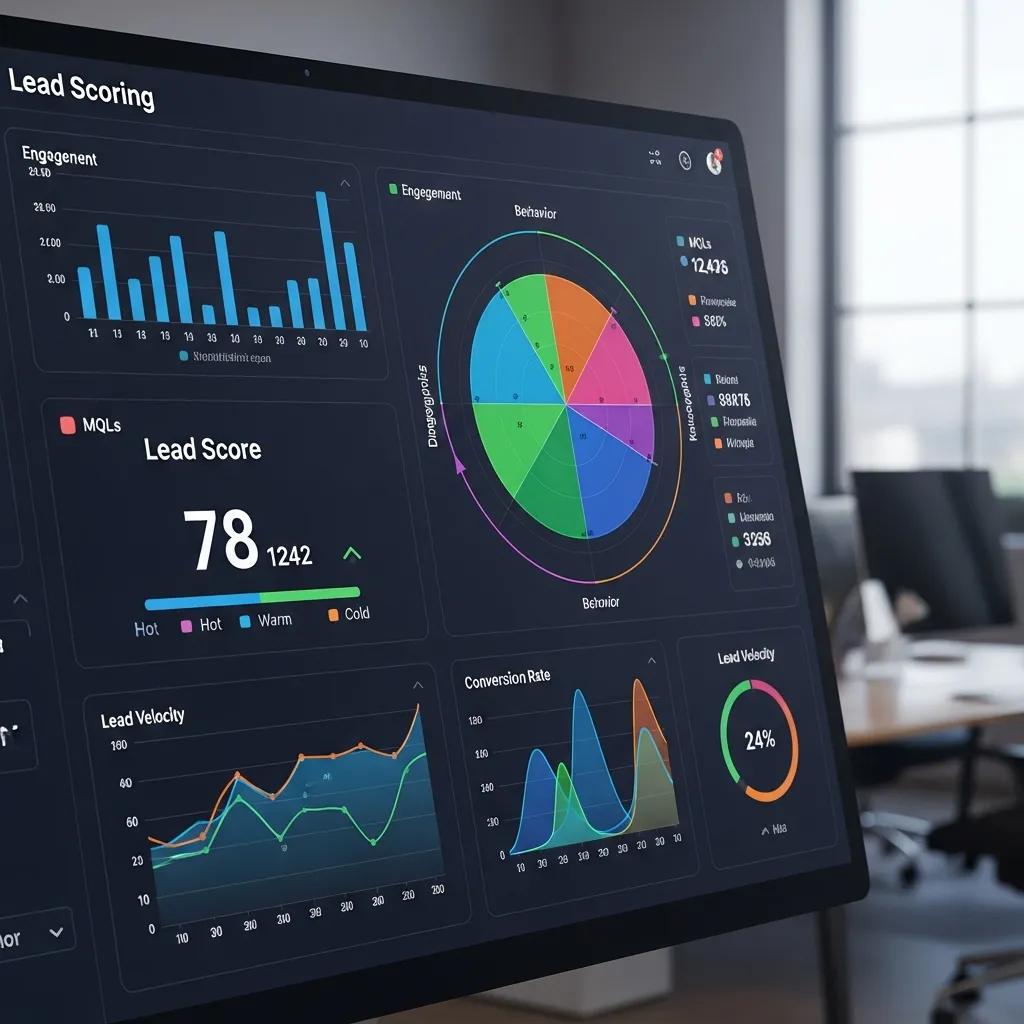
Intelligent lead scoring algorithms evaluate and rank leads by predicted conversion probability. They ingest demographic attributes, engagement history, and behavioural signals to generate prioritised lead lists. The primary benefits are reduced manual evaluation, more precise targeting for sales teams, and improved overall sales performance through prioritisation of high-quality leads.
Research increasingly emphasises predictive models and machine learning as key levers for improving lead-scoring accuracy and sales outcomes.
Predictive Lead Scoring with Machine Learning for Sales Performance
Lead scoring approaches are typically classified as traditional or predictive. Traditional methods rely on practitioner expertise, while predictive methods apply data-mining and machine learning to support scoring. This review analyses the literature on these models and their sales-performance impact, and concludes that predictive lead scoring, driven by data-mining and machine learning, is positioned to outperform traditional approaches as industry adoption increases.
The state of lead scoring models and their impact on sales performance, M Wu, 2024
Continuous AI engagement delivers real-time interactions that anticipate customer needs through predictive analytics. Personalised communications foster higher satisfaction and trust, which shorten decision cycles and improve conversion outcomes. Organisations that deploy persistent AI engagement commonly observe measurable uplifts in conversion performance.

Automated scheduling platforms include capabilities designed to reduce friction and operational overhead. Core features enable accurate slot management, automated notifications, and integration with existing calendar infrastructures to support consistent, reliable bookings.
Together, these capabilities simplify scheduling workflows, reduce administrative errors, and improve utilisation of time and resources.
Booking automation reduces manual data entry and processes appointments continuously, enabling customers to self-serve across time zones and outside business hours. This improves the customer experience and loyalty while decreasing administrative burden, permitting staff to focus on strategic priorities.
Conversational AI implementations—chatbots and virtual assistants—support natural-language booking workflows that manage inquiries, deliver information, and schedule meetings without human intervention. These systems streamline qualification and booking while maintaining a consistent user experience.
When applied correctly, conversational AI measurably improves lead handling efficiency and accelerates appointment conversion.
AI lead generation tools integrate with CRM and sales automation platforms to create a unified lead-management environment. Integration synchronises contact records and activity data, enabling consistent tracking and a single source of truth for customer interactions.
This integrated approach improves lead visibility, reduces data friction, and supports more effective nurturing and handoffs between marketing and sales.
Embedding AI within CRM systems automates routine activities, enables personalised customer interactions, and generates real-time analytics. These capabilities directly support faster decisions and more effective engagement across the customer lifecycle.
Applied correctly, AI-augmented CRM systems optimise sales processes and strengthen customer relationships.
Sales automation platforms reduce manual effort across capture, qualification, and scheduling. They centralise lead intake from multiple channels, automate routine tasks, and enable faster pursuit of revenue opportunities.
Such software is a strategic component for organisations seeking measurable improvements in sales efficiency and conversion velocity.
AI-powered sales automation produces measurable impacts on efficiency and revenue. Reported outcomes include a 300% average ROI increase, up to 80% time savings on manual tasks, and a 40–60% improvement in conversion rates through enhanced qualification and engagement.
These metrics demonstrate the economic case for investing in AI-enabled sales automation.
Continuous AI automation sustains lead capture and qualification around the clock. Algorithms prioritise leads and enable instant engagement, ensuring opportunities are pursued promptly and efficiently.
Deploying 24/7 AI automation enhances operational throughput and supports higher conversion rates by reducing latency in customer interactions.
Continuous AI engagement is a critical component for delivering a consistent, high-quality customer experience at all hours.
24/7 AI Sales Automation for Enhanced Customer Experience
Providing 24/7 support and rapid responses, AI-driven sales automation creates a consistent customer experience that strengthens loyalty and retention. AI-Driven Sales Automation: Enhancing Lead Generation and Customer Engagement, 2025
InnovAit AI has deployed solutions across multiple sectors to automate lead qualification and booking. Case studies document client challenges, tailored interventions, and measurable improvements in conversion and operational efficiency.
These examples demonstrate the practical, quantifiable benefits of adopting InnovAit AI solutions for lead management.
Implementation and optimisation require a structured approach: select tools aligned to objectives, train staff to operate systems effectively, and monitor performance to drive iterative improvements.
Following this sequence enables reliable integration of AI into lead management practices and supports continuous performance gains.
Maximise value by defining precise objectives, automating repetitive workflows where appropriate, and maintaining continuous monitoring and refinement of models and processes.
Adhering to these practices ensures AI deployments remain aligned with business goals and sustain operational improvements.
Effective measurement begins with clear objectives and KPIs, such as conversion rate, lead response time, and revenue impact. Engage stakeholders to review findings and prioritise actions based on evidence.
Regular analysis of these metrics enables informed adjustments that improve AI effectiveness and business outcomes.
Organisations across retail, healthcare, real estate, and professional services benefit from continuous lead qualification and automated booking. Any enterprise that depends on lead generation and appointment scheduling can improve responsiveness, streamline operations, and increase conversion rates through AI-driven automation.
Protect data by using encryption for storage and transmission, complying with regulations such as GDPR and CCPA, obtaining explicit user consent, and conducting regular audits. Staff training in data-handling protocols further reduces risk and helps maintain customer trust.
Common challenges include organisational resistance to change, technical integration with legacy systems, and dependence on high-quality data. Addressing these requires stakeholder alignment, careful integration planning, and data governance to ensure model accuracy.
Measure success with KPIs such as conversion rates, lead response times, and sales growth, supplemented by customer feedback. Continuous monitoring and data-driven adjustments are necessary to validate impact and refine performance.
Customer feedback provides qualitative insights that inform algorithm refinement, user-interface improvements, and communication strategies. Incorporating feedback helps align AI behaviour with user expectations and improves conversion and satisfaction metrics.
AI lead qualification is particularly effective in sectors with high lead volumes and complex interactions—real estate, finance, and healthcare are notable examples. Industries that rely on appointment scheduling also gain substantial efficiency from automated booking. Nevertheless, AI solutions can be adapted to deliver value across diverse sectors.
Jane Doe, PhD, is a seasoned expert in AI-driven sales and marketing technologies with over 15 years of experience in the field. She holds a doctorate in Computer Science specializing in machine learning applications for business growth. Jane has contributed to numerous industry-leading publications and consults for Fortune 500 companies on AI integration strategies.
InnovAit AI is a leading provider of artificial intelligence solutions focused on sales automation and customer engagement. With a commitment to innovation and measurable results, InnovAit AI partners with businesses worldwide to transform lead qualification and booking processes through cutting-edge AI technologies.
Deploying 24/7 lead qualification and booking automation materially improves operational efficiency and conversion outcomes. AI-driven solutions streamline processes, increase customer engagement, and support revenue growth. The insights in this article underscore the practical value of these technologies for organisations of all sizes. Discover how to elevate your lead management strategy by exploring our range of AI solutions today.