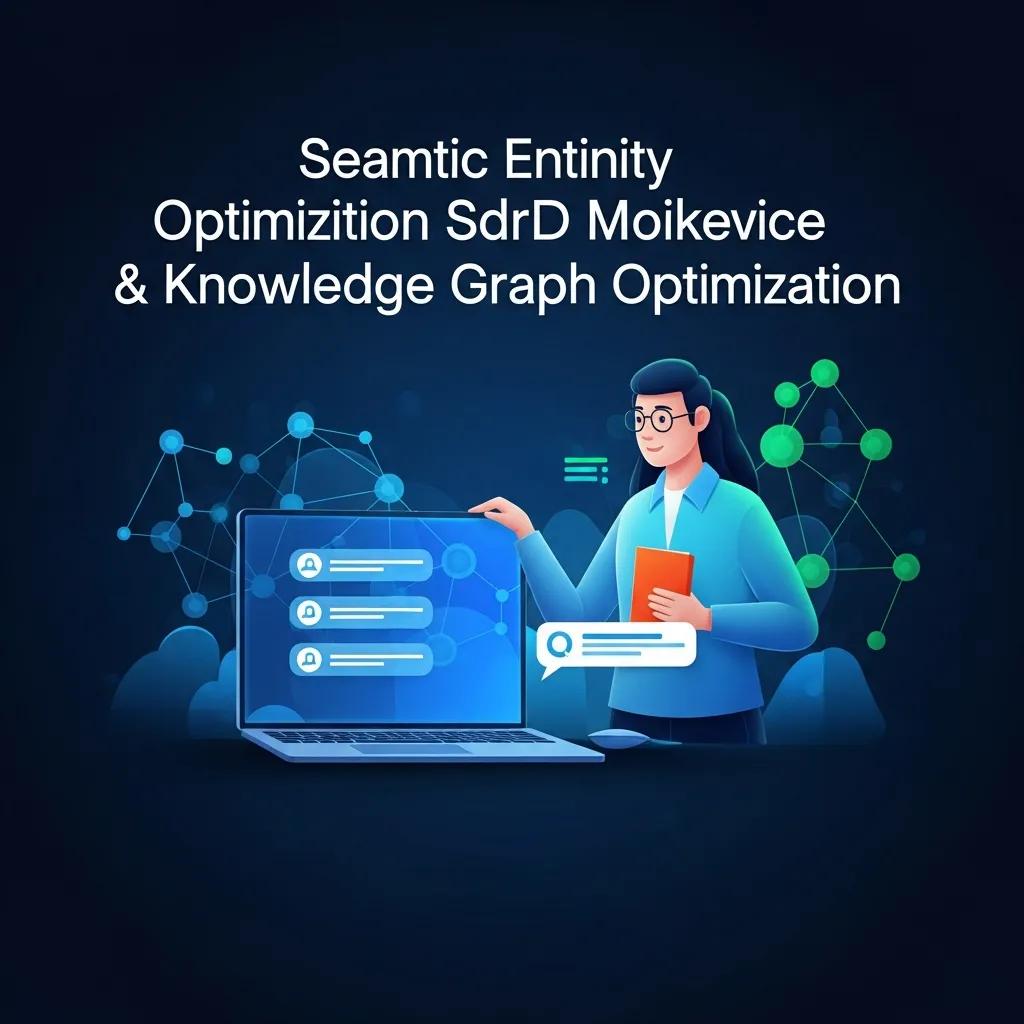
Semantic entity and knowledge graph optimization are strategic approaches that materially improve search visibility and lead generation when implemented correctly. This article explains the mechanisms of semantic SEO, the role of structured content, and how AI automates lead capture and qualification. It also outlines practical techniques for knowledge graph development, contextual search best practices, and recent industry trends that demonstrate effective deployments.

AI-first strategies are a requirement for organisations seeking measurable improvements in search visibility and digital presence. Leveraging AI-driven tools enables content to align with modern search algorithms and user intent. Effective implementation depends on understanding how AI models interpret data and applying that insight to produce more relevant, query-aligned content.
InnovAit AI provides bespoke AI development services focused on semantic entity and knowledge graph optimization. Their technical competence enables organisations to operationalise AI capabilities that drive efficiency and growth.
Semantic SEO improves rankings by prioritising user intent and contextual relationships rather than isolated keywords. Applying structured data and explicit entity relationships helps search engines index and interpret content more accurately, increasing the likelihood of relevant SERP placements.

Clear content structure is essential for user experience and for machine interpretation. Use hierarchical headings, lists and schema markup to improve readability and to signal relationships to search engines. The following practices support both engagement and discoverability:
Increasing user engagement is a primary driver of retention and lead conversion. Employ interactive elements, personalised experiences and content designed to improve click-through rates. Higher engagement amplifies downstream conversion signals and supports organic performance.
InnovAit AI integrates these engagement techniques into lead generation services to help organisations connect with priority audiences more effectively.
Automation streamlines lead capture and qualification while reducing manual overhead. AI systems can capture leads, automate sequenced follow-ups and analyse behavioural data to enable targeted outreach. This approach increases operational efficiency and the effectiveness of acquisition pipelines.
Regular content assessment is required to maintain relevance in a dynamic search environment. Use analytics to track performance, iterate on content based on observed user behaviour, and adapt to evolving query patterns. Continuous monitoring preserves alignment with both user needs and algorithmic changes.
Building brand authority increases trust and conversion potential. Establish strategic content hubs, reinforce credibility through internal linking, and publish authoritative materials that attract qualified leads. Consistent authority signals position organisations as category leaders.
Semantic entity recognition identifies and classifies key concepts within content, improving the representation of relationships and the relevance of search results. It is a foundational process for constructing knowledge graphs that accurately map entity connections.
Entity recognition AI extracts salient concepts from content and enhances semantic search relevance. By detecting entities and their attributes, these models help align content with user intent and improve visibility in results driven by contextual understanding.
Entity linking services increase data accuracy by mapping and disambiguating relationships between entities. Aligning entities with organisational taxonomies improves contextual understanding and makes content more discoverable and relevant to users.
Effective knowledge graph development requires defined objectives, rigorous data quality practices and seamless integration with operational workflows. The following best practices support long-term utility:
Core techniques for managing knowledge graphs include user intent analysis, structured content design and targeted technical enhancements. Together these ensure knowledge graphs remain effective and aligned with business objectives.
Optimising graph databases requires attention to performance, semantic modelling and scalability. Apply design patterns that support high-volume data handling and preserve meaningful relationships for downstream AI consumption.
Effective semantic search optimisation focuses on aligning content with natural language queries, employing structured data, and increasing user engagement. These methods improve the signal quality that AI-driven search systems rely upon.
Deploying semantic SEO best practices materially improves lead generation by increasing relevance and discoverability. The following strategies drive measurable improvements in engagement and conversion potential:
InnovAit AI’s domain expertise in semantic SEO supports practical implementation of these practices for enterprise outcomes.
AI-enabled knowledge graph tools improve semantic search by enabling precise entity mapping, automated semantic analysis and structured content design. These capabilities help produce content that is more relevant to user queries.
AI-driven lead generation benefits from semantic entity and knowledge graph optimisation through improved content relevance, more accurate targeting and higher engagement metrics. Integrating these approaches strengthens acquisition efficiency.
Integrating semantic entity optimisation with AI-powered lead generation allows organisations to optimise content for AI search while leveraging AI to identify and engage leads. This alignment produces more cohesive and effective acquisition programs.
Assessing AI-first semantic SEO requires defined objectives, tracked KPIs and robust analytics. This measurement framework enables organisations to evaluate impact, quantify returns and prioritise iterative improvements.
Industry trends show increased adoption of AI-first strategies and a growing reliance on knowledge graphs to enhance search visibility. Case studies highlight implementations where semantic entity optimisation contributed to demonstrable business outcomes.
Multiple case studies document the effectiveness of semantic SEO and knowledge graph initiatives, offering practical strategies, measurable outcomes and lessons for replication.
Emerging AI SEO developments include integration of generative engines and progress in entity disambiguation. These advances are reshaping content production and optimisation, creating new pathways to improve digital presence.
While generative AI creates new avenues for content production, recent research emphasises current limitations and practical challenges in applying it to content SEO.
Generative AI in Content SEO: Use Cases & Challenges
This paper examines use cases, benefits, pitfalls, team role implications, organisational success factors and organisational barriers for generative AI in content SEO work. The findings are drawn from ten interviews with Finnish SEOs and content creators. Primary conclusions indicate that AI use remains largely unstructured and individually driven; while AI text is suitable for specific use cases, human edits and revisions are required in most instances.
Generative AI in content SEO processes, 2024
Semantic SEO delivers improved search rankings, a better user experience and increased organic traffic when aligned with user intent. By focusing on context and entity relationships, organisations can generate content that resonates with target audiences, increases engagement and strengthens niche authority—factors that support long-term conversion growth.
Content structuring directly influences both indexability and user engagement. Clear headings, bullet points and schema markup enable search engines to interpret context and relationships, improving ranking potential. Simultaneously, organised layouts keep users engaged, reduce bounce rates and increase conversion likelihood.
AI automates entity recognition and relationship mapping at scale. Machine learning models analyse large datasets to identify patterns and linkages, increasing the accuracy and usefulness of knowledge graphs. These insights support content strategies that better align with user intent and evolve as data changes.
Measure semantic SEO success by tracking KPIs such as organic traffic, search rankings and engagement metrics. Use analytics platforms to evaluate performance against clear objectives, and iterate based on observed trends and user behaviour to ensure continual improvement.
Common challenges include data quality shortfalls, integration complexity and limited internal expertise. Poor data undermines targeting accuracy; integrating AI with existing systems often requires technical adjustments; and organisations need skilled staff to manage and interpret AI outputs. Addressing these areas is essential to realise AI benefits.
Current trends include broader adoption of natural language processing techniques and tighter integration of AI to improve content relevance. Organisations are prioritising content that matches conversational queries, adapting for voice search, and increasing the use of structured data to enhance discoverability.
Maintain currency by following industry publications, attending webinars and conferences, and participating in specialist communities on platforms such as LinkedIn and Twitter. Subscribing to reputable tool providers and organisational newsletters also supports ongoing professional development.
Implementing semantic entity and knowledge graph optimisation strengthens search visibility and user engagement when aligned with clear intent and structured content. Adopt these advanced techniques to maintain competitive advantage. Discover how our tailored solutions can elevate your brand’s online presence today.
Combine entity optimization with our AEO and GEO optimization services to build a strong, authoritative presence in AI search results.