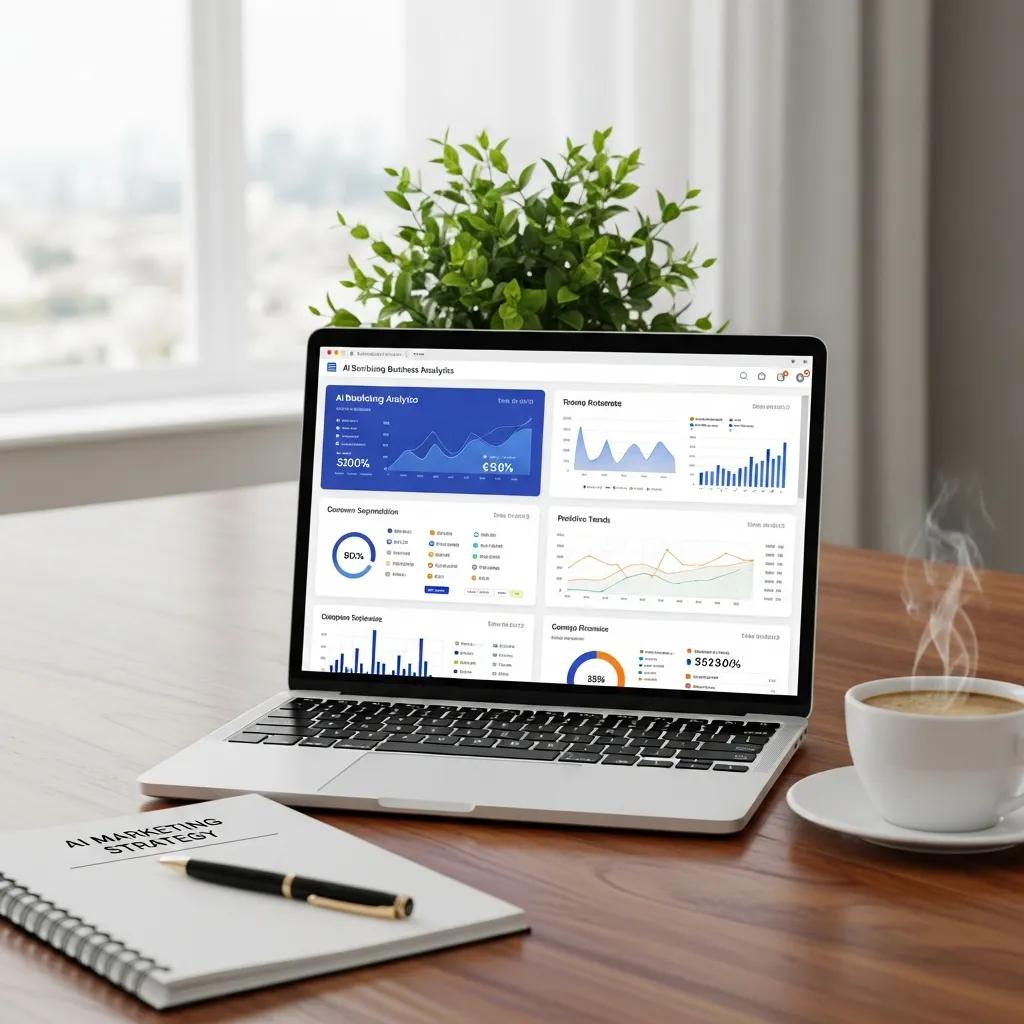
Service businesses are increasingly adopting AI-driven strategies to improve lead generation. The AI Funnel Playbook provides a comprehensive framework for applying artificial intelligence to optimize marketing funnels. This article examines the playbook’s core components, its significance, the benefits it delivers, and practical applications for service firms. Many organisations contend with inefficient lead-generation that fails to convert prospects; an AI-driven approach streamlines marketing operations, enhances customer engagement, and supports measurable growth. Coverage includes definitions of AI marketing funnels, effective lead-generation strategies, and optimisation best practices.
The AI Funnel Playbook is a strategic framework that enables service businesses to deploy artificial intelligence across marketing activities. It documents methodologies and tools for automating lead-generation workflows, improving targeting, and strengthening nurturing and conversion capabilities. Integrating AI into marketing strategies enhances the ability to attract, nurture and convert leads while addressing the specific competitive challenges service-oriented organisations face.
An AI Funnel Playbook is a structured methodology for applying AI to optimize marketing funnels. It drives growth by automating repetitive tasks, analyzing customer data, and generating actionable insights that inform strategy. Core components include lead scoring, customer segmentation and personalized content delivery. Leveraging these AI capabilities reduces acquisition friction, improves marketing efficiency and enables teams to focus on strategic decision-making while AI manages operational lead-generation processes.
AI marketing funnels automate the sequence of attracting, engaging and converting leads. These systems apply AI to analyze customer behavior, preferences and interactions, enabling targeted personalization of marketing efforts. AI provides real-time analysis and predictive modeling to improve campaign effectiveness. By mapping customer journeys and optimizing touchpoints, service businesses can increase conversion rates and strengthen long-term customer relationships.
Research demonstrates that integrating reinforcement learning with predictive analytics can dynamically optimize marketing funnels and improve conversion performance.
AI-Enhanced Marketing Funnel Optimization with RL & Predictive Analytics
This paper examines the integration of reinforcement learning (RL) and predictive analytics to enhance marketing-funnel optimization and customer engagement. It proposes a framework where RL autonomously adapts marketing strategies in real time using consumer interaction and market data, while predictive analytics forecasts behavior and segments audiences to refine the RL input and improve learning efficiency. The study outlines development and testing of an RL model that leverages historical and contextual data to adjust tactics across funnel stages—from awareness to conversion.
Leveraging Reinforcement Learning and Predictive Analytics for AI-Enhanced Marketing Funnel Optimization, 2022

Several AI-driven sales funnel strategies can optimize lead generation for service businesses. These approaches focus on improving lead prioritization, personalizing outreach, and automating engagement to increase conversion efficiency.
Adopting these strategies enables service organisations to streamline lead-generation workflows, prioritize higher-value prospects and improve conversion outcomes.
AI-driven lead scoring employs machine learning to evaluate and rank leads by conversion probability, enabling prioritized outreach and resource allocation. Implementation produces actionable insights into customer behavior and preferences, allowing marketers to tailor communications to specific needs and pain points and thereby increase conversion effectiveness.
Academic studies validate that predictive lead-scoring models outperform traditional methods in improving sales performance.
Predictive Lead Scoring Models for Sales Performance
Lead scoring is an efficient method for measuring lead quality and aligning sales and marketing functions. Traditional models rely on salesperson and marketer judgment, whereas predictive models use data mining and machine learning to support scoring. This review analyzes existing literature on lead scoring models and their impact on sales performance, noting that predictive approaches—despite implementation costs—tend to deliver higher effectiveness and efficiency and are expected to supplant traditional models as adoption increases.
The state of lead scoring models and their impact on sales performance, M Wu, 2024
Generative AI enhances funnel content by producing relevant, high-quality assets—personalized emails, social posts and landing-page copy—that align with audience segments and behavioral signals. Tailored content increases engagement and accelerates prospect progression through the funnel, improving conversion outcomes when integrated into a coherent content strategy.
Service businesses can automate lead funnels with generative AI to manage email campaigns, schedule social content and handle customer follow-ups. AI ensures consistent, timely outreach, reduces manual workload, and analyzes interactions to continuously refine targeting and messaging—resulting in improved customer experience and higher conversion potential.
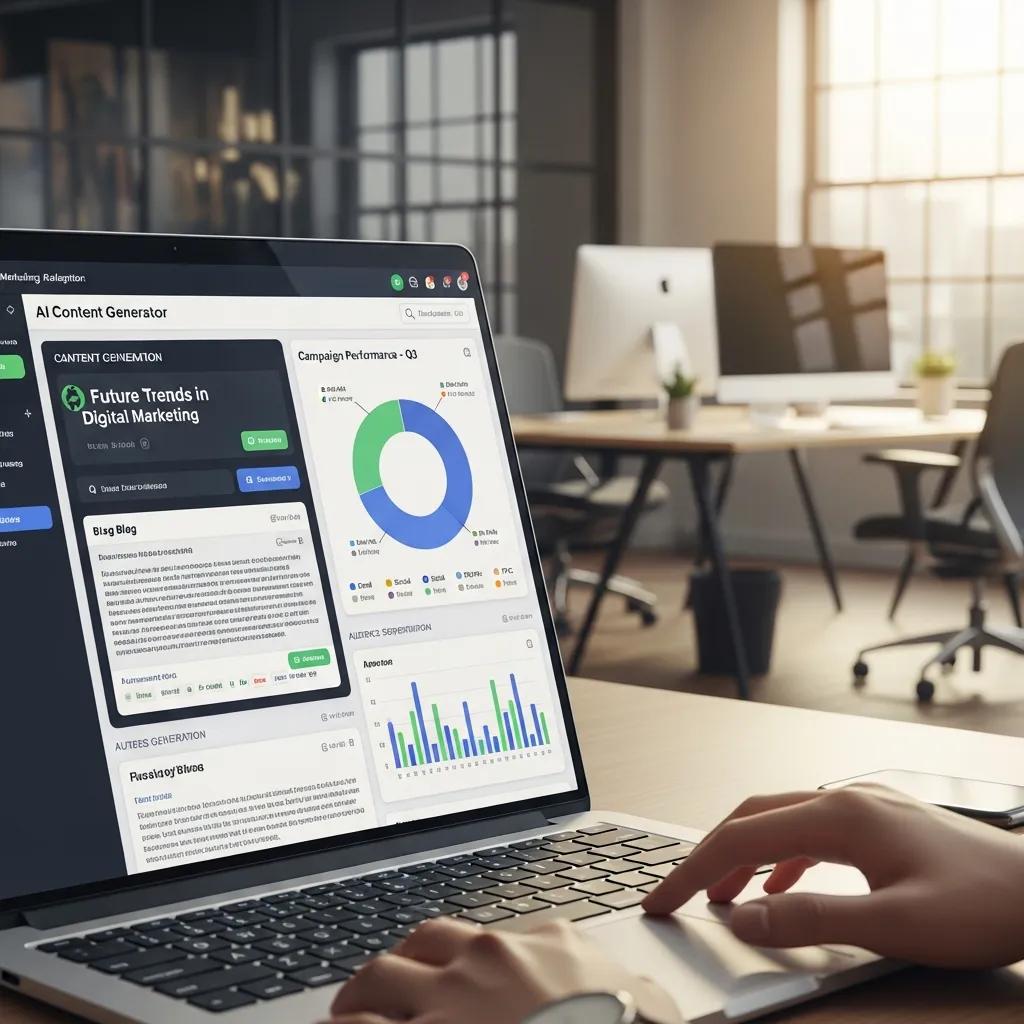
Integrating AI marketing automation tools is critical for efficient funnel management. These platforms automate repetitive tasks—email, social, lead nurturing—and surface behavioral insights that enable more targeted campaigns. Examples include:
Adopting these tools improves operational efficiency and increases the effectiveness of marketing programs.
Measuring the return on investment (ROI) of AI funnels requires tracking key metrics that reflect conversion effectiveness and cost dynamics. Important indicators include conversion rate, customer acquisition cost (CAC) and lifetime value (LTV).
Analyzing these metrics enables service businesses to assess AI-driven funnel performance and prioritize optimizations that enhance ROI.
To optimize AI funnels effectively, service businesses should implement a small set of rigorous practices focused on data, testing and customer alignment.
Following these practices strengthens AI funnel optimization and produces measurable improvements in marketing outcomes.
AI funnel analytics reveal performance gaps by examining customer interactions at each stage. This diagnostic view identifies bottlenecks and isolates specific stages that require intervention. Common issues include low engagement and high drop-off rates.
Addressing identified bottlenecks allows businesses to refine messaging, adjust touchpoints and improve overall funnel performance.
Sustained growth depends on continuous testing and iterative refinement of AI-driven funnels. Regular evaluation of strategy and performance data keeps funnels responsive to market and customer changes.
An institutionalised process of testing and adjustment ensures AI funnels remain effective and aligned with evolving customer needs.
Case studies illustrate tangible results from AI funnel implementations. For example, a marketing agency used AI-driven lead scoring to prioritize high-potential prospects and improved conversion performance. Another service provider deployed chatbots to reduce response times and increase customer satisfaction. These examples demonstrate practical benefits from targeted AI adoption.
Evaluating AI-driven lead generation campaigns requires focus on metrics that reflect quality, engagement and cost efficiency.
Concentrating on these indicators allows service businesses to make data-driven adjustments that improve campaign performance and cost-effectiveness.
Deploying AI funnels presents common challenges that organisations must address proactively.
To mitigate these obstacles, prioritise data governance, invest in staff training and plan integrations carefully to ensure successful AI funnel deployment.
Effective AI funnel development relies on a set of complementary technologies, including CRM systems, email marketing platforms and analytics solutions that embed AI capabilities for tracking, automation and insight generation.
Leveraging these tools strengthens lead-generation execution and supports systematic funnel optimization.
Leading AI marketing platforms deliver a combination of CRM functionality, automation and analytic capabilities to support funnel workflows and decision-making.
These platforms enable service businesses to streamline operations and improve marketing outcomes through integrated AI capabilities.
When selecting AI solutions, evaluate options against criteria that ensure long-term value and operational fit.
Careful assessment of these factors helps service businesses select AI solutions that deliver measurable improvements in marketing performance.
AI enhances lead generation by automating repetitive tasks and freeing teams to focus on strategy. It generates analytical insights that enable tailored marketing, improves customer engagement through personalized content and timely responses, and contributes to higher conversion rates and lower customer acquisition costs. Overall, AI integration increases operational efficiency and supports measurable growth.
Ensure data quality by implementing robust collection standards, conducting regular data audits, training staff on entry best practices and deploying automated validation tools. Prioritizing data governance and integrity maximizes the effectiveness of AI models and improves marketing outcomes.
Customer feedback provides direct evidence of preferences and experience, which informs messaging, content and engagement tactics. Collect feedback through surveys, reviews and direct interactions and incorporate it into AI-driven processes to align marketing with customer needs and improve conversion and satisfaction metrics.
Measure success using KPIs such as conversion rates, customer acquisition cost (CAC) and engagement indicators—click-through rates, time on site and similar metrics that reflect lead quality. Analyzing these KPIs enables data-driven adjustments and continuous improvement.
Common challenges include poor data quality, integration friction with legacy systems and insufficient in-house expertise. Address these by investing in data management, planning integrations carefully and providing targeted training to ensure teams can leverage AI tools effectively.
Effective strategies include systematic A/B testing, continuous KPI monitoring and established feedback loops to capture customer insights. An iterative testing and measurement process drives steady improvements and maintains funnel relevance as conditions change.
Select AI tools by assessing scalability, integration capability and user-friendliness. Choose platforms that align with existing systems, support growth objectives and are accessible to teams to ensure adoption and measurable returns.
Implementing an AI Funnel Playbook enables service businesses to systematically optimize lead generation and marketing strategy. Leveraging AI improves customer engagement, streamlines processes and supports measurable growth. Insights from AI-driven analytics provide a competitive advantage in understanding customer behavior and preferences. Begin transforming your marketing approach by evaluating AI solutions tailored for service businesses.