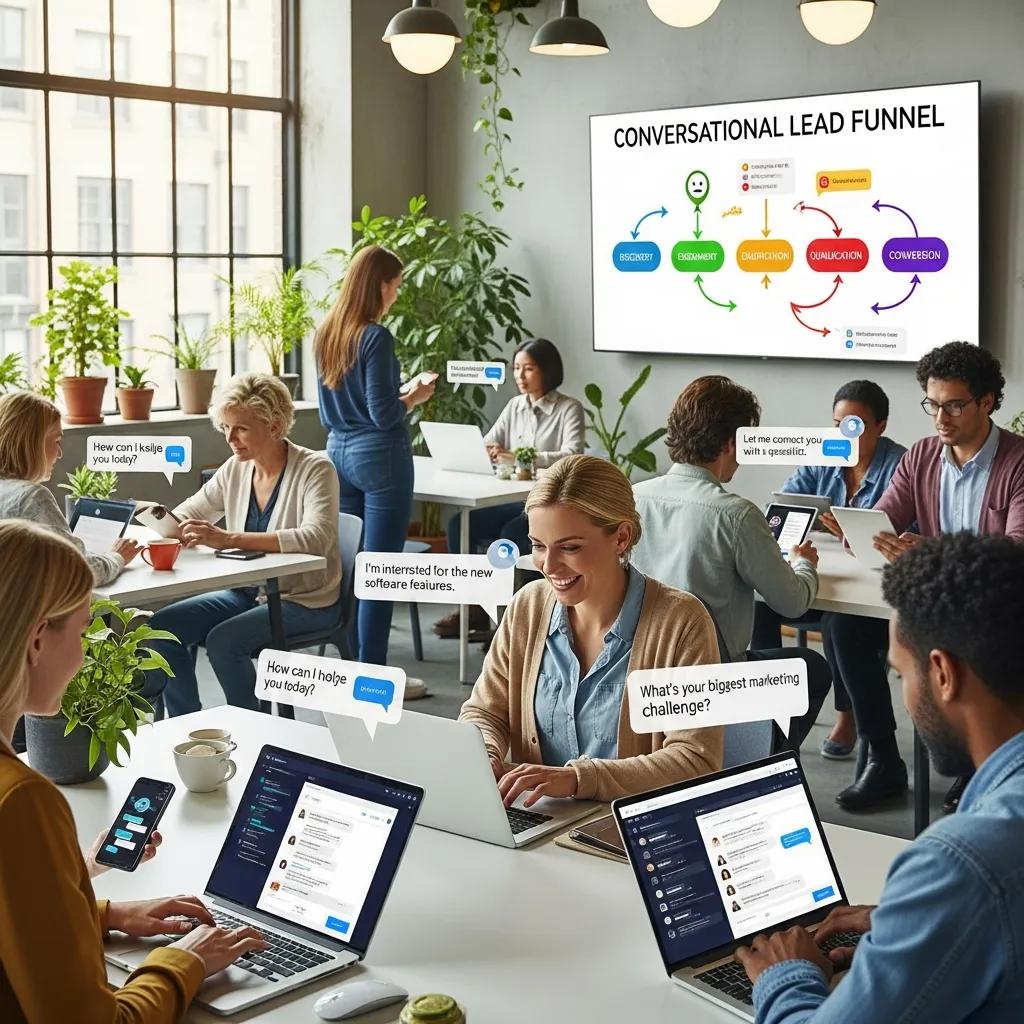
AI conversational lead funnels and bots are transformative components of contemporary digital marketing. They employ artificial intelligence to initiate interactive dialogues, qualify prospects, and support conversion objectives. This article examines the operational mechanisms, quantifiable benefits, and integration pathways for these systems within existing marketing architectures. Given heightened competition and the premium on efficient lead capture, proficiency with conversational funnels, sales-funnel automation, and CRM integration is essential for sustained commercial growth.
Continuous, around-the-clock engagement is a material contributor to these chatbots’ effectiveness in modern lead generation.
Chatbots for 24/7 Lead Generation & Conversational Marketing
Chatbots established a viable lead generation channel: although they did not pass the Turing test, they demonstrated the ability to engage users in conversation and thereby generate leads.
Conversational marketing: How the world’s fastest growing companies use chatbots to generate leads 24/7/365 (and how you can too), 2019
AI conversational lead funnels are automated architectures that engage website visitors via chatbots and AI-driven chat flows. Leveraging natural language processing and machine learning, these systems infer user intent and deliver tailored responses in real time. The result is a streamlined lead workflow that delivers timely, relevant information to prospects and improves conversion efficiency.
Conversational marketing bots are purpose-built AI agents that guide users through the sales funnel using targeted questioning and response logic. Unlike general-purpose support bots, these platforms prioritize lead capture and qualification, collecting preference and need signals that allow businesses to optimise lead routing and follow-up strategies.
The specialised design of these bots is critical for precise lead qualification, as corroborated by field research.
AI Chatbots for Lead Qualification in Conversational Marketing
In lead generation contexts, chatbots converse with high-intent prospects to improve qualification outcomes; limitations occur when bots are not trained to handle specific queries.
Artificial Intelligence in Chatbots and Conversational Marketing, A Marwah, 2025
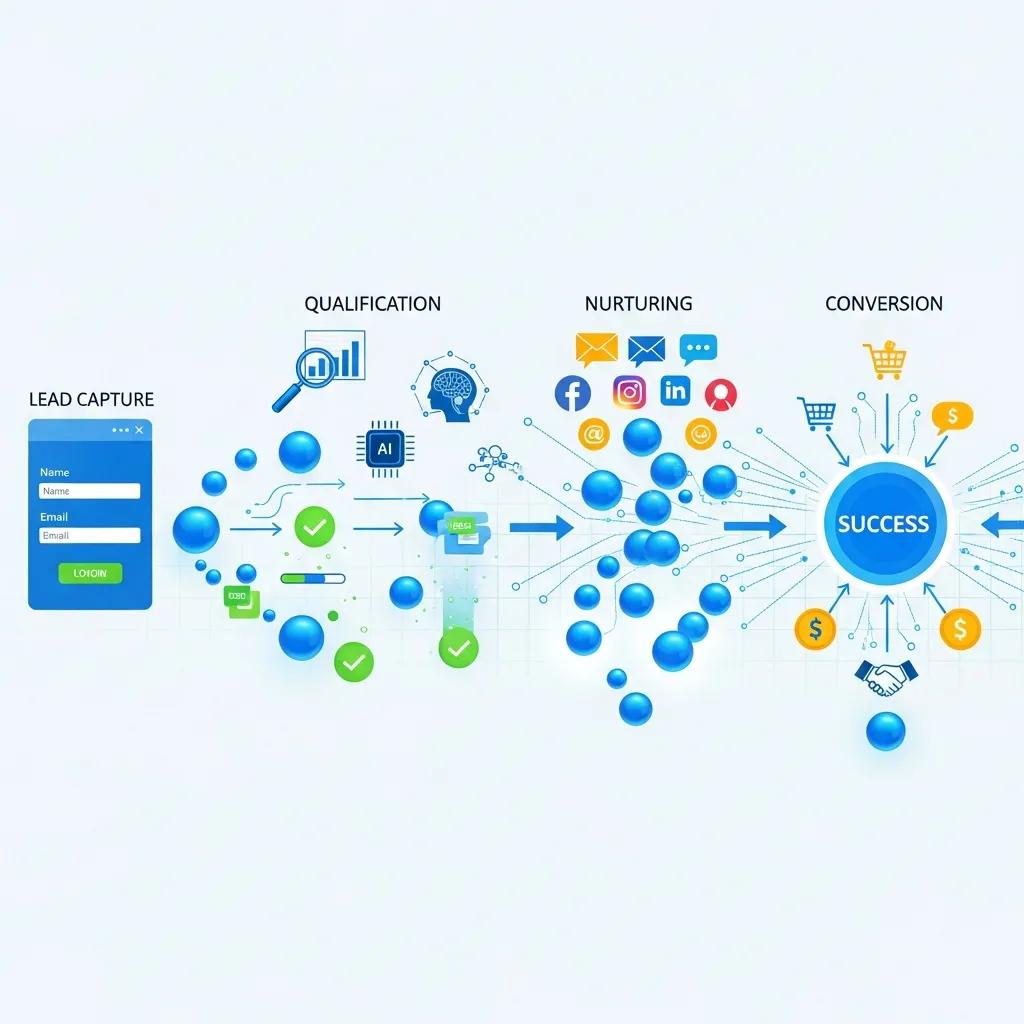
Automated sales funnels reduce manual overhead by automating prospect interactions and qualification. They enable real-time responses to inquiries, improve user satisfaction, and apply data analysis to surface high-quality leads so sales teams can prioritise outreach where it yields the highest return.
| Entity | Attribute | Value |
|---|---|---|
| AI Chatbots | Functionality | Lead qualification |
| Conversational Funnels | Engagement | Real-time interaction |
| Automated Workflows | Efficiency | Streamlined processes |
The table illustrates how distinct lead-generation tools contribute to overall sales-process efficiency by assigning specific functional roles.
An AI-first marketing strategy drives growth by increasing visibility and automating lead acquisition workflows. AI enables analysis of large datasets to surface actionable insights, optimise audience targeting, and deliver the right message at the right time—improvements that translate into higher lead generation efficiency and stronger revenue outcomes.
InnovAit AI specialises in AI conversational lead funnels and bots that automate and optimise lead generation for enterprises. Its offer set includes AI-first strategy education, bespoke AI development, and optimisation services designed to increase lead-generation efficiency and AI search visibility for large organisations.
Implementing AI-driven funnel automation requires a structured approach: define precise lead-generation objectives, select appropriate AI platforms, and establish continuous monitoring and optimisation processes to respond to market and user-behaviour changes.
CRM integration ensures conversational interactions are captured, stored, and analysed centrally. This enables automated, personalised follow-ups and targeted content delivery based on prior interactions, improving nurture programs and increasing conversion probability.
AI-driven lead qualification delivers measurable benefits that can materially improve sales performance:
Collectively, these advantages demonstrate why integrating AI into qualification workflows is a strategic imperative for sales optimisation.

AI chatbots improve conversion rates by providing immediate engagement, answering product queries, recommending solutions, and guiding prospects through purchasing steps. They also automate follow-up sequences to maintain engagement across the funnel.
Automated lead scoring using AI prioritises prospects based on behaviour and interaction data, enabling focused outreach to high-probability accounts. Combined with automated follow-up, this approach shortens sales cycles and increases close rates.
Developing custom chatbot solutions follows a three-phase process: discovery and analysis to define requirements; technology selection and implementation to build the solution; and a support plan for ongoing monitoring and iterative improvements.
Executing this process produces tailored chatbot deployments that align with lead-generation and engagement objectives.
Effective chatbot development requires clear objective setting, selection of scalable platforms, and rigorous security controls to protect user data and preserve trust.
Adherence to these practices increases the likelihood of delivering secure, scalable chatbot solutions that support measurable lead-generation outcomes.
Optimisation focuses on rapid engagement, personalised responses, and continuous performance improvement informed by user data and feedback.
Implementing these strategies increases funnel throughput and enhances conversion efficiency.
Effective AI-funnel optimisation relies on tracking targeted metrics that reflect visibility, engagement, and conversion performance.
These indicators provide the diagnostic insight required to prioritise optimisation efforts and demonstrably improve outcomes.
Monitoring growth and conversion KPIs is essential to quantify the impact of AI-driven lead generation. Track conversion rates, lead quality measures, and cost-per-lead to evaluate effectiveness and optimise budget allocation.
Focused KPI tracking enables data-driven decisions that enhance lead-generation performance over time.
Funnel analytics reveal user interaction patterns that inform targeted improvements to conversational logic and follow-up timing, supporting iterative performance gains.
Applying analytics-driven refinements helps ensure conversational bots remain effective instruments for lead capture and conversion.
The industry continues to evolve with increased adoption of AI tools for lead generation. Recent case studies and performance data report meaningful gains in operational efficiency and conversion metrics, illustrating clear potential for positive return on investment when implementations are executed correctly.
Recent statistics from 2026 highlight the success of AI-powered lead generation strategies. Key findings include:
These statistics underscore the measurable impact AI can have on lead-generation efficiency and financial performance.
Several case studies demonstrate tangible ROI improvements from AI chatbots: a leading e-commerce company reported a 50% increase in conversion rates after integrating a conversational bot, and a B2B service provider reduced lead qualification time by 60%, enabling sales teams to focus on higher-value prospects.
This article was authored by a team of AI and digital marketing experts with extensive experience in conversational marketing and lead generation technologies. The insights presented are grounded in industry research and practical implementations. InnovAit AI, featured in this article, is a recognized leader in AI conversational lead funnels and chatbot development, providing enterprise-grade solutions and strategic consulting to enhance lead-generation efficiency.
For further information about InnovAit AI and their services, visit their official website or contact their expert team directly.
AI conversational lead funnels are applicable across sectors—e-commerce, retail, B2B services, healthcare—and any organisation that depends on scalable lead generation and personalised customer engagement.
Chatbots improve experience by delivering immediate responses, guiding prospects through funnel stages, and providing data-driven recommendations based on user signals, which reduces friction and accelerates decision-making.
Common challenges include ensuring reliable natural language understanding, achieving seamless integration with existing systems, and sustaining engagement through effective training and ongoing optimisation.
Success is measured via KPIs such as conversion rate, lead quality, engagement metrics, click-through rates, and ROI analyses that quantify the financial impact of lead-generation initiatives.
Data privacy is fundamental: organisations must comply with regulations such as GDPR and CCPA, implement robust security controls, and maintain transparency about data usage to preserve customer trust and regulatory compliance.
Yes. Chatbots can be tailored in language, tone, and functionality to address industry-specific queries and workflow requirements, ensuring alignment with brand and operational objectives.
Anticipated trends include advances in natural language processing, greater integration with predictive analytics for improved lead scoring, and expanded use of voice interfaces and multi-channel engagement to reach prospects across platforms.
AI conversational lead funnels and bots provide a demonstrable pathway to improved lead capture, faster qualification, and higher conversion efficiency. By automating qualification and applying data-driven optimisation, businesses can increase operational performance and scale revenue-generating activities. Explore tailored, enterprise-grade AI solutions to transform your lead-generation strategy.
Our conversational lead funnel automation engages visitors 24/7 to ensure no lead is left behind.